
Articles
Ocean & Biodiversity
A Summary of the Social Impact Assessment of the compounding impacts of COVID-19 and the Wakashio oil spill
Introduction:
As a small island nation and recognised biodiversity hotspot in the Indian Ocean, Mauritius is vulnerable to external socio-economic shocks and environmental stressors. In light of the climate crisis and increasingly volatile multilateral politics, Mauritius’s social, economic and environmental resilience is more important than ever. Unfortunately, two such exogenous shocks in 2020, namely the COVID-19 pandemic and the country’s worst oil spill, eroded that resilience in the South-East Coast. It is imperative that the correct measures, support mechanisms, and policies are put in place in order to repair the socio-economic losses and restore the damaged environment.
Background:
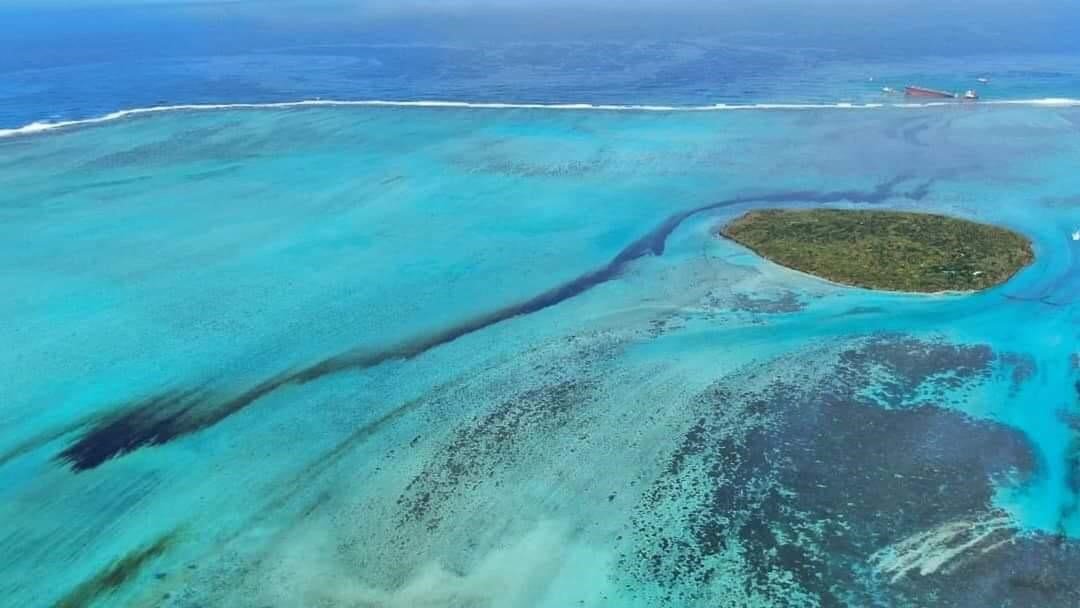
On the 25th of July 2020, the Japanese-owned, Panama-flagged MV Wakashio bulk carrier vessel, ran aground off the island’s south-east coast, spilling over 1,000 tonnes of fuel oil along more than 30 km of coastline. The region is known for its artisanal fishing villages and concentration of ecologically sensitive areas and nature reserves, including two Ramsar sites, two fishing reserves and several islets and nature reserves. This incident occurred while the island was still dealing with the COVID-19 pandemic, notably about one month after one of the world’s most severe 3-month national lockdowns.
Timeline of events:
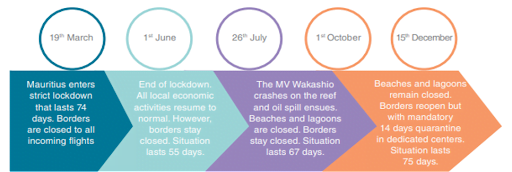
To explore the impact of these compounding shocks on the Southeast coastal communities of Mauritius, our team undertook a study, between November 2020 and January 2021, involving seven community meetings attended by 120 community members, 22 key informant interviews and 792 random household surveys across the oil spill impacted sites and reference sites. The objective of this study and subsequent report is to provide an initial socio-economic assessment of the direct and indirect impacts of these adverse events, so that the information can be utilised by concerned stakeholders to provide a holistic response.
Our findings show that the oil spill and the pandemic disproportionately affected coastal communities of the Southeast coast, as this region’s socio-economic structure is nearly entirely reliant on the ocean as a resource and is relatively underdeveloped compared to the rest of the island. The communities’ main earnings come from tourism (hotels, bed and breakfasts, seafood restaurants, and ocean-based activities), and on fishing. Thus, the closure of the country’s borders to tourism during that period, the closure of the sea during the lockdown and again after the oil-spill essentially closed all revenue streams of this susceptible region and its communities for 10 months.
Notable impacts:
Current barriers to resilience:
Building back the region started nearly immediately after the oil-spill by various stakeholders such as NGOs, the private sector, the Mauritian Government, along with the support of other entities such as the Japanese Government and the UN. According to our initial assessment of these responses, a number of issues remain which continue to affect the resilience of the impacted Southeast coast of Mauritius.
The perceived lack of preparedness of the government, the slow start of the expert clean-up process and lack of information about clean-up strategies and short- & long-term monitoring have created an important trust-deficit amongst the communities, which could hamper future recovery efforts.
A lot of the difficulties faced by the communities stemmed from how beneficiaries of financial support and compensation were chosen. Although the government set-up the MV Wakashio Support Cell to identify beneficiaries using top-down and bottom-up approaches, one of the approaches employed was to distinguish COVID-19 impacts from Wakashio impacts and aim to support only Wakashio-impacted individuals. This is quite problematic as these events/disasters happened simultaneously and worsened each other’s impacts. Secondly, most beneficiaries were chosen from formal lists from respective institutions such as registered fishers and tourist operators, leaving out affected individuals in the informal sector as well as other businesses indirectly impacted such as seafood restaurants. Thirdly, fishers were compensated at a much lower rate than their usual earnings, also caused by the fact that fish catches tend to be under–reported. And a final issue, for the small percentage of those who indebted themselves, sold productive assets etc. resilience may be so eroded that the road to recovery is likely to be very complex without additional support.
Brief high-level recommendations:
Summary written by Amandine de Rosnay, Sustainability Consultant, Dynamia
Cover photo credit: Pierre Dalais