As illustrated recently by hurricane Fiona in the Caribbean and skyrocketing costs of fuel, island communities are vulnerable to external shocks. On one hand, severe weather conditions are capable of damaging critical energy infrastructure, as Fiona did in Puerto Rico, and on the other, fuel price increases can have wider implications for island nations. Energy independence has been identified as a key consideration for isolated communities seeking to build resilience, reduce their reliance on imported fuel, decrease their impact on the environment, and future-proof their infrastructure. Tackling energy vulnerability can lay a solid foundation for sustainable development and climate action, but as the Edenway Group highlighted in their Virtual Island Summit panel, there are innovative ways of maximizing local energy production.
Moderated by Edenway’s Founding Partner, Sébastien Dalmas, the discussion featured Hélène Morin, Head of European Affairs at Bretagne Development Innovation, Jean-Baptiste Wallaert, a Seaweed Expert from JBW Consulting, Colm Watling, a Consultant based on the Isle of Wight, Tonio Maritato, Energy Transition & Services Project Manager at REDEO Energy, and Gwendal Vonk, Project Manager at SDEF. These expert speakers looked at Edenway’s Intelligent Community Energy (ICE) project, which focuses on using local island communities’ environment and waste as potential solutions to energy vulnerability.
“Islands tend to have less renewable energy systems, so we wanted to improve the reliability of their systems and provide more renewable energy using the environment they have around them,” said Hélène Morin of the basis behind the ICE project, “We wanted to find new renewable resources, we also wanted to find a solution for storage [to counter the intermittency], and work with inhabitants to see where they can reduce their energy consumption.”
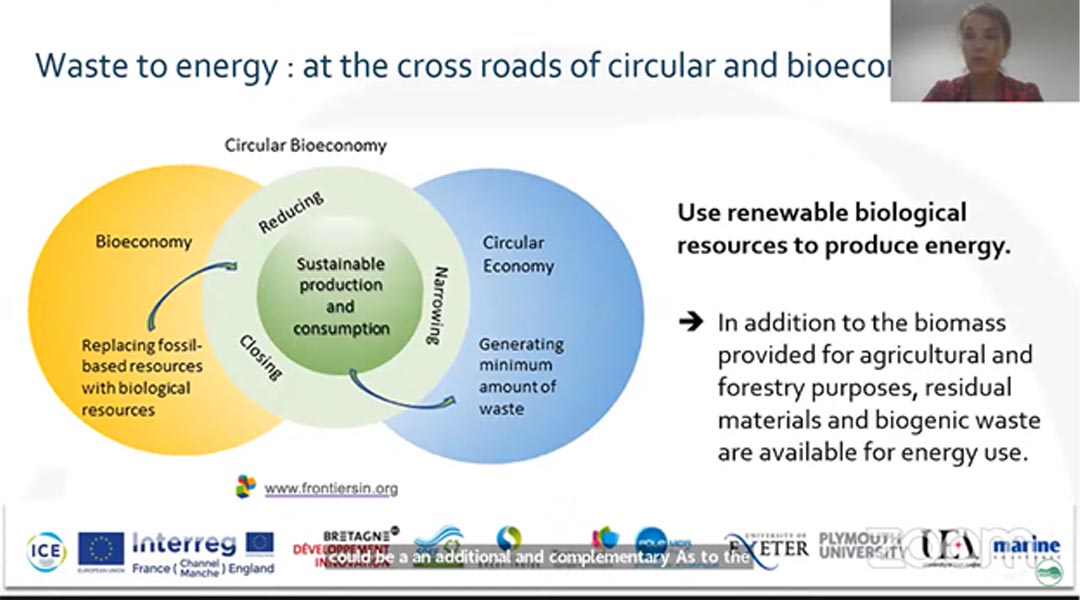
Using a mixture of smart technologies such as IoT sensors, combined with population surveys, discussions with local stakeholders and island-specific studies on renewable power availability, researchers were able to identify relevant local opportunities to improve energy efficiency and resilience. Over the course of the project, waste became a core focus. “Waste was seen as a burden for these islands, it was difficult to prevent or recycle and expensive to manage,” Morin continues, “What we wanted to see with the waste was how we could use it as a source of energy.”
By changing how we interact with waste, opportunities can be created for energy creation. “The more energy you consume, the more waste you produce,” states Gwendal Vonk, as he points to a data table highlighting the differences in waste management against Gross Domestic Product, “Incineration plays a big part in high income countries [waste management], while in low income countries incineration is low to non-existent, [with most waste] going to either dumps or landfills.” Noting the environmental impacts that incineration, landfills and dumps have, Vonk proposes a solution for waste management that both deals with waste and generates electricity: air gasification.
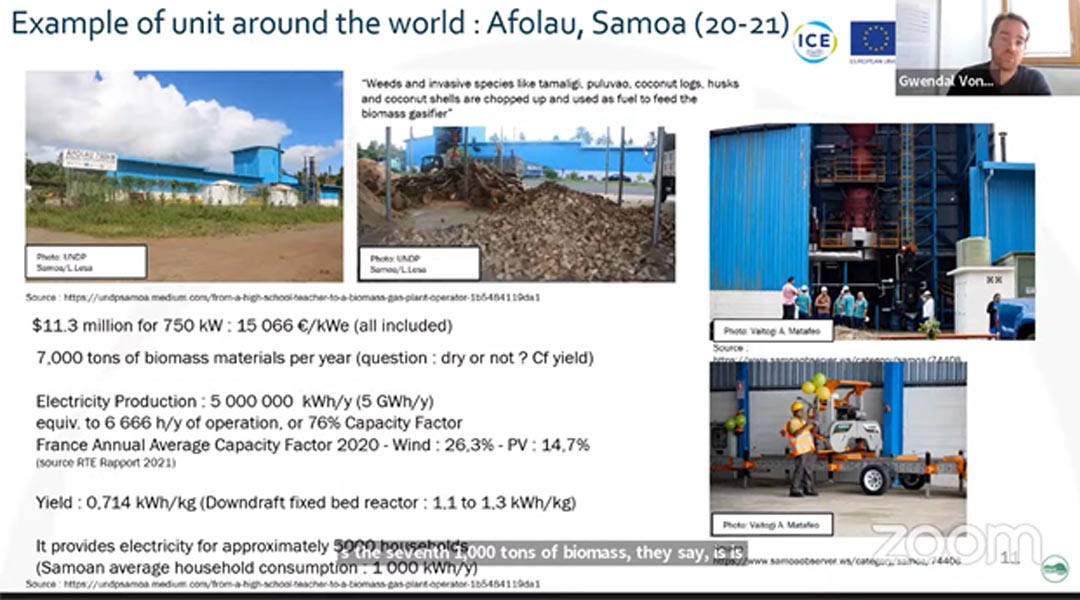
The process of air gasification is relatively simple, by heating biomass in a low-oxygen environment, it breaks down into its constituent molecules, creating syngas and an inert char. The gas can be then either used to produce electricity, or can be further refined into other forms, such as hydrogen. A technology that has been around for almost three centuries, air gasification for waste is actively being used at scale in developing countries, something Vonk believes should be more popular with all nations regardless of economic level. Capable of being installed as a small, modular unit, air gasification is an innovative solution that produces around one kilowatt hour electric per kilogram of dry biomass. As part of the ICE project, several units will be tested on participating islands later this year.