
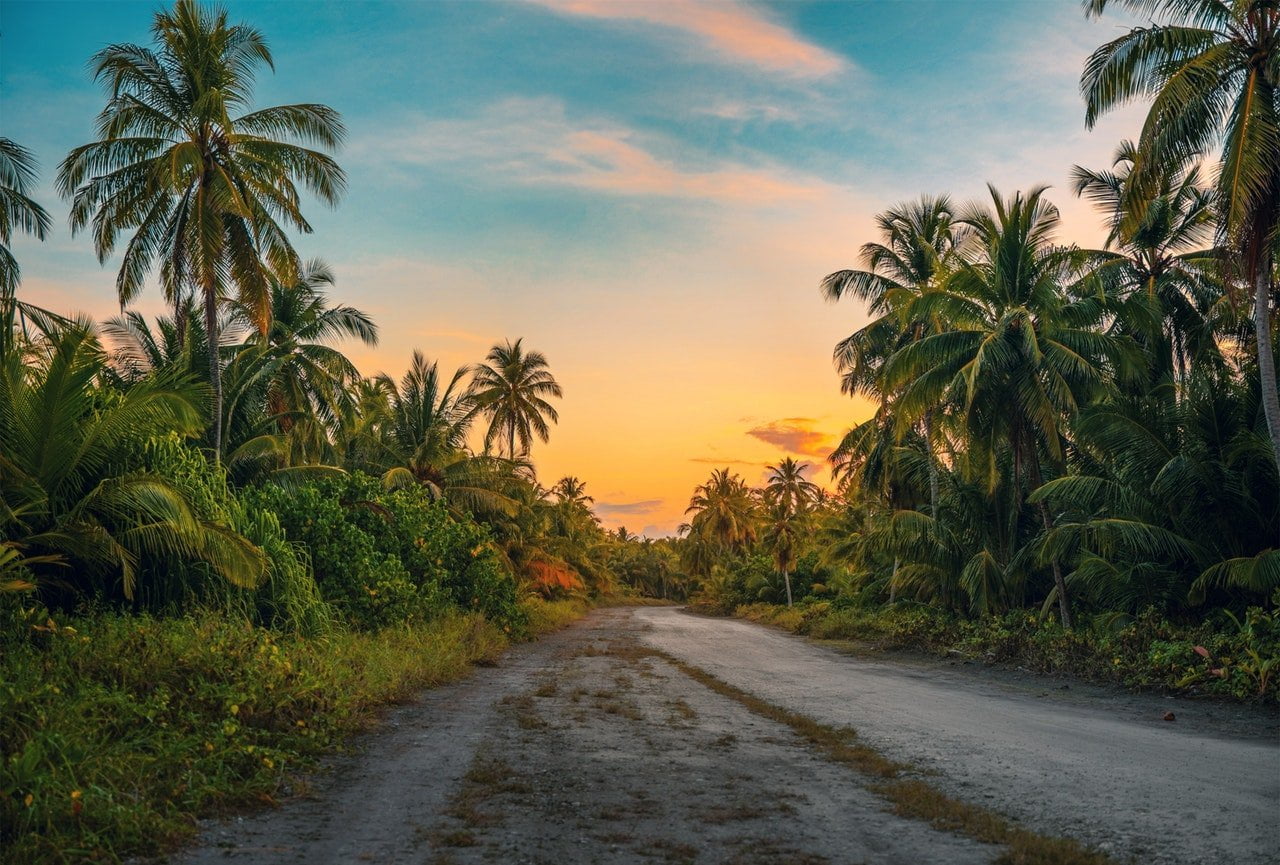
This week’s thought: What is “paradise”? And who gets to experience it?
People often tell me how lucky I am to be frequently travelling to “paradise”, visiting some of the most beautiful islands in the world. And I know it.
But isn’t paradise in our imaginations? The term impacts our relationships with islands – for both visitors and residents. It implies a site for adventure, hedonism and exploitation. Paradise can be cultural supremacy.
Islands are conceived in the popular imagination idyllic with abundant natural beauty. They are envisioned as utopias, enhanced by distance and small size. Paradise was first coined by sailors, colonists and missionaries after months at sea, finally able to stand on dry land.
Yet islands have also been places to hide dark shame: slavery, prisons, massacres. The imagined idea of paradise can perpetuate exploitation and disguise deep global inequalities that allow foreigners to fly in and play in landscapes in ways that may be unavailable to local people.
Island communities so often have an outsider narrative imposed on them that revolves around a tropical paradise. This can mask the realities of the issues that they may be facing. Even islands in colder regions fall into this trap, treated as a pristine playground for others to enjoy.
This is a point made by the Antiguan author Jamaika Kinkaid in her essay “A Small Place” – a searing critique of the colonial nature of Caribbean tourism through the eyes of a returning emigrant. By emphasising natural beauty at the expense of residents dealing with their day-to-day lives, we obscure their problems.
This drama recently played out with the political discussion in Tobago, where a new 750-room all-inclusive resort has been under much scrutiny and was recently scrapped due to local concerns. Despite the obvious jobs and tax revenues that would arrive, clearly other issues were of higher priority. How do we measure benefits from tourism when much of the money goes elsewhere?
Am I trying to degrade the beauty of (tropical) islands? No. Am I discouraging you from visiting? No. But perhaps think about who benefits from the word “paradise” and who ultimately gets to experience it.