VIS 2026VIS 2026 — Virtual Island Summit|Also: GSIS 2027GSIS 2027
Island Innovation Logo
About
Services
The Network
Events
Content Library
Contact Us

Subscribe to our newsletter. By submitting, you agree to our Privacy Policy.

Island Innovation

Island Innovation works with governments, institutions, and partners worldwide to support island-led sustainable economic development.

We Support The UN Development Goals

SDG 9: Industry, Innovation and InfrastructureSDG 11: Sustainable Cities and CommunitiesSDG 12: Responsible Consumption and ProductionSDG 13: Climate ActionSDG 14: Life Below WaterSDG 17: Partnerships for the Goals

Explore

AboutServicesNetworkEvents

Content

ArticlesNewsCareers

Ready to Connect?

Join the island innovation community

Get in Touch

About

  • About us
  • Case Studies
  • FAQs
  • Press
  • Careers
  • Contact

Services

  • Services Overview
  • Public & Media Relations
  • Strategic Communications

Network

  • The Island Network
  • Academic Council
  • Newsletter

Events

  • Our Events
  • Watch Past Events

Content

  • All Content Library
  • Videos
  • Articles
  • News
Privacy PolicyTerms of ServiceContact

© 2025 Island Innovation. All rights reserved.

    News

    Curated stories and analysis from islands and sustainability leaders worldwide.

    Filter by Core Theme

    All ThemesCircular EconomyClimate ActionConnectivity & DigitizationCulture & CommunityEnergy & TransportGreen Finance & EconomyOcean & BiodiversityPolicy & GovernanceTourism & Remote WorkWater & Food
    Showing 9 of 100 news items in Circular Economy
    Zanzibar’s Pemba Island confronts a 230-tonne a day waste problem offering a blueprint Africa can use
    Circular EconomySeptember 2, 2025

    Zanzibar’s Pemba Island confronts a 230-tonne a day waste problem offering a blueprint Africa can use

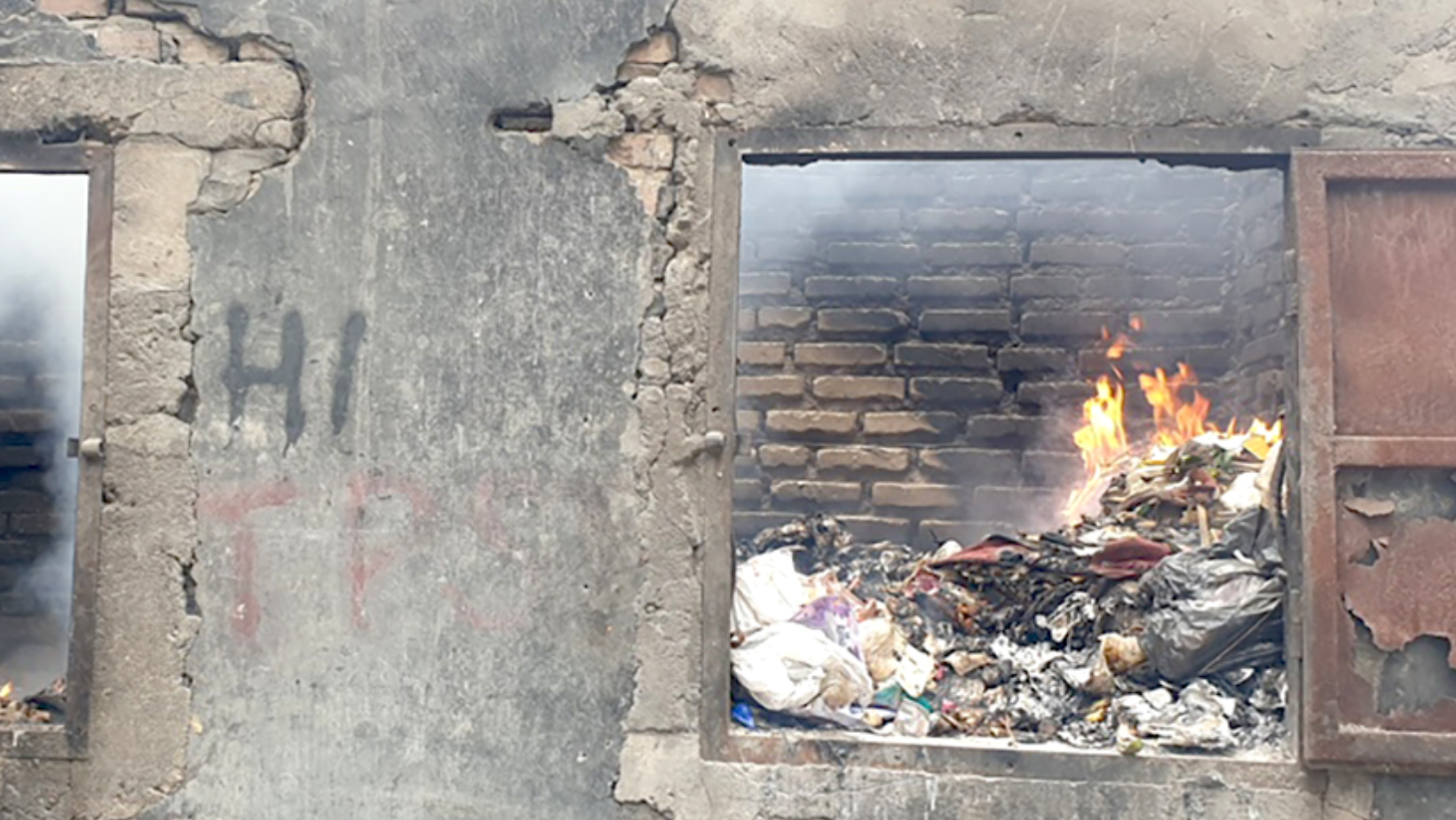
    Excerpt from africasustainabilitymatters.com A new assessment of Pemba Island, in the Zanzibar Archipelago, has put hard numbers to a long-felt reality: the island generates more than 230 tonnes of waste every day, much of it burned in the open or dumped in informal sites. The study, led by RSK Environment (East Africa) with Lumen Associates and Patrick Matandala for the NGOs LVIA and Oikos East Africa, argues that the crisis is fixable if authorities lean into data-led planning, small-scale processing and community enterprise, a package the team has framed in a locally owned “Theory of Change.” The timing is deliberate; Pemba is one of three Tanzanian cities targeted by the European Union’s Green and Smart Cities SASA programme — a TZS 190 billion (about €75 million) Team Europe Initiative launched in 2024 to bankroll greener infrastructure and jobs. In Pemba, LVIA and Oikos have been contracted to translate that big ticket into block-and-tackle improvements in how waste is collected and treated.

    Read more
    12345678910
    St. Kitts and Nevis Steps Closer to Single-Use Plastic Ban with Multi-Agency Support
    Circular EconomyMarch 17, 2025

    St. Kitts and Nevis Steps Closer to Single-Use Plastic Ban with Multi-Agency Support

    St. Kitts and Nevis is advancing its phased ban on single-use plastics with collaborative efforts across multiple government agencies and support from the business community. Hon. Dr Joyelle Clarke, Minister of Sustainable Development, Environment and Climate Action and Constituency Empowerment, expressed gratitude to the media, consumers, the Chamber of Industry and Commerce, and other business entities for supporting the government’s ban of single-use t-shirt shopping bags. Legislative and Collaborative Support Minister Clarke emphasised that the transition requires more than just governmental intention, highlighting the necessity of supporting legislation. “We recognise that the shift requires more than just government saying what its intention is, but legislation also needs to support the single-use plastic ban. And so, the Attorney General has confirmed that we will have a plastic regulation bill ready for the ban. The Minister of Trade will also be presenting to us and to the nation the international standards for biodegradable alternatives that all retailers and wholesalers can access to purchase the biodegradable options for importing to St. Kitts and Nevis.”

    Read more
    How Africa’s smallest nation is cleaning up its waste and energy sectors
    Circular EconomyFebruary 19, 2025

    How Africa’s smallest nation is cleaning up its waste and energy sectors

    In the azure waters of the Indian Ocean lies Seychelles, an archipelago of 115 islands. While being the smallest country in Africa in terms of land area, Seychelles serves as a strong voice for small island states through its environmental stewardship and sustainable development initiatives. Seychelles is facing numerous challenges relating to the triple planetary crisis: the crisis of climate change; the crisis of nature and biodiversity loss; and the crisis of pollution and waste. To address these, the country has remained steadfast in its commitment to environmental conservation through its partnership with the [United Nations Environment Programme](https://www.unep.org/who-we-are/about-us) (UNEP) since 2002. Seychelles regularly contributes to UNEP’s core [Environment Fund](https://www.unep.org/about-un-environment-programme/funding-and-partnerships/environment-fund?_ga=2.27928575.298943202.1713110845-819168951.1689366334), the organization’s main source of flexible funding and the bedrock of its work on the triple planetary crisis. “The programmes that UNEP has been operating over the past years have really contributed to the success of Seychelles that we see today,” said Flavien Joubert, Seychelles’ Minister of Agriculture, Climate Change and Environment. “We expect that with time, we will continue to evolve in our relationship with UNEP and cover all areas, even those that traditionally we haven’t.”

    Read more
    Sustainability reimagined: NUS students get creative in building a more eco-conscious society
    Circular EconomyFebruary 12, 2025

    Sustainability reimagined: NUS students get creative in building a more eco-conscious society

    Excerpt and Photo from news.nus.edu.sg Sustainability is a shared commitment that requires everyone to take personal responsibility for the planet. NUS students are encouraged to foster ground-up projects and partake in community initiatives to promote a sustainability mindset and sustainable practices across campus and among the next generation. With hostelites spending much of their time on campus, making sustainable living both accessible and engaging is essential. From island-hopping excursions and food rescue operations to swapping fashion items, discover how students from various NUS hostels are learning and inspiring their peers to embrace a sustainable lifestyle! **Pioneer House** At the heart of [Pioneer House’s (PH)](https://nus.edu.sg/osa/pioneerhouse) ethos lies a fundamental belief in the power of humanity. To this end, one of PH’s core values is promoting frugality and sustainable living as part of a broader effort to remind residents that they can do their part to contribute meaningfully to the House and the wider community. A [Frugality and Sustainable Living Subcommittee](https://nus.edu.sg/osa/pioneerhouse/residential-life/frugal-and-sustainability) comprising 17 like-minded students, led by undergraduate Prisha Ramesh Babu, oversees the planning of different initiatives to promote sustainable living among the PH community. “Our efforts centre on introducing sustainable practices and habits that residents can adopt, while also encouraging a deeper connection with nature. By planning innovative and engaging events, we aim to transform sustainability into an inspiring and enriching aspect of community life!” said Prisha, a Year 2 [Chemical Engineering](https://cde.nus.edu.sg/chbe/) undergraduate.

    Read more
    How Solomon Islands’ water plant became an aid failure
    Circular EconomyJanuary 15, 2025

    How Solomon Islands’ water plant became an aid failure

    As its bid for the Kongulai project was being evaluated, Rean/PCS was facing scrutiny for non-performance on four separate ADB-funded water treatment systems in the central Indian state of Madhya Pradesh, according to court records from the joint venture’s unsuccessful appeal of the blacklisting. A January 2022 “show cause” letter from the state-owned Madhya Pradesh Urban Development Company, included in the court records, noted that each of these projects was more than four years behind schedule and warned that Rean/PCS was at risk of being blacklisted by the state. The company ultimately was blacklisted for two years in June 2022 — just a month after it was awarded the Solomon Islands tender. The “show cause” letter was copied to ADB staff members, meaning that at least some staff had access to the material while the Solomon Islands bid was being evaluated. ADB declined to answer specific questions about the letter. By August 2022, just three months into the project, Kongulai was already running dangerously behind schedule, according to minutes of meetings between Solomon Water and Rean/PCS. That month, a Solomon Water manager told the board that Rean/PCS had been notified of three breaches of contract for failing to complete key tasks, including securing the insurance needed to build permanent structures, a copy of the report obtained by OCCRP shows. The board was told that it would be “impossible” for the contractor to meet its June 2023 deadline.

    Read more
    Thursday Island community sparking a ride revolution
    Circular EconomyJanuary 8, 2025

    Thursday Island community sparking a ride revolution

    Excerpt and Photo from abc.net.au Cost of living pain is being felt nowhere more keenly than on Thursday Island in the Torres Strait, off the tip of north Queensland where fuel can be anywhere up to three dollars a litre. A grassroots community group on the Island is hoping to ease that burden by spearheading a bicycling revolution and raising funds to buy 100 bikes for the remote island community

    Read more
    Students participate in ‘Tour de Trash’ exploring Oʻahu waste management facilities
    Circular EconomyJanuary 8, 2025

    Students participate in ‘Tour de Trash’ exploring Oʻahu waste management facilities

    Excerpt and Photo from hawaii.edu As the University of Hawaiʻi aims for zero-waste goals, students got a close up look at how waste is handled on Oʻahu through participating in a tour coordinated by the City and County of Honolulu to two waste management facilities: H-POWER and Waimanalo Gulch Sanitary Landfill in December. This initiative, coordinated by the UH [Office of Sustainability](https://www.hawaii.edu/sustainability/), in partnership with the Student Sustainability Council, was part of the broader “Tour de Trash” program at UH, which aims to explore the path of our ʻōpala (trash). “The tour de trash was very eye-opening in learning how our waste gets managed and what gets done to it,” said Alexander Ah-Tye, a UH student participant. “Typically we don’t give throwing away trash a second thought since it’s out of sight and out of mind. Seeing it in person really makes you consider how much waste we produce within our island. It made me a little self-conscious of all the times I have haphazardly thrown tons of non-recyclable and non-renewable materials away.” The first stop was H-POWER, a waste-to-energy facility in Kapolei. Participants witnessed how municipal solid waste is incinerated to generate electricity for Oʻahu. A highlight was observing crane operators maneuvering massive amounts of waste into the incinerator. H-POWER processes approximately 700 tons of waste annually, showcasing its role in reducing landfill reliance while generating renewable energy.

    Read more
    Homes built with clay, grass, plastic and glass: How a Caribbean island is shying away from concrete
    Circular EconomyJanuary 8, 2025

    Homes built with clay, grass, plastic and glass: How a Caribbean island is shying away from concrete

    Photo Credit: Damar Ali. Retrieved from bbc.com On the island of Trinidad, houses are being built using upcycled materials to make them more climate resilient. When Erle Rahaman-Noronha decided to try his hand at farming in 1997, the land he settled on in Freeport, like much of Trinidad’s farmland, had been focused on monoculture – a remnant of the colonial plantations that scarred the region’s history. “There was just a citrus tree every 20ft (6m) – none of these big trees were here,” he says, gesturing around him. Now the 30 acres (12 hectares) more closely resembles a forest, dotted with structures built out of repurposed materials. Rahaman-Noronha hasn’t just reforested his land; he is passionate about ensuring the buildings on his farm are sustainable too. As you enter the farm a concrete house greets you – one of the older buildings on the land. But every other structure has touches of the earth. Clay, harvested from the land nearby; timber from the trees further back on the farm; repurposed glass bottles of all colours that glitter as the light hits them; rounded formations that only hint at the old, upcycled tires buried underneath to provide structure; and textured walls containing patchworks of dried grasses. The farmer is embracing the old Trinidadian ways of building, when residents would use what was available to them, rather than [mass importing materials](https://tradingeconomics.com/trinidad-and-tobago/imports-by-category). Not only is he putting waste products that would otherwise end up in landfill to use, Rahaman-Noronha is employing building styles that provide resilience against the island’s [changing climate](https://climateknowledgeportal.worldbank.org/country/trinidad-and-tobago#:~:text=As%20a%20Small%20Island%20Developing,and%20loss%20of%20coastal%20habitats.).

    Read more
    The Rastafarians opening up Caribbean cannabis farms to build a flourishing medical industry
    Circular EconomyJanuary 8, 2025

    The Rastafarians opening up Caribbean cannabis farms to build a flourishing medical industry

    Photograph: Demion McTair. Retrieved from theguardian.com On Golba Hill on the Caribbean island of [St Vincent and the Grenadines](https://www.theguardian.com/world/saint-vincent-and-the-grenadines) (SVG), just below a cluster of colourfully decorated homes, there are rows and rows of premium marijuana plants. Gleaming like green gold in the Caribbean sun, they lead up to a crudely constructed hut where cannabis farmer Bobbis Matthews spends most of his time nurturing and protecting his precious field. As he did his routine inspection, removing male plants that could diminish the potency of his crop, Matthews recalled a time, not too long ago, when the idea of a cannabis farm in a residential area was unthinkable. Like many of SVG’s cannabis farmers, Matthews is a Rastafarian who spent years hiding illegal cannabis fields deep in the mountains and living in fear of US-backed antinarcotics operations that would destroy millions of dollars worth of the plant. “It was hard! At least three times a year, US helicopters would come and tear down the crop. In those days, it felt like you couldn’t even say the word marijuana because just to say marijuana, you could get arrested,” Matthews said. “We had a song called Helicopter. It was about the panic and franticness whenever you hear the sound of the helicopter,” added Matthew’s cousin Erasto Robertson, a conservationist and fellow Rastafarian farmer. “Back then, we had to develop a good relationship with the police. And some would protect us because the policeman sometimes was the son or the brother of the marijuana farmer. They were the same blood, so they were protecting their family and the wealth of their family,” Robertson said

    Read more