VIS 2026VIS 2026 — Virtual Island Summit|Also: GSIS 2027GSIS 2027
Island Innovation Logo
About
Services
The Network
Events
Content Library
Contact Us

Subscribe to our newsletter. By submitting, you agree to our Privacy Policy.

Island Innovation

Island Innovation works with governments, institutions, and partners worldwide to support island-led sustainable economic development.

We Support The UN Development Goals

SDG 9: Industry, Innovation and InfrastructureSDG 11: Sustainable Cities and CommunitiesSDG 12: Responsible Consumption and ProductionSDG 13: Climate ActionSDG 14: Life Below WaterSDG 17: Partnerships for the Goals

Explore

AboutServicesNetworkEvents

Content

ArticlesNewsCareers

Ready to Connect?

Join the island innovation community

Get in Touch

About

  • About us
  • Case Studies
  • FAQs
  • Press
  • Careers
  • Contact

Services

  • Services Overview
  • Public & Media Relations
  • Strategic Communications

Network

  • The Island Network
  • Academic Council
  • Newsletter

Events

  • Our Events
  • Watch Past Events

Content

  • All Content Library
  • Videos
  • Articles
  • News
Privacy PolicyTerms of ServiceContact

© 2025 Island Innovation. All rights reserved.

    News

    Curated stories and analysis from islands and sustainability leaders worldwide.

    Filter by Core Theme

    All ThemesCircular EconomyClimate ActionConnectivity & DigitizationCulture & CommunityEnergy & TransportGreen Finance & EconomyOcean & BiodiversityPolicy & GovernanceTourism & Remote WorkWater & Food
    Showing 9 of 100 news items in Circular Economy
    The Grenada Green Group Tackles The Plastic Bottle Pollution Problem
    Circular EconomyDecember 10, 2024

    The Grenada Green Group Tackles The Plastic Bottle Pollution Problem

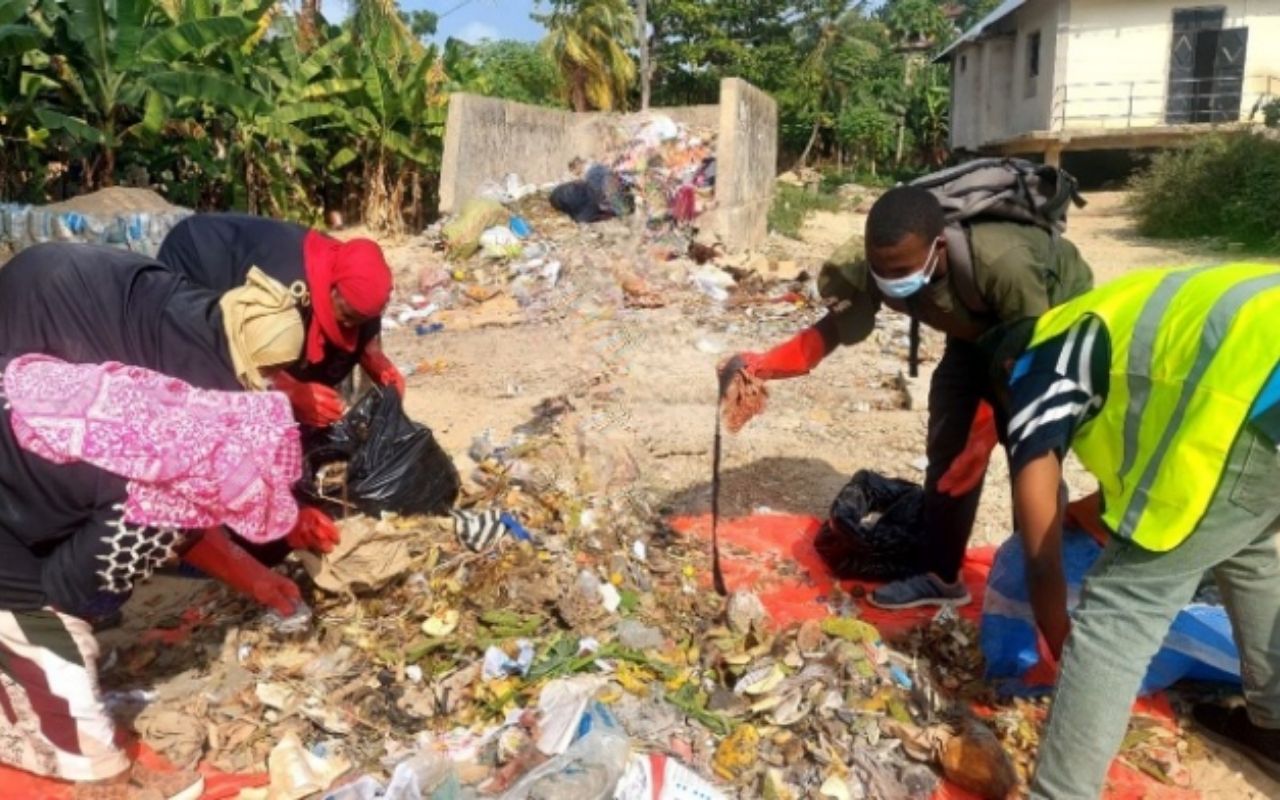
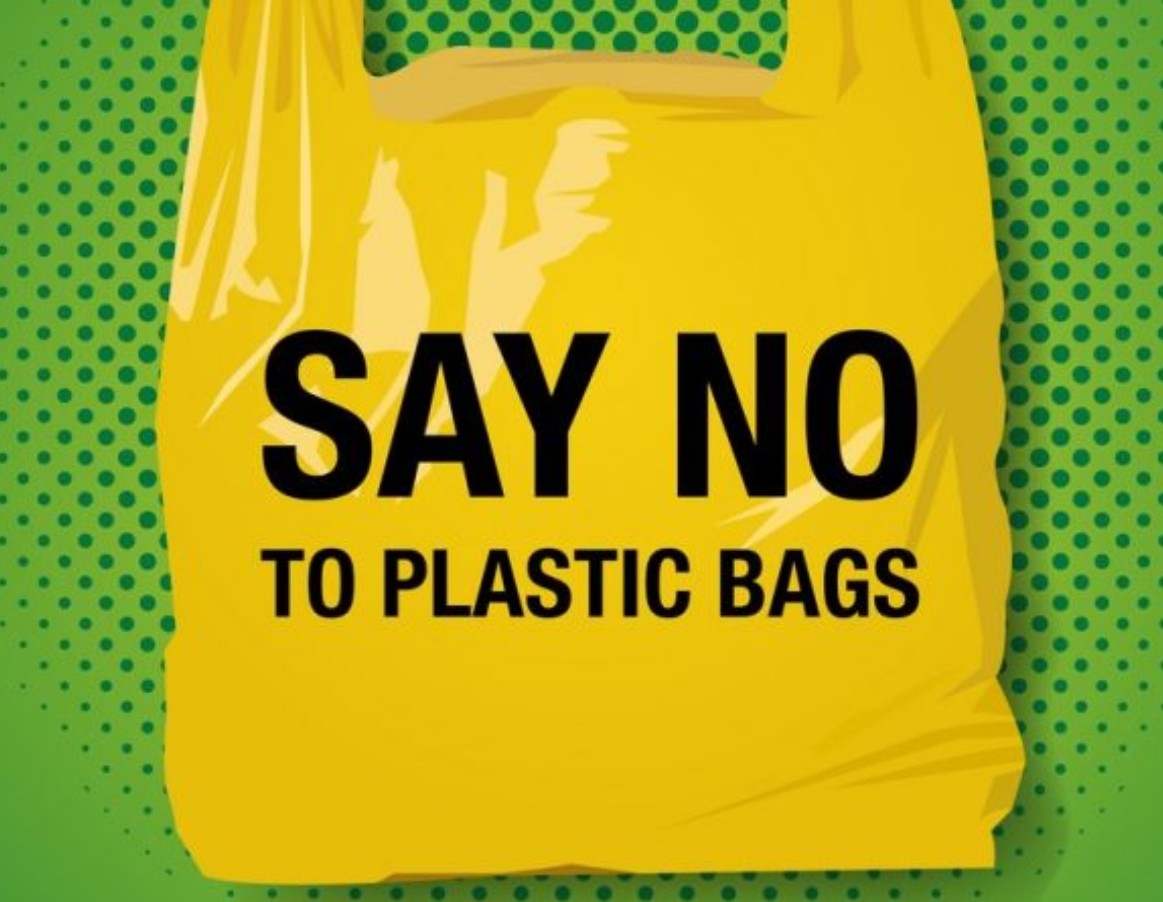
    Read the full document from [The Grenada Green Group](https://islandinnovation.co/wp-content/uploads/THE-GRENADA-GREEN-GROUP-TACKLES-THE-PLASTIC-BOTTLE-POLLUTION-PROBLEM.pdf) Grenada, known for its stunning beaches and lush green hills, faces a growing challenge: plastic pollution. Taking bold action against this environmental threat is the Grenada Green Group (G3), a non-governmental organization which was registered in 2014. The Grenada Green Group was founded by two tour operators who felt that the litter found throughout the island was not only an eyesore & sending the wrong message to tourists but also a health hazard. They made it their mission to try to tackle this, relying partially on the already existing Anti Litter Statutes passed in 2015. The group worked on eliminating single use plastic bags in grocery stores, eliminating Styrofoam containers for carry out food, awarding certificates to businesses which kept the premises litter free, doing presentations in school to engage young people in the fight against litter. One of the ways we did this was to ask the schools to organize a poster competition. The winning children were given cash prizes. There were several other initiatives but the most recent one, a campaign to collect plastic bottles, has been the most impactful. A chance encounter with a representative of Unite Caribbean resulted in obtaining a grant to initiate the bottle collection campaign & run it for 6 months. Data was collected on several components: The campaign under the Recycle OECS Project, focuses on collecting Polyethylene Terephthalate (PET) and High-Density Polyethylene (HDPE) bottles from across Grenada. These bottles are sent to the Queen’s Park Recycling Facility which is managed by the Grenada Solid Waste Management Authority (GSWMA), for processing Additional funding received, has enabled the Grenada Green Group to continue and expand the campaign with the co operation of the Grenada Solid Waste Management Authority and various communities throughout the island. It is our intention to add educational components to the campaign, specifically focusing on working with schools to engage young children. An effort will be made to reach out to all 6 parishes as well as our sister islands of Carriacou and Petite Martinique & guide them in establishing their own plastic bottle collection campaigns with guidance from the Grenada Green Group

    12345678910
    Read more
    Plastic pollution: Chinese island’s plastic waste turned into artworks
    Circular EconomyDecember 6, 2024

    Plastic pollution: Chinese island’s plastic waste turned into artworks

    Excerpt and Photo from france24.com As storm clouds gathered on a forgotten beach in China’s Miaodao islands, artist Fu Junsheng picked his way through piles of plastic waste washed up along the shoreline, looking for inspiration.

    Read more
    Jali Local Aboriginal Land Council votes to rebuild its flood-prone Cabbage Tree Island home
    Circular EconomyNovember 1, 2024

    Jali Local Aboriginal Land Council votes to rebuild its flood-prone Cabbage Tree Island home

    Photo: ABC North Coast: Hannah Ross. Retrieved from abc.net.au An Aboriginal community in northern NSW has voted to rebuild its island home almost three years after it was abandoned due to flooding. Nineteen houses will be rebuilt on Cabbage Tree Island near Ballina at a cost of $30 million, funded by the New South Wales Reconstruction Authority and the National Emergency Management Agency. A further $13 million has been allocated to the rebuild of community infrastructure including the Cabbage Tree Island Public School and local health centre. Jali Local Aboriginal Land Council said the decision marked a momentous turnaround from 12-months ago when the state government and the land council [deemed the island too high risk for habitation](https://www.abc.net.au/news/2023-09-01/cabbage-tree-island-flood-rebuild-poses-unacceptably-high-risk/102802630). At the time the NSW Planning and Environment Department wrote to the land council saying the “risks are so high they cannot in good faith financially support a rebuild on the island for residential purposes”.

    Read more
    Battling ocean plastic on Svalbard
    Circular EconomyNovember 1, 2024

    Battling ocean plastic on Svalbard

    Photo by Louise Krüger. Retrieved from oceanographicmagazine.com As oceanographer with Utrecht University in the Netherlands, Erik Van Sebille, explains: “Svalbard is at the end of a large conveyor belt circulation. A lot of the plastic from the US, Europe and so on, if it stays afloat, may end up there,” he says. The Norwegian Polar Institute estimates that there are over 79,000 tonnes of plastic in the deep water between Svalbard, Greenland and in the Barents Sea – the equivalent weight of about 50,000 cars. Every time there’s rough weather, storms or wind, that plastic washes up on shore and, if not washed out at sea again, stays there. Fortunately, this is about to change – at least for today. Only an hour after we’ve arrived and are settled in on the ship, we gear up in survival suits and head to the nearest beach. Wijdefjorden, the longest fjord of [Svalbard](https://oceanographicmagazine.com/features/svalbard-the-last-hunt-for-the-future/), opens out towards the northern coastline, and basking in the sun, it seems far from ghastly. Two volunteers and today’s polar bear guards disembark first to ensure the coast is clear. One of them is Sund. She swiftly dances out of her survival suit, steps into hiking boots and ascends the nearest hill. “Clear,” she radios back. Once confirmed, no bears in sight, the rest of us enter land, wiggling our way out of our survival suits, grabbing white plastic bags, and spreading along the beach to cover as much ground as possible. As if the race has begun, we start hunting for all pieces of trash we can find.

    Read more
    UNDP Supports Sustainable Land Management Practices in Rodrigues
    Circular EconomyNovember 1, 2024

    UNDP Supports Sustainable Land Management Practices in Rodrigues

    Excerpt and Photo from UNDP.ORG A three-day consultative workshop was organised in Rodrigues from 22 to 24 October under the ‘[Sustainable Land Management and Biodiversity Conservation in the Republic of Mauritius](https://www.undp.org/mauritius-seychelles/projects/mainstreaming-sustainable-land-management-and-biodiversity-conservation-republic-mauritius)’ (SLM) Project. Chaired by the Department Head of the Commission for Agriculture, Fisheries, Food Production, Forestry and Plant and Animal Quarantine, the workshop was attended by over 50 representatives from the various commissions of the Rodrigues Regional Assembly, institutions, NGOs and Farmers Associations. This initiative aimed at engaging key stakeholders, and gathering additional data and insights to inform project implementation and decision making. The Sustainable Land Management Project is funded by the Global Environment Facility, and implemented by the Ministry of Agro-Industry and Food Security, through the Forestry Service, in collaboration with the United Nations Development Programme (UNDP). It aims to address these issues by scaling up the adoption of sustainable land management in production landscapes in Mauritius and Rodrigues. The expected outcomes include a strengthened policy and institutional framework; the development of skills, tools and incentives to pilot and implement SLM practices; and improving knowledge management and gender mainstreaming. **Strengthening policy and institutional framework** The first day of the workshop focused on the legal component of the project and included presentations which highlighted specific laws on sustainable land management in Rodrigues. Participants engaged in group sessions on current unsustainable land management practices, gaps in existing legislation, and the main challenges preventing the implementation of these laws on the island. Discussions also touched on the effective implementation of regulations concerning Environmentally Sensitive Areas, noting that in Rodrigues, around [80% of the land area](https://ecosud.mu/wp-content/uploads/2019/09/ESA-Classification-Report-FINAL.pdf)falls within one of the designated ESA types. The feedback received from participants will help to strengthen the policy and institutional framework for the promotion of SLM in Rodrigues.

    Read more
    Islanders upcycle washed up plastic waste into boats
    Circular EconomySeptember 26, 2024

    Islanders upcycle washed up plastic waste into boats

    **On the Lamu island, off Kenya’s east coast, 47-year-old Usmail collects plastic which he then sells onto the Flipflopi Project.** The NGO was founded in 2016. It upcycles the waste into boats and furniture. Lamu is contending with mounds of plastic waste – some washed up on its beaches, others genrated by its residents. “We started collecting plastics a while ago,” Usmail says. “There used to be a lot of plastic waste in this area, Lamu. We collect the plastic waste and sell it to the organization at Ksh16 per-kilogram or about 16 cents in dollars, We do not have a job. That is where we get money to educate our children and also make a living.” The Flipflopi Project receives grants from other NGOs which they then use to buy plastic waste from locals. The co-founder detailshow the process unfolds at this facility. “We go to the community, and because we have some grant, we buy from the community,” Ali Skanda starts.

    Read more
    Tabarca’s dilemma: Balancing sun, sea, and sustainability
    Circular EconomySeptember 17, 2024

    Tabarca’s dilemma: Balancing sun, sea, and sustainability

    Known for its ecological importance, [Tabarca](https://euroweeklynews.com/2024/06/28/from-cauldrons-to-culinary-delight-legacy-of-tabarcas-el-caldero/) became a marine reserve in 1986. Despite its small size of 0.3 square kilometres and a population of about 60 residents, it attracts many visitors, especially in summer. In 2023, about 230,000 people visited Tabarca, with some summer days seeing over 10,000 tourists. This high number of visitors is putting pressure on the island’s fragile ecosystem. Originally, Tabarca relied on fishing, but now its economy depends on day-trippers. This shift has created an urgent need to preserve the island’s natural and cultural heritage while managing tourism sustainably.

    Read more
    BLUE ECONOMY: Draft territorial plan for the development of marine aquaculture in Saint-Martin
    Circular EconomySeptember 6, 2024

    BLUE ECONOMY: Draft territorial plan for the development of marine aquaculture in Saint-Martin

    **Development plans offer territories, particularly island territories, the opportunity to diversify their supply methods for seafood products, reduce pressure on fish stocks and ensure greater food security.** This project must be built with the entire population and in particular marine stakeholders, in order to arrive at a concerted project that meets local expectations. For the territory of Saint-Martin, this territorial plan identifies the potential species to be developed and the suitable sites for each species in order to guarantee the good development of this sector. In addition, marine aquaculture is also a relay for social and economic growth that provides sustainable jobs. This public consultation concerns the future draft territorial plan for the development of marine aquaculture in the territory. The complete file can be consulted from yesterday, Monday, September 2, until Wednesday, October 2, 2024, either on the website of the Collectivité of Saint-Martin (see information), or at the public service in the reception hall of the Collectivité hotel. Public participation in the project can be sent until October 2, 2024 by email to [[email protected]](/cdn-cgi/l/email-protection) or on the register made available in the reception hall of the Hôtel de la Collectivité.

    Read more
    Barbados: From Beach Paradise to Tech Haven
    Circular EconomyAugust 5, 2024

    Barbados: From Beach Paradise to Tech Haven

    In the heart of the Caribbean, an unexpected revolution is brewing. Barbados, long celebrated for its pristine beaches and vibrant culture, is rapidly transforming into a hotbed of innovation and entrepreneurship. This small island nation, barely visible on a world map, is making big waves in the global startup ecosystem, challenging perceptions and redefining its economic landscape. For decades, Barbados has relied heavily on tourism and offshore financial services to drive its economy. However, a new generation of ambitious Barbadians is writing a different story – one of technological innovation, social impact, and economic diversification. From fintech to edtech, healthtech to transportation solutions, Barbadian startups are addressing local challenges with global potential. At the forefront of this transformation is MedRegis, a startup that’s revolutionizing healthcare management in Barbados. In a country where paper-based medical records were the norm until recently, MedRegis is bringing healthcare into the 21st century with its digital platform. By digitizing medical records, MedRegis is not only improving patient care but also opening up possibilities for data-driven healthcare policies. The potential impact extends beyond Barbados, offering a model for other Caribbean nations grappling with similar healthcare challenges.

    Read more