VIS 2026VIS 2026 — Virtual Island Summit|Also: GSIS 2027GSIS 2027
Island Innovation Logo
About
Services
The Network
Events
Content Library
Contact Us

Subscribe to our newsletter. By submitting, you agree to our Privacy Policy.

Island Innovation

Island Innovation works with governments, institutions, and partners worldwide to support island-led sustainable economic development.

We Support The UN Development Goals

SDG 9: Industry, Innovation and InfrastructureSDG 11: Sustainable Cities and CommunitiesSDG 12: Responsible Consumption and ProductionSDG 13: Climate ActionSDG 14: Life Below WaterSDG 17: Partnerships for the Goals

Explore

AboutServicesNetworkEvents

Content

ArticlesNewsCareers

Ready to Connect?

Join the island innovation community

Get in Touch

About

  • About us
  • Case Studies
  • FAQs
  • Press
  • Careers
  • Contact

Services

  • Services Overview
  • Public & Media Relations
  • Strategic Communications

Network

  • The Island Network
  • Academic Council
  • Newsletter

Events

  • Our Events
  • Watch Past Events

Content

  • All Content Library
  • Videos
  • Articles
  • News
Privacy PolicyTerms of ServiceContact

© 2025 Island Innovation. All rights reserved.

    News

    Curated stories and analysis from islands and sustainability leaders worldwide.

    Filter by Core Theme

    All ThemesCircular EconomyClimate ActionConnectivity & DigitizationCulture & CommunityEnergy & TransportGreen Finance & EconomyOcean & BiodiversityPolicy & GovernanceTourism & Remote WorkWater & Food
    Showing 9 of 504 news items in Climate Action
    WHO launches first climate-health strategy in Fiji to protect lives and secure the future
    Climate ActionOctober 25, 2025

    WHO launches first climate-health strategy in Fiji to protect lives and secure the future

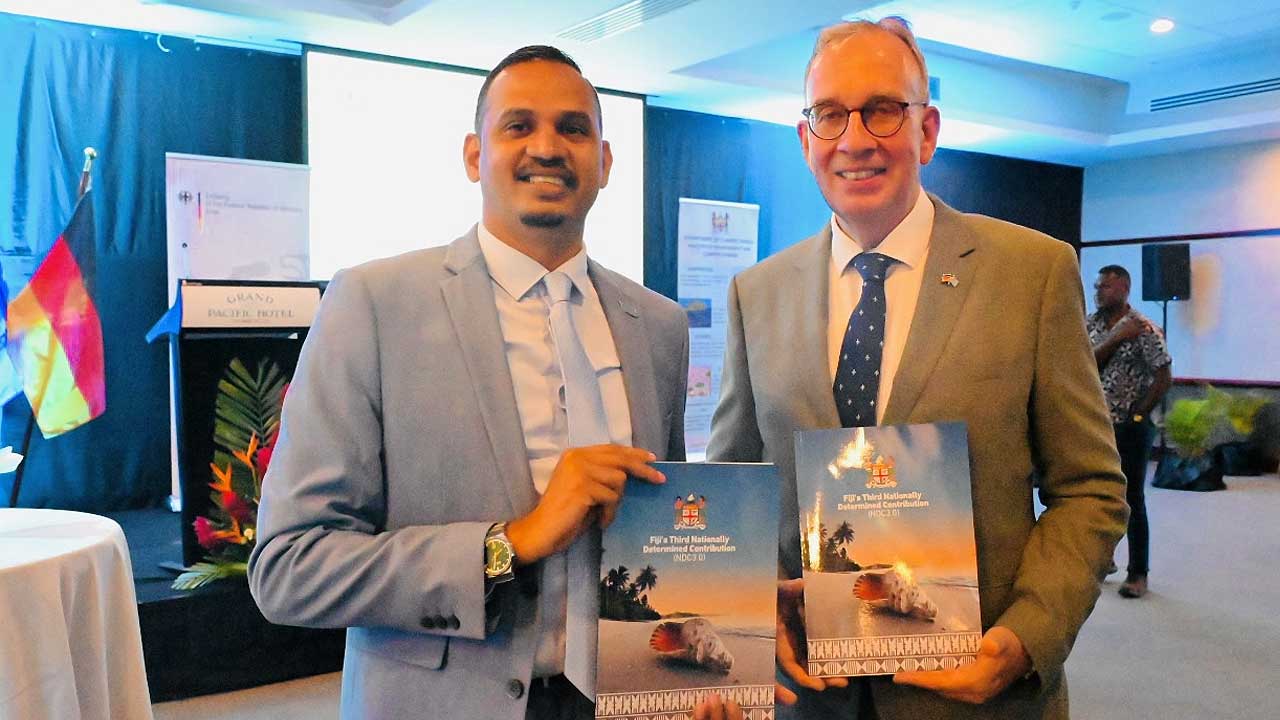
    Excerpt from pmn.co.nz The World Health Organization (WHO) has launched its first-ever regional strategy for climate and health action. The landmark plan was unveiled this week during a major health summit in Fiji, one of the Pacific island nations most acutely threatened by climate change. Health ministers and delegates from 38 countries across Asia and the Pacific are gathering in Nadi for the 76th Session of the WHO Regional Committee for the Western Pacific, where the 2025-2030 Strategic Plan for the WHO Asia-Pacific Centre for Environment and Health (ACE) was formally adopted.

    Read more
    12345678910
    Barbados is an Earthshot Prize 2025 Finalist
    Climate ActionOctober 17, 2025

    Barbados is an Earthshot Prize 2025 Finalist

    Excerpt from earthshotprize.org Barbados is responsible for just 0.01% of global greenhouse gas emissions, yet it stands on the climate frontline. Rising seas, stronger storms, droughts and floods threaten lives, livelihoods and ecosystems, jeopardising decades of social and economic progress. Across the Caribbean, unchecked climate impacts could cost as much as US$22 billion per year by 2050. The crisis is compounded by a debt trap. Climate-vulnerable nations are forced to borrow heavily simply to recover from disasters, pushing their economies deeper into unsustainable debt. This weakens their resilience and makes it harder to invest in sustainable development. What’s more, current international finance structures often limit rather than enable climate and nature spending. Without systemic reform, vulnerable nations like Barbados will remain under-resourced and exposed, caught between escalating climate hazards and financial systems that hold back progress. But Barbados is not waiting to be rescued, its leaders are shaping the changes needed to make the global financial system fairer and more effective for climate action.

    Read more
    Invasive Beetles Are Overrunning Oʻahu. Could New Methods Offer Relief?
    Climate ActionOctober 17, 2025

    Invasive Beetles Are Overrunning Oʻahu. Could New Methods Offer Relief?

    Excerpt from civilbeat.org Kimeona Kane drives his pickup truck around his neighborhood on the Windward side of Oʻahu pointing out dead and dying palm trees along the road. Nearby, the copious piles of mulch and rotting wood littering lots and private properties host the culprit: coconut rhinoceros beetles. Kane has been trying to get a handle on the infestation for the past four years as chair of the Waimānalo Neighborhood Board, but he said his calls to the state’s reporting hotline, 643-PEST, went nowhere. “I think at this point for Oʻahu, everyone’s kind of on their own,” he said. As the Department of Agriculture and Biosecurity focuses on stopping the spread of coconut rhinoceros beetles on Hawaiʻi island and Moloka‘i residents fight to block it from reaching their shores, resources to deal with Oʻahu’s growing invasion have been diverted elsewhere. Money allocated by the Legislature last session for the CRB Response Team offers some hope. According to the team’s Mike Melzer, the $500,000 will fund mitigation efforts on all of the islands, paying for things like pesticides, netting and biocontrol research. The team recently returned from a trip to the Southern Hemisphere with samples of the Malaysian-borne nudivirus, which has shown promise in controlling beetle populations but may also have a negative impact on native species. While officials tap into limited resources to help all the islands, they’re also trying to empower local communities to fight the problem on their own.

    Read more
    Metabolism of Islands Documentary
    Climate ActionOctober 13, 2025

    Metabolism of Islands Documentary

    This 34-minute documentary explores the provocative question: Can a small island truly achieve sustainability? Drawing on the powerful analogy that islands, much like living organisms, metabolize materials and energy to sustain their populations, the film reveals how unsustainable resource-use patterns—an “island metabolism” out of balance—can weaken resilience and amplify vulnerability to climate shocks. The Metabolism of Islands introduces a groundbreaking, evidence-based systems perspective that moves beyond short-term fixes toward holistic strategies for long-term sustainability. Featuring voices from across the world’s small island nations, the documentary brings together science, storytelling, and lived experience to illuminate both the challenges and pathways to resilience. Conceived and directed by Simron Singh, and edited by Alexandra Ulacio, the film is a collaborative global effort produced and funded by the International Society for Industrial Ecology (ISIE), in partnership with Metabolism of Islands (MoI) and the Climate Adaptation and Resilience (CLARE) program of the U.K. and Canada.

    Read more
    ‘You don’t get to aim big when you are somewhere small’: A teenager’s fight to end single use plastics on her Scottish island
    Climate ActionSeptember 30, 2025

    ‘You don’t get to aim big when you are somewhere small’: A teenager’s fight to end single use plastics on her Scottish island

    Excerpt from theguardian.com Tabby Fletcher, a 17-year-old from the Isle of Jura, off the west coast of Scotland, lives in what many people would probably assume is a pristine wilderness. Yet she regularly sees dead birds, their bodies entangled in plastic, among piles of waste washed up on the island’s beaches after powerful storms. “In January, we had Storm Éowyn,” she says. “Huge storm surges brought piles of plastic on to the beach close to my house. I saw dead birds wrapped in plastic. It was obvious from little bits inside their decomposing bodies they had eaten plastic. A stag with big orange and red plastic hanging off its antlers as two men hold the animal down View image in fullscreen Islanders untangling fishing floats from a stag’s antlers on Jura. Photograph: Tabby Fletcher “There was a dead goat too – its head stuck in a plastic fishing net. It’s really horrible.” She decided to start a petition calling on the Scottish government to ban all single-use plastics. This has now received more than 26,000 signatures and the backing of MSPs in the Highlands and Islands. “Around 50% of the plastic we use in the UK is single use, and by cutting these items out it creates a more sustainable footprint in the natural world,” she says. She describes images she has seen of red deer, which feed on seaweed, entangled in washed-up fishing nets. “If they are left to their own devices, they can starve to death. There are fibres of plastic that come off the netting too,” she says. Plastic endangers seabirds, seals and other wildlife through ingestion, entanglement and toxic contamination, while microplastics – tiny particles from broken-down plastic – pose a long-term threat to wildlife and human health. It can contain any of more than 16,000 chemicals, many of them linked to health issues. The teenager says that although her community organises beach clean-ups, plastic pollution is a growing problem that will only worsen unless action is taken nationally.

    Read more
    From the frontlines of climate change: Survey investigates stances of small-island states
    Climate ActionSeptember 30, 2025

    From the frontlines of climate change: Survey investigates stances of small-island states

    Photo credit: phys.org Excerpt from phys.org Small island states are among the most vulnerable to climate change, but there's surprisingly scant research revealing what such residents think about these threats, says Parrish Bergquist, assistant professor of political science in the School of Arts & Sciences. "This segment of the population is pivotal to global conversations around climate change. Their leaders are front and center when these discussions happen, but we know so little about what members of the public in these places think and feel." A paper published in the Proceedings of the National Academy of Sciences closely examines exactly that issue. Through a first-of-its-kind survey completed by Bergquist and national colleagues, the researchers gained insight into how residents across 55 small-island states and territories are approaching climate change.

    Read more
    On the front line of the climate crisis in Kiribati
    Climate ActionSeptember 16, 2025

    On the front line of the climate crisis in Kiribati

    Photo credit: discoverwildlife.com Excerpt from discoverwildlife.com Dozens of island nations and thousands of individual islands are threatened by rising sea levels all over the world. They are at the frontline of the impacts of carbon emissions as a result of burning coal, gas and oil, though almost all of them are tiny, if not negligible contributors to the overall ‘pot’. The Marshall Islands, for example, could disappear by the end of the century without radical action, but are responsible for just 0.01 per cent of emissions annually and have emitted 5 million tonnes of greenhouse gases since 1990. Here are some of the island groups most at risk.

    Read more
    Relocating communities: Tonga and the Solomon Islands call for more action now
    Climate ActionSeptember 10, 2025

    Relocating communities: Tonga and the Solomon Islands call for more action now

    Excerpt from tvniue.com Relocating communities is already happening in Tonga and the Solomon Islands. During the regional dialogue on Loss and Damage earlier in Samoa earlier this month, it was evident that the emotional toll of having to relocate because of the rising waters or forced displacement due to a natural disaster, communities are left with very little choice but to move. It’s been four years since the volcanic eruption in Tonga and subsequent tsunami forced displacement of communities from the outer islands to the mainland. Maikolo Fonua says there is still a lot of work to be done in terms of emotional trauma support. “Every time there is a tsunami warning like that earthquake in Europe. It triggers the memory of the tsunami so there is still a lot of work to be done in terms of the support, emotionally, mentally,” he said. “Assessing the impacts on the children, still a lot of work to be done to deal with the trauma” Maikolo Fonua says: “Some of them, they experienced shock, in terms of the changes of their livelihoods. Some of them rely on fishing for example, for their day to day subsistence but since they moved to the main island they can’t do fishing like they used to. There’s an extra cost of traveling out from the mainland to fish.” In the Solomon Islands, relocating communities is already being done because of the rising sea level however relocating entire communities is very complicated according to its National Coordinator for Loss and Damage, Derek Mane.

    Read more
    Fifteen new local projects launched under the Kiwa Initiative to strengthen Pacific resilience through Nature-based Solution
    Climate ActionSeptember 2, 2025

    Fifteen new local projects launched under the Kiwa Initiative to strengthen Pacific resilience through Nature-based Solution

    Photo: Group photo - kiwa inititiative local projects launch from iucn.org Excerpt from iucn.org Today, the International Union for Conservation of Nature in Oceania (IUCN-ORO), through the Kiwa Initiative, marked a significant milestone with the launch of 15 new locally led projects designed to harness Nature-based Solutions (NbS) in addressing the impacts of climate change across the Pacific. The event, held in Suva, Fiji, was attended by donor representatives, members of the diplomatic corps, and regional partners, reflecting a strong commitment to collaboration in building resilience for Pacific communities

    Read more