VIS 2026VIS 2026 — Virtual Island Summit|Also: GSIS 2027GSIS 2027
Island Innovation Logo
About
Services
The Network
Events
Content Library
Contact Us

Subscribe to our newsletter. By submitting, you agree to our Privacy Policy.

Island Innovation

Island Innovation works with governments, institutions, and partners worldwide to support island-led sustainable economic development.

We Support The UN Development Goals

SDG 9: Industry, Innovation and InfrastructureSDG 11: Sustainable Cities and CommunitiesSDG 12: Responsible Consumption and ProductionSDG 13: Climate ActionSDG 14: Life Below WaterSDG 17: Partnerships for the Goals

Explore

AboutServicesNetworkEvents

Content

ArticlesNewsCareers

Ready to Connect?

Join the island innovation community

Get in Touch

About

  • About us
  • Case Studies
  • FAQs
  • Press
  • Careers
  • Contact

Services

  • Services Overview
  • Public & Media Relations
  • Strategic Communications

Network

  • The Island Network
  • Academic Council
  • Newsletter

Events

  • Our Events
  • Watch Past Events

Content

  • All Content Library
  • Videos
  • Articles
  • News
Privacy PolicyTerms of ServiceContact

© 2025 Island Innovation. All rights reserved.

    News

    Curated stories and analysis from islands and sustainability leaders worldwide.

    Filter by Core Theme

    All ThemesCircular EconomyClimate ActionConnectivity & DigitizationCulture & CommunityEnergy & TransportGreen Finance & EconomyOcean & BiodiversityPolicy & GovernanceTourism & Remote WorkWater & Food
    Showing 9 of 386 news items in Culture & Community
    'The House of the Dragon' will be filmed in Gran Canaria: preparations begin at the Las Niñas dam
    Culture & CommunityMarch 11, 2026

    'The House of the Dragon' will be filmed in Gran Canaria: preparations begin at the Las Niñas dam

    Excerpt from canarias7.es Photo credit: Arcadio Suárez via Canarias7.es Spring will arrive in Gran Canaria brimming with fantasy . The production company behind the American blockbuster 'House of the Dragon' , one of the series in the fictional universe created from 'Game of Thrones', has selected the natural setting of the Las Niñas dam as one of the main locations to appear in the fourth season of the acclaimed international series. Several workers are already on site preparing the area to the liking of the fantasy saga's directors. From February 23rd until May 15th, the camping area and the recreational area are reserved for filming, so several restrictions can already be seen in the vicinity, such as fences or security guards , to prevent the most curious from entering the area where the series will be filmed.

    Read more
    12345678910
    How mountain terraces have helped Indigenous peoples live with climate uncertainty
    Culture & CommunityMarch 2, 2026

    How mountain terraces have helped Indigenous peoples live with climate uncertainty

    Excerpt from eco-business.com Indigenous communities have lived with changes to the climate for centuries. Their adaptations over those many years are based on their close observation of weather, water, soils and seasonal change, and they have been refined through generations of learning. That knowledge, though developed deep in the past, is increasingly useful in the modern world. As global temperatures rise, climate pressures are intensifying, with longer dry spells, stronger storms and more erratic rainfall. Terrace systems reflect Indigenous peoples’ long experience of living with environmental uncertainty in specific places and historical contexts. They offer ways of thinking about risk and long-term land use based on observation and intergenerational learning.

    Read more
    On Indonesia’s longest river, a Borneo community passes crucial public health milestone
    Culture & CommunityFebruary 18, 2026

    On Indonesia’s longest river, a Borneo community passes crucial public health milestone

    Excerpt from news.mongabay.com SEKADAU, Indonesia — Children’s laughter skimmed over water the color of mud as mothers wrung laundry over banks where the Sekadau joins the Kapuas, the longest river in Indonesia. Local testimony along the Kapuas River, which flows 1,143 kilometers (710 miles) east to west from Borneo’s Müller Mountains out into the Natuna Sea, suggests this river — like many flowing across the world’s largest archipelagic country — may be losing prominence as a center of community life. “The river is dirtier now and no longer a gathering place like before,” an older resident told researchers from Tanjungpura University downriver in Pontianak, the capital of West Kalimantan province, for a study published in September. But here in Sekadau, the river remains central to daily life — a place to bathe, wash vegetables, and, until recently, to defecate. Research conducted on the Kapuas from 2020-2022 and published in the Journal of Aquaculture and Fish Health last year recorded double the legal limit of lead, a heavy metal pollutant that impairs neurological development — and 24 times the maximum coliform bacteria level for rivers permitted by Indonesia’s government.

    Read more
    Displacement Capitalism in Barbuda: A Story of Greed, Resistance and Hope
    Culture & CommunityFebruary 11, 2026

    Displacement Capitalism in Barbuda: A Story of Greed, Resistance and Hope

    Excerpt from researchinginternaldisplacement.org The reality of people and even whole communities having to move due to adverse conditions has become one of the consequences of the present climate emergency. Although displacement, particularly evacuations intended to save lives, is justified in many situations, there are instances where displacement is used as ‘cover’ for something else. A catastrophic event in Barbuda, triggered by the 2017 Hurricane Irma disaster, provides insight into this other side of displacement. “For the first time in 300 years, there’s not a single living person on the island of Barbuda”. These were the words of Ronald Sanders, the ambassador of Antigua and Barbuda to the United States. He made this statement in the aftermath of Hurricane Irma and proceeded to make the case that the hurricane caused extensive damage, rendering the island, in his words and those of the administration he represents, “uninhabitable”. This conclusion, that an entire island was not fit to support its people, was arrived at even before official assessments were made by the relevant international agencies.

    Read more
    Building Media Resilience in African SIDS: Case studies from Comoros and São Tomé and Príncipe
    Culture & CommunityJanuary 25, 2026

    Building Media Resilience in African SIDS: Case studies from Comoros and São Tomé and Príncipe

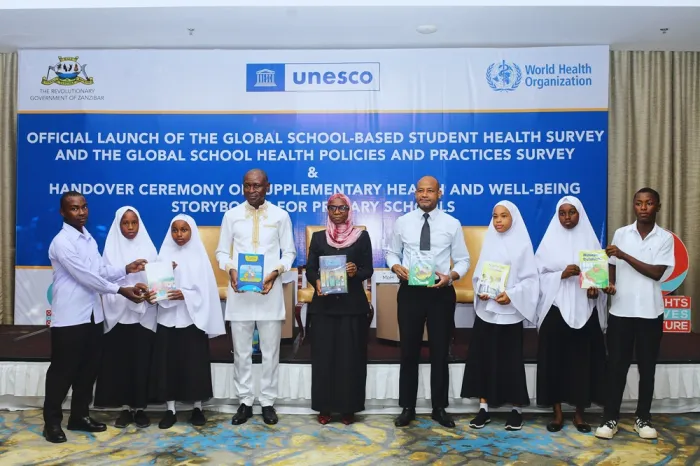
    Excerpt from unesco.org In Comoros and São Tomé and Príncipe, two African island nations regularly exposed to extreme weather, media outlets are key actors in informing the public during emergencies and fostering a culture of prevention. With support from a UNESCO initiative carried out in partnership with the African Union of Broadcasting, Al-Watwan in Comoros and the national radio of São Tomé and Príncipe are taking concrete steps to institutionalise disaster preparedness, shifting from reactive reporting into proactive resilience-building.

    Read more
    For Ukrainians in Vardø, the Arctic is a refuge, not a battleground
    Culture & CommunityJanuary 16, 2026

    For Ukrainians in Vardø, the Arctic is a refuge, not a battleground

    Excerpt from cryopolitics.com The Arctic is often perceived as a future military theatre. But while war rages to the south, it has become a safe haven for refugees from Ukraine and beyond. To many, Norway is a resolutely northern country. Yet the country whose name means “the north way” in Old Norse is also an eastern country. Norway’s coastline, which looks like a child’s scribblings, stretches all the way around the top of the Scandinavian Peninsula to Russia, where, one could say, east meets east. Teetering on an island off the coastline’s very edge is its easternmost town, Vardø. Famously, it lies east of Istanbul and Saint Petersburg.

    Read more
    Why Greenland is indispensable to global climate science
    Culture & CommunityJanuary 15, 2026

    Why Greenland is indispensable to global climate science

    Excerpt from theconversation.com A 30-minute stroll across New York’s Central Park separates Trump Tower from the American Museum of Natural History. If the US president ever found himself inside the museum he could see the Cape York meteorite: a 58-tonne mass of iron taken from northwest Greenland and sold in 1897 by the explorer Robert Peary, with the help of local Inuit guides. For centuries before Danish colonisation, the people of Greenland had used fragments of the meteorite to make tools and hunting equipment. Peary removed that resource from local control, ultimately selling the meteorite for an amount equivalent to just US$1.5 million today. It was a transaction as one-sided as anything the president may now be contemplating.

    Read more
    Samoa faces double-edged labour mobility sword
    Culture & CommunityJanuary 7, 2026

    Samoa faces double-edged labour mobility sword

    Excerpt from islandsbusiness.com SAMOA faces a double-edged sword as labour mobility schemes flood the economy with remittances while draining local talent. Monthly remittances soar to $ST70 million (Samoan Tala), accounting for a staggering 35 per cent of GDP, yet the exodus of skilled workers threatens essential public services and local businesses. Amid rising wage disparities and emotional tolls on families, the government grapples with balancing economic benefits against the stark realities of community disruption. “The schemes began in 2007 with New Zealand seasonal work and expanded with Australian programs in 2012 and 2018, merging into PALM to cover multiple industries,” said Dr Masami Tsujita, an Associate Professor of Development Studies at the National University of Samoa.

    Read more
    An island depends on him to run the ferry. Who will do it after Terry?
    Culture & CommunityMay 20, 2026

    An island depends on him to run the ferry. Who will do it after Terry?

    Excerpt from washingtonpost.com Terry Laird, following in the footsteps of his father and uncle, has spent his adult life keeping the people who live on a tiny Chesapeake Bay island connected. It’s 6:15 in the morning when 50-year-old Terry Laird starts work for the day. The moon illuminates the path he drives from his house to his little red-and-white boat, The Captain Jason. Little Terry, as he’s known on the island, unspools a thick brown rope and sets the boat free. He hops in the front seat and jets off. Orange and blue start coloring the sky.

    Read more