VIS 2026VIS 2026 — Virtual Island Summit|Also: GSIS 2027GSIS 2027
Island Innovation Logo
About
Services
The Network
Events
Content Library
Contact Us

Subscribe to our newsletter. By submitting, you agree to our Privacy Policy.

Island Innovation

Island Innovation works with governments, institutions, and partners worldwide to support island-led sustainable economic development.

We Support The UN Development Goals

SDG 9: Industry, Innovation and InfrastructureSDG 11: Sustainable Cities and CommunitiesSDG 12: Responsible Consumption and ProductionSDG 13: Climate ActionSDG 14: Life Below WaterSDG 17: Partnerships for the Goals

Explore

AboutServicesNetworkEvents

Content

ArticlesNewsCareers

Ready to Connect?

Join the island innovation community

Get in Touch

About

  • About us
  • Case Studies
  • FAQs
  • Press
  • Careers
  • Contact

Services

  • Services Overview
  • Public & Media Relations
  • Strategic Communications

Network

  • The Island Network
  • Academic Council
  • Newsletter

Events

  • Our Events
  • Watch Past Events

Content

  • All Content Library
  • Videos
  • Articles
  • News
Privacy PolicyTerms of ServiceContact

© 2025 Island Innovation. All rights reserved.

    News

    Curated stories and analysis from islands and sustainability leaders worldwide.

    Filter by Core Theme

    All ThemesCircular EconomyClimate ActionConnectivity & DigitizationCulture & CommunityEnergy & TransportGreen Finance & EconomyOcean & BiodiversityPolicy & GovernanceTourism & Remote WorkWater & Food
    Showing 9 of 166 news items in Energy & Transport
    This Quebec island loses its ferry for 2 months every year. Residents say it’s time for change
    Energy & TransportSeptember 6, 2024

    This Quebec island loses its ferry for 2 months every year. Residents say it’s time for change

    Photo: Isabelle Larose/Radio-Canada. Retrieved from cbc.ca For about two months out of the year, Ralph Josey must rely on his personal boat to transport large items from his home in Entry Island up to Cap-aux-Meules in Quebec’s Magdalen islands. As of Sunday, the small island of about 60 permanent residents will be without its permanent ferry, the MV Ivan-Quinn, as it undergoes annual maintenance. The technical shutdown from Sept. 1 to Oct. 19 means residents won’t be able to have trash pickup, ambulatory services or get their cars or big appliances to the mainland. “I mean right now if my vehicle breaks down I’m stuck,” said Josey. “We have our own boats … But why should we have to go through the expense of sailing to the main island?” Josey, who has lived there for nearly six decades, is among those calling for solutions or compensation. “It’s too long for a shutdown.… That’s our highway. That’s the only route we have off Entry,” said Josey, pointing to the difficulties the maintenance period causes for the island’s seniors.

    Read more
    12345678910
    Winds of change: Orkney Harbours’ path to the future
    Energy & TransportAugust 29, 2024

    Winds of change: Orkney Harbours’ path to the future

    Excerpt and Photo from pressandjournal.co.uk For years the ports have been at the forefront of the oil and gas sector, with crude oil moving through the Flotta Terminal since 1977. In addition, ship-to-ship operations of crude oil cargo have been conducted in Scapa Flow since 1980 and tankers have long used the site for sheltered anchorage. However, as the transition to Net Zero continues, the need to capitalise on the new market of renewables is clear. That point is emphasised by a reduction in oil and gas coming through the Flotta terminal. The clearest opportunity in the North Sea renewables sector undoubtedly comes from offshore wind. But the ports face a number of challenges to fully harnessing that potential, not least the financial aspect. Paul Olvhoj business development manager at Orkney Harbours, said: “Offshore Wind is obviously the main opportunity for us going forward. The huge scale of developments planned in Scotwind / INTOG and others on paper provides a strong income stream for the supply chain as it transitions from fossil fuels. However, the technical and financial challenges for these are placing a burden on business owners, in particularly ports. The demand for infrastructure projects to be fast tracked in time to support developments prior to contractual agreements means that investment is a major hurdle.”

    Read more
    Perspective Pivot: Mapping a Landscape of Voices in Oahu Changes Energy Planning
    Energy & TransportAugust 26, 2024

    Perspective Pivot: Mapping a Landscape of Voices in Oahu Changes Energy Planning

    Photo from Kendall Leonard, Hawaii Natural Energy Institute. Retrieved from cleantechnica.com At the National Renewable Energy Laboratory (NREL), researchers often serve as guides who help communities navigate the world of renewable energy solutions. But in community-based technical assistance projects, the guiding role goes both ways: Researchers need local perspectives to fill contextual knowledge gaps and create more meaningful energy solutions. “Energy problems are people problems. We prioritize the interests of people and develop tools to serve them,” said Katy Waechter, an NREL researcher whose people-focused lens helped her team make critical adjustments during an energy resilience project for the island of Oahu in Hawaii. Over the course of six weeks, Waechter—along with representatives from the Hawaiian Electric utility and Hawaii Natural Energy Institute, affiliated with the University of Hawaii—traveled the 600-square-mile island to hear how individuals perceived independently owned hybrid microgrids. No amount of preliminary research could prepare the team for what they discovered: candid concerns, fresh perspectives, and previously uncharted priorities that ultimately pivoted the team’s research direction to better inform Oahu-wide energy planning.

    Read more
    On a rural Hawaiian island, solar provides a path to energy sovereignty
    Energy & TransportAugust 16, 2024

    On a rural Hawaiian island, solar provides a path to energy sovereignty

    Photo: Todd Yamashita. Retrieved from grist.org Like many homesteaders on the island of Molokaʻi, Kailana Place grew up off-grid, on 40 acres of family land designated for Native Hawaiians. Living in repurposed school buses surrounded by fields of red volcanic clay and kiawe trees “was a glamping lifestyle,” joked the social worker and mother of three, a way of life powered by kerosene and propane. Three years ago, those fuels sparked a devastating fire. Neighbors helped Place and her husband, Ikaika, build a new house with rooftop solar and a battery. Even now, the buzz of constant, reliable power has yet to wear off. Beyond ensuring continuous internet access and a freezer for fish and venison — most residents depend upon subsistence fishing, hunting, and farming — their asthmatic son no longer relies on a generator to power his inhaler. “It’s unreal,” said Ikaika Place. “My wife has never had a house where she could just switch on the lights.” It’s been a radical change. When it comes to electricity, residents of Molokaʻi get by with as little as possible. [Consumption rates](https://www.hawaiipublicradio.org/molokai-news/2013-06-03/molokais-soaring-electric-rates) on this rural island are the lowest in the Hawaiian Archipelago, and energy costs are the most expensive in the state, which pays the nation’s [highest price per watt](https://www.hawaiianelectric.com/billing-and-payment/rates-and-regulations/average-price-of-electricity). For the 7,300 or so residents, that often means forgoing the luxury of reliable power. In fact, the cost and challenges of [accessing utilities](https://www.civilbeat.org/2021/09/molokai-has-an-electricity-problem-this-co-op-wants-to-change-that/) prompt many to live off the grid altogether.

    Read more
    Faroe Islands: Inside the undersea network of tunnels
    Energy & TransportJuly 23, 2024

    Faroe Islands: Inside the undersea network of tunnels

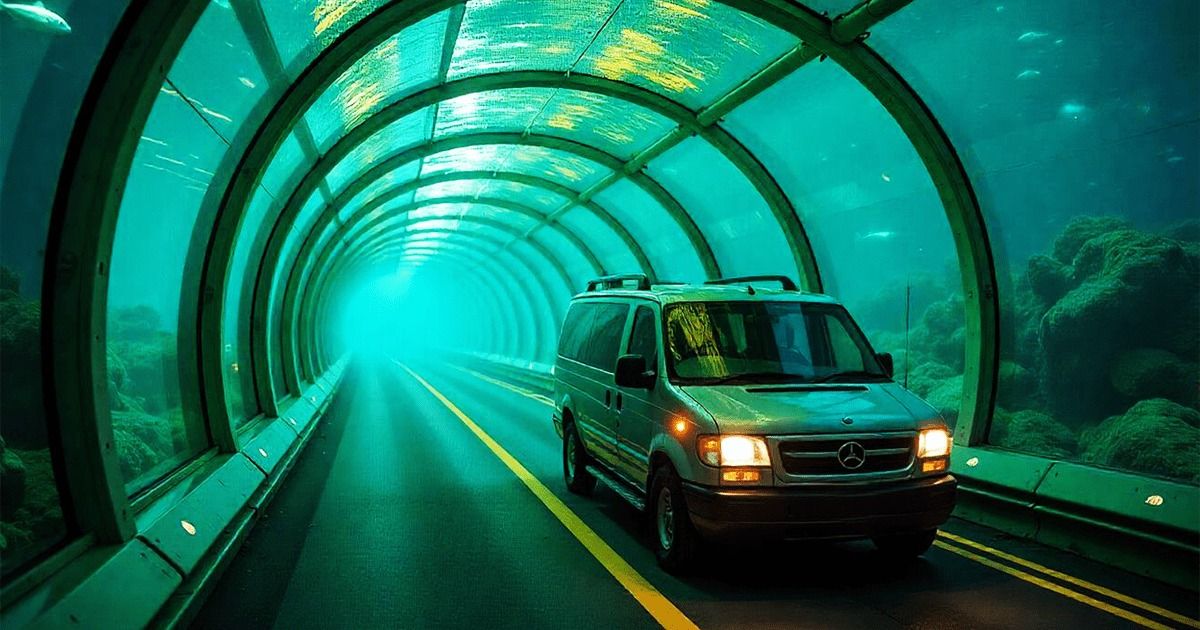
    High in the North Atlantic, the Faroe Islands is an isolated archipelago home to just 54,000 people. Tunnel building began in the 1960s and has transformed this tiny island nation both geographically and socially. More than two dozen tunnels now link communities that were once separated by mountains or sea. The newest tunnels are engineering marvels burrowing under the sea. Recently, the longest tunnel yet opened to the southern island of Sandoy, bringing change to the lives of its small community.

    Read more
    Design of a solar island with a water-battery storage system for Lake Ziway islanders in Ethiopia
    Energy & TransportJuly 12, 2024

    Design of a solar island with a water-battery storage system for Lake Ziway islanders in Ethiopia

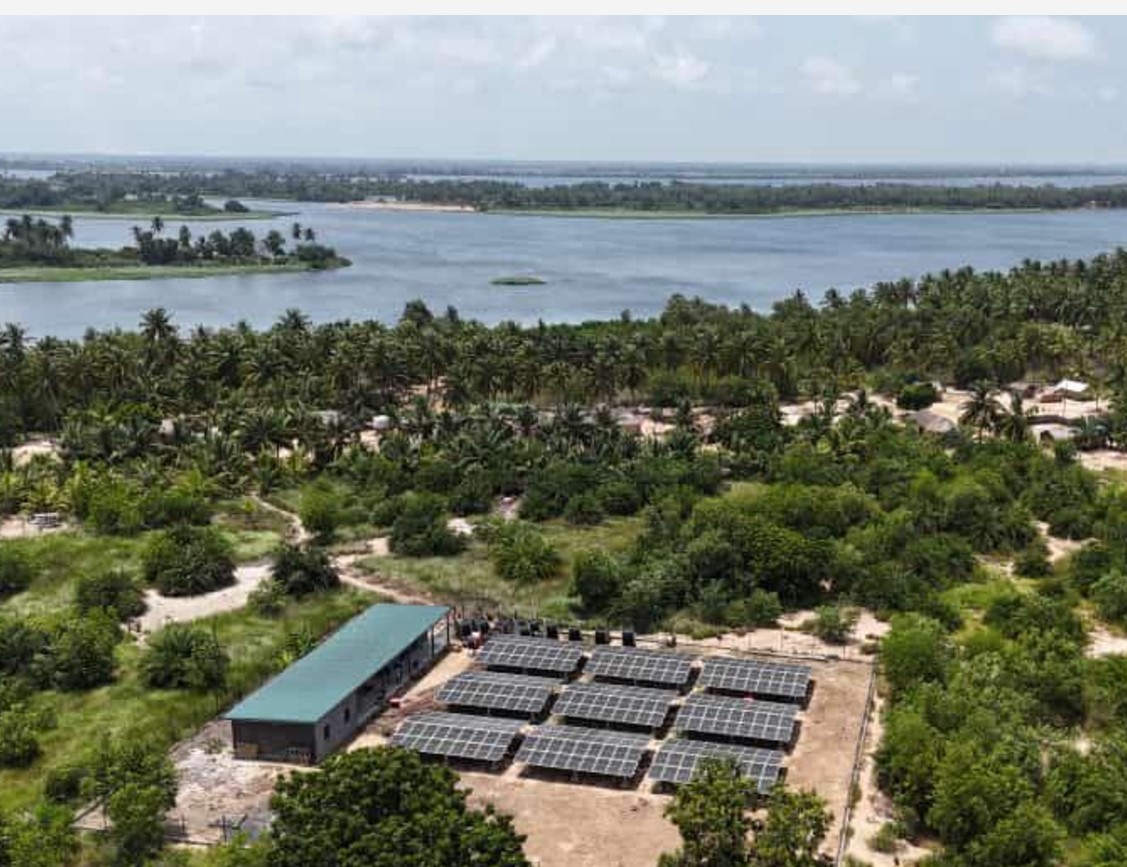
    Access to reliable electricity remains a challenge for millions in remote African villages, including Lake Ziway’s islands in Ethiopia. This study introduces an integrated electricity system for Tulu Gudo Island, combining floating photovoltaics (FPV), pumped-hydro storage (PHS) and diesel generators (DGEs) to overcome energy constraints, land scarcity and sustainability issues. The study assesses electricity demand and solar-PHS potential using LiDAR-based digital elevation model (DEM) data and Geographic Information Systems (GIS). PVsyst and HOMER Pro optimize the system based on net present cost (NPC), cost of energy (COE) and its ability to support a water-energy-food (W-E-F) nexus approach. An optimized configuration with 32.2 KWp FPV and two PHS units (PH: 245 KWh (508 KWh)) meets Tulu Gudo Island’s energy needs through a cycle charging strategy (CCs). This configuration offers economic and environmental sustainability, with an NPC of $154,265 and a COE of $0.140/KWh, while conserving 8760 m3 of water. It integrates successfully with the W-E-F nexus approach, achieving a 7% increase in electricity generation and a 2.4% higher capacity factor compared to conventional setups. The study validates results through comparisons with other simulation tools, ensuring accuracy. This hybrid electricity system has potential applicability in regions with similar conditions worldwide.

    Read more
    Beaver Island takes early steps to test wave energy in its waters
    Energy & TransportJuly 12, 2024

    Beaver Island takes early steps to test wave energy in its waters

    Excerpt and Photo from greatlakesnow.org A project off the shore of Beaver Island could harness the power of Lake Michigan’s waves to generate renewable energy. Right now, the island’s roughly 600 year-round residents get electricity from an underwater cable and diesel generators. But the community has worked toward renewable energy for a while. For instance, in 2022 it was one of 12 remote communities to [receive](https://www.energy.gov/articles/doe-support-clean-energy-transition-12-remote-and-island-communities) Department of Energy grants to identify renewable energy and energy efficiency opportunities, and it’s [exploring](https://www.mlive.com/public-interest/2023/12/beaver-island-explores-community-solar-project-for-energy-security.html) community solar. Now, a [team with the University of Michigan](https://graham.umich.edu/activity/29385) is collaborating with Beaver Island residents to develop a wave energy converter for the island. Wave energy converters use the movement of the water to generate electricity. The research team will spend the next couple years developing a prototype to install in the waters off the island.

    Read more
    Norway proposes first acreage for deep sea mining in Arctic
    Energy & TransportJuly 2, 2024

    Norway proposes first acreage for deep sea mining in Arctic

    Photo credit: Greenpeace. Retrieved from energyvoice.com Norway is inviting comments on Arctic seabed areas it plans to offer for [deep sea mining](https://www.energyvoice.com/markets/479398/deep-sea-mining/) ahead of formally awarding permits for the first time. The Nordic country is one of the first to take a step that has been highly criticized by environmental and fishing groups due to the possible [damage to marine life](https://www.energyvoice.com/markets/482698/deep-sea-mining-could-threaten-whales-and-dolphins-scientists-warn/). The European Parliament has also voiced concern, while the bloc’s green deal chief, Maros Sefcovic, said in March that the European Union would monitor the process. Norway is not a member of the bloc. The government on Wednesday proposed to put forward 386 blocks in the Arctic as part of the first licensing round. The area makes up about 38% of the 280,000 square kilometers (108,000 square miles) opened for exploration of minerals on the continental shelf off the Norwegian coast earlier this year, with backing of the country’s parliament. The government plans to award licenses in the first half of next year, Energy Minister Terje Aasland said on Wednesday.

    Read more
    Solomons Participate in Pacific-Wide Project Highlighting Potential of Solar Energy
    Energy & TransportJune 19, 2024

    Solomons Participate in Pacific-Wide Project Highlighting Potential of Solar Energy

    Photo source: uq.edu.au. Retrieved from solomontimes.com The Solomon Islands continue to lead by example as the Governor General Residence has been fitted with new solar panels as part of the “Solarization of Residences of Pacific Heads of State Project”. This $1.3 million USD programme is funded by the Government of India with support from the Pacific Island Development Forum (PIDF), United Nations Development Programme (UNDP), United Nations Office of South-South Cooperation (UNOSCC) and nonprofit Solar Head of State (SHOS). The Solomon Islands joins Fiji, Tonga, and Tuvalu in successfully solarizing their heads of state. An inclusive initiative meant to develop inter/intra-regional cooperation between Small Island Developing States (SIDS) to implement the Sustainable Development Goals, PIDF, UNOSCC, and UNDP are committed to fostering multi-stakeholder engagements across the Pacific. The photovoltaic units were donated by manufacturer Solaria through a public-private partnership to highlight the benefits of solar energy and the development of green jobs.

    Read more