VIS 2026VIS 2026 — Virtual Island Summit|Also: GSIS 2027GSIS 2027
Island Innovation Logo
About
Services
The Network
Events
Content Library
Contact Us

Subscribe to our newsletter. By submitting, you agree to our Privacy Policy.

Island Innovation

Island Innovation works with governments, institutions, and partners worldwide to support island-led sustainable economic development.

We Support The UN Development Goals

SDG 9: Industry, Innovation and InfrastructureSDG 11: Sustainable Cities and CommunitiesSDG 12: Responsible Consumption and ProductionSDG 13: Climate ActionSDG 14: Life Below WaterSDG 17: Partnerships for the Goals

Explore

AboutServicesNetworkEvents

Content

ArticlesNewsCareers

Ready to Connect?

Join the island innovation community

Get in Touch

About

  • About us
  • Case Studies
  • FAQs
  • Press
  • Careers
  • Contact

Services

  • Services Overview
  • Public & Media Relations
  • Strategic Communications

Network

  • The Island Network
  • Academic Council
  • Newsletter

Events

  • Our Events
  • Watch Past Events

Content

  • All Content Library
  • Videos
  • Articles
  • News
Privacy PolicyTerms of ServiceContact

© 2025 Island Innovation. All rights reserved.

    News

    Curated stories and analysis from islands and sustainability leaders worldwide.

    Filter by Core Theme

    All ThemesCircular EconomyClimate ActionConnectivity & DigitizationCulture & CommunityEnergy & TransportGreen Finance & EconomyOcean & BiodiversityPolicy & GovernanceTourism & Remote WorkWater & Food
    Showing 9 of 86 news items in Green Finance & Economy
    Prince Edward Island Leading by Example
    Green Finance & EconomyMarch 28, 2024

    Prince Edward Island Leading by Example

    As a young person from the vibrant island nation of Trinidad and Tobago, I am thrilled to share my excitement about attending the upcoming [Global Sustainable Islands Summit 2024](https://islandinnovation.co/events/global-sustainable-islands-summit/), set to take place in the enchanting province of Prince Edward Island (PEI). This summit holds immense promise, not only in terms of professional development, but also in the opportunity it presents to explore and contribute to the crucial dialogue surrounding sustainability and green technology. PEI’s commitment to achieving net-zero emissions by 2040 is commendable, and sets a remarkable precedent for islands worldwide. It’s inspiring to witness a place — Canada’s smallest province, nestled in the Maritime region — dedicated to propelling renewable energy and embracing green initiatives, aligning perfectly with my aspirations for a more sustainable future. The summit’s venue, the renowned Rodd Crowbush Resort, promises to provide an ideal setting for meaningful discourse and collaboration. From state-of-the-art meeting facilities to tranquil oceanfront views, every aspect seems meticulously designed to foster productive discussions and moments of reflection alike.

    Read more
    12345678910
    Bridging the sustainability gap between Caribbean Nations
    Green Finance & EconomyFebruary 13, 2024

    Bridging the sustainability gap between Caribbean Nations

    Excerpt and Photo from climatetrackercaribbean.org “It is imperative that we devise strategies to bridge the sustainability gaps between Island Nations.” Words from James Ellsmoor, founder and Director of Island Innovation, a network operating across island communities across the globe. Serving as a beacon of hope in the Caribbean, the organization’s major role is to convey people and stimulate information-sharing to implement innovative solutions to pressing environmental challenges. For years, Island Innovation has spearheaded sustainable development in the Small Island Developing States (SIDS). The organisation does not directly implement projects on the ground. Rather, they have a network of non-governmental organizations, the private sector, media, universities and academia and serve as a bridge across all these sectors whilst considering their respective roles.

    Read more
    Building plans for Cleantech Innovation Centre unveiled
    Green Finance & EconomyDecember 18, 2023

    Building plans for Cleantech Innovation Centre unveiled

    Excerpt and Photo from princeedwardisland.ca Plans for the Cleantech Park in Georgetown, which include the Cleantech Innovation Centre (CIC), were made public today. CIC will house the Cleantech Academy, a joint initiative between Holland College and UPEI. Students will work collaboratively with local industry to develop cutting-edge environmental solutions that can be brought to market. Early design plans include net-zero ready elements. Demonstrating the province’s commitment to carbon sequestering, the building will use an exposed timber structural system. It will be as airtight as possible, reducing the amount of energy used by the building with passive solar windows, along with planted and reflective roof surfaces. The building’s planned solar panels will not only generate energy but will also be a roof top classroom where various types of solar panels can be installed so students and researchers can study, test and collect solar energy data in real-world conditions. Digital dashboards will be located throughout the centre to show instant readings on the building’s energy use and energy savings. The inaugural program, unveiled by the Cleantech Academy in partnership with Holland College, is the post-graduate certificate in [Sustainable Business Leadership(link is external)](https://www.hollandcollege.com/programs/sustainable-business-leadership-post-graduate-certificate.php). This program is designed to empower students with the knowledge, essential skills, and practical experience required to spearhead organizations toward sustainable practices and implement innovative cleantech solutions.

    Read more
    Can Avinash Persaud Convince Capitalists to Embrace Green Growth?
    Green Finance & EconomyDecember 5, 2023

    Can Avinash Persaud Convince Capitalists to Embrace Green Growth?

    Avinash Persaud is impatient with his audience. “I was born into the moral imperative of development,” he tells diplomats gathered in March at the G-20 Sherpas Meeting in India. “My growing up was a realization that moral imperative is not enough.” Development officials have descended on the lush coastal state of Kerala to discuss “woman-led development,” “bridging the digital divide,” and other subjects on which moral grandstanding is endemic. Persaud seems short-tempered. He rushes through a flat personal introduction and moves on to the proposal he was invited to discuss: a plan to lower the cost of borrowing for green investment in poor countries. India, this year’s G-20 president, has asked this statesman from a tiny Caribbean island to give the keynote address. Since 2020, Persaud, who is climate envoy to Barbados Prime Minister Mia Mottley, has vaulted to prominence in the small and sharp-elbowed world of development finance, advising big industrializing economies such as Brazil and Pakistan. His warm reception in India is partly due to the lectures he won’t deliver. He is trying fix a lopsided global financial system, not nagging anyone to shut off coal.

    Read more
    Turks And Caicos Islands, The Delicate Balance Between Development And Preservation
    Green Finance & EconomyNovember 21, 2023

    Turks And Caicos Islands, The Delicate Balance Between Development And Preservation

    Like myself, some citizens are often skeptical about any major developments and rapid population growth across these islands. It is seen as a danger in commoditising deeply held traditions so closely linked to individuals and our collective identity. But there is a caveat. Many still see it as the primary way to keep these tiny islands alive and to survive. Tourism is the bread and butter of this tiny British Overseas Territory, with close to US$800 million annually. This alone corresponds to approximately 75% of the country’s gross domestic product. Although Providenciales is the main hub for visitors via air travel, many are unaware that the sister islands are only a hop, skip and a jump away either by an interconnecting flight or the local ferry boats. In recent years, visitors have been flocking to the historical island of Grand Turk which is the capital of Turks and Caicos Islands, although, in terms of development, it may not appear to be. On this island in particular, over 80 percent of the residents depend to some extent on tourism. Grand Turk has a number of the amenities as most major cities, but still gives you that small town feel. Like the sister island, Salt Cay, some supplies are limited. There is a fairly large selection of groceries at the supermarkets, however, healthy foods come at a high price. What residents and visitors can depend on is fresh catch of the day, which is regularly available by the local fishermen at reasonable prices. Those in the tourism business tend to try and earn as much of their income as possible from visitors during the peak tourism season which is between November and April.

    Read more
    Small Islands, big problems: Can Bitcoin fix this?
    Green Finance & EconomyNovember 7, 2023

    Small Islands, big problems: Can Bitcoin fix this?

    Photo from cointelegraph.com Cointelegraph recently traveled to Cape Verde, West Africa, to explore whether Bitcoin could be a tool for progress. In the latest on-the-ground video documentary from Cointelegraph, global reporter Joe Hall investigates the remittances market, cash economies, and the challenges and opportunities faced by small island nations worldwide. Cape Verde, officially the Republic of Cabo Verde, is an island nation in the central Atlantic Ocean. Cape Verde comprises 10 main islands and several smaller islets, sitting 570 kilometers (350 miles) west of [Senegal, West Africa](https://cointelegraph.com/magazine/bitcoin-senegal-why-how-african-country-using-btc/). Hall discovers that more Cape Verdeans live abroad than on the country’s islands. Due to its small land mass, it struggles to cultivate and export goods abroad. The islanders of Cape Verde, especially Sal, rely on tourism to stimulate the economy, and relatives living abroad send money home. The combination of a tourism and remittance-based economy presents multiple issues. Due to the presence of tourists year-round, Sal uses three currencies: the local Escudo, the U.S. dollar, and the Euro, although Hall discovered it’s also possible to pay in British pounds. Mastercard and Visa charge upward of 4% for transaction fees in stores, which merchants often pass on to customers.

    Read more
    Filipino, Chilean scientists: Small islands, invasive species need research, policy attention
    Green Finance & EconomyOctober 2, 2023

    Filipino, Chilean scientists: Small islands, invasive species need research, policy attention

    Filipino and Chilean scientists recently advised governments and communities of the significance of safeguarding small islands and warned them against the aggressive rates of invasive alien species that contribute to biodiversity loss. In a recently published [article](https://www.nature.com/articles/s44185-023-00023-5.epdf?sharing_token=PJTV4PPd_X9m1d__WNVrVNRgN0jAjWel9jnR3ZoTv0NDqJe5cDX93JACnlpHZmWYOMU094KNt_OFNJpLCGb8QLiQ6395LFZAms-MeJYj1K7PEh8e2uzvhTEEKM1CHnYSl9Z2A0YpXjarkBNA10vHX4plUpOuoiM-IdBF7dueUKo%3D) in the npj Biodiversity journal, Andrea Monica Ortiz, Laurice Jamero, Silvio Crespin, Cecilia Ramirez, Denise Matias, Jameela Joy Reyes, Anibal Pauchard, and Tony La Viña of the Ateneo School of Government highlighted the need to include small islands in research and policy attention. Small islands are not only more vulnerable to climate change and biodiversity loss but they also play a vital role in the ecosystem and the stability of human life on Earth. While the Small Islands Developing States (SIDS), a political group of 39 states and 18 associate members of the United Nations regional commissions, have uplifted the case of small islands in the global policy sphere, it is still limited to those part of the assemblage.

    Read more
    The land and sea routes to 2030: a call for greater attention on all small islands in global environmental policy
    Green Finance & EconomySeptember 12, 2023

    The land and sea routes to 2030: a call for greater attention on all small islands in global environmental policy

    Photo by Costa Rica Drone Tours from [Pexels](https://www.pexels.com/photo/green-trees-near-blue-sea-13501101/) Islands have unique vulnerabilities to biodiversity loss and climate change. Current Nationally Determined Contributions under the Paris Agreement are insufficient to avoid the irreversible loss of critical island ecosystems. Existing research, policies, and finance also do not sufficiently address small islands’ social-environmental challenges. For instance, the new Global Biodiversity Framework (GBF) mentions islands in the invasive species management target. This focus is important, as islands are at high risk to biological invasions; however, this is the only GBF target that mentions islands. There are threats of equal or greater urgency to small islands, including coastal hazards and overexploitation. Ecosystems such as coral reefs and mangroves are crucial for biodiversity, coastal protection, and human livelihoods, yet are unaddressed in the GBF. While research and global policy, including targeted financial flows, have a strong focus on Small Island Developing States (SIDS), the situation of other small islands has been largely overlooked. Here, through a review of policy developments and examples from islands in the Philippines and Chile, we urge that conservation and climate change policies place greater emphasis on acknowledging the diversity of small islands and their unique governance challenges, extending the focus beyond SIDS. Moving forward, global policy and research should include the recognition of small islands as metacommunities linked by interacting species and social-ecological systems to emphasize their connectivity rather than their isolation. Coalition-building and knowledge-sharing, particularly with local, Indigenous and traditional knowledge-holders from small islands, is needed to meet global goals on biodiversity and sustainable development by 2030.

    Read more
    Seychelles Pioneers Novel Financing Instruments and Taps IMF Climate Facility
    Green Finance & EconomyAugust 22, 2023

    Seychelles Pioneers Novel Financing Instruments and Taps IMF Climate Facility

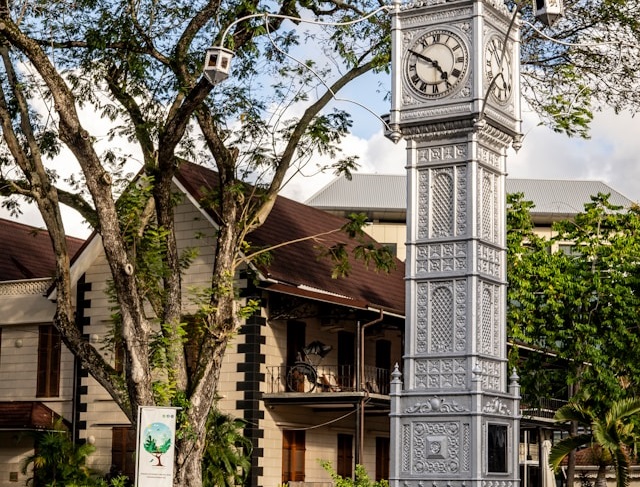
    Photo retrieved from imf.org Seychelles is successfully balancing conservation and economic development by tapping innovative financing instruments. The East African island nation relies largely on tourism and fishing for revenue and was the first country to issue a blue bond and to designate its fragile coastal areas for protection in return for a novel deal relieving it of part of its sovereign debt. It is now also the second African country, after Rwanda, to access the [IMF’s Resilience and Sustainability Facility](https://www.imf.org/en/About/Factsheets/Sheets/2023/Resilience-Sustainability-Facility-RSF) (RSF)—funding aimed at helping countries with limited room in their budget address long-term challenges, such as climate change and pandemic preparedness. In an interview with Country Focus, Naadir Hassan, Seychelles’ Minister of Finance, National Planning and Trade, and Calixte Ahokpossi, IMF Mission Chief, talk about the RSF and Seychelles’ innovative approach to financing its climate goals.

    Read more