VIS 2026VIS 2026 — Virtual Island Summit|Also: GSIS 2027GSIS 2027
Island Innovation Logo
About
Services
The Network
Events
Content Library
Contact Us

Subscribe to our newsletter. By submitting, you agree to our Privacy Policy.

Island Innovation

Island Innovation works with governments, institutions, and partners worldwide to support island-led sustainable economic development.

We Support The UN Development Goals

SDG 9: Industry, Innovation and Infrastructure
SDG 11: Sustainable Cities and Communities
SDG 12: Responsible Consumption and Production
SDG 13: Climate Action
SDG 14: Life Below Water
SDG 17: Partnerships for the Goals

Explore

AboutServicesNetworkEvents

Content

ArticlesNewsCareers

Ready to Connect?

Join the island innovation community

Get in Touch

About

  • About us
  • Case Studies
  • FAQs
  • Press
  • Careers
  • Contact

Services

  • Services Overview
  • Public & Media Relations
  • Strategic Communications

Network

  • The Island Network
  • Academic Council
  • Newsletter

Events

  • Our Events
  • Watch Past Events

Content

  • All Content Library
  • Videos
  • Articles
  • News
Privacy PolicyTerms of ServiceContactManage email preferences

© 2025 Island Innovation. All rights reserved.

    News

    Curated stories and analysis from islands and sustainability leaders worldwide.

    Filter by Core Theme

    All ThemesCircular EconomyClimate ActionConnectivity & DigitizationCulture & CommunityEnergy & TransportGreen Finance & EconomyOcean & BiodiversityPolicy & GovernanceTourism & Remote WorkWater & Food
    Showing 9 of 245 news items in Ocean & Biodiversity
    A New Island Rose From the Sea in Iceland, But Everyone Except Scientists is Banned From Setting Foot. Here's Why.
    Ocean & BiodiversitySeptember 14, 2026

    A New Island Rose From the Sea in Iceland, But Everyone Except Scientists is Banned From Setting Foot. Here's Why.

    A barren stretch of volcanic rock rising from the Atlantic Ocean may not sound like one of the world's most protected places, yet almost nobody is allowed to set foot on Iceland's Surtsey island. There are no permanent residents, hotels or tourist attractions, and even scientists need special permission to visit. Formed by an undersea volcanic eruption, Surtsey is one of the few places on Earth where researchers have been able to watch an ecosystem develop entirely from scratch.

    Read more
    12345678910
    New Seychelles-EU Fisheries Deal Worth €23 Million Secures Local Jobs and Investment
    Ocean & BiodiversityJuly 30, 2026

    New Seychelles-EU Fisheries Deal Worth €23 Million Secures Local Jobs and Investment

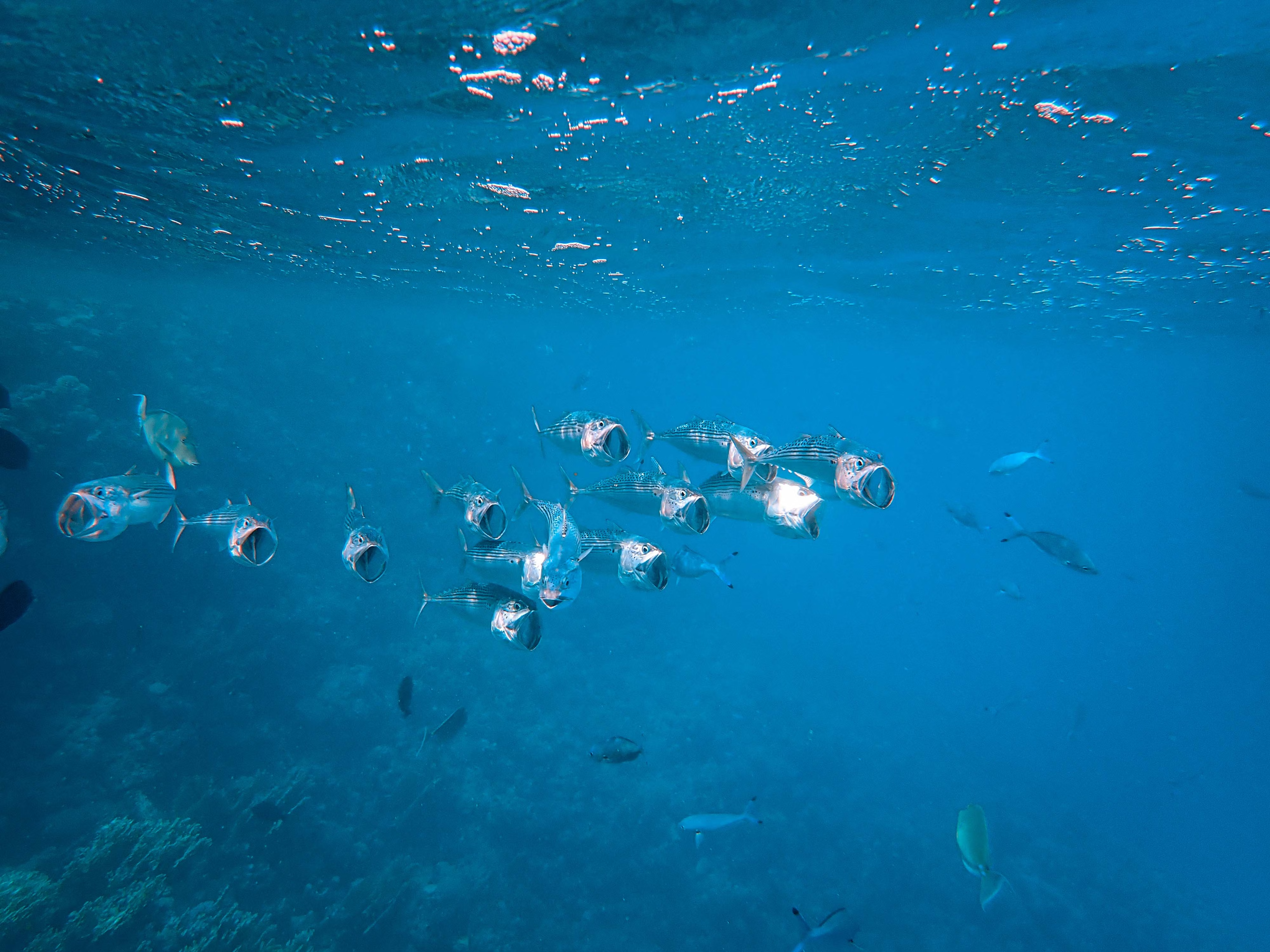
    Seychelles and the European Union have signed a four-year protocol to their Sustainable Fisheries Partnership Agreement, allowing EU vessels to resume fishing for tuna and other migratory species in Seychelles' Exclusive Economic Zone. The agreement provides €23 million over four years, including €3 million for sustainable fisheries-sector support, alongside licence and catch fees paid by shipowners. By sustaining activity at Port Victoria and providing a reliable supply for tuna processing, the protocol is expected to safeguard maritime and shore-based jobs while supporting infrastructure, safety and modernisation for artisanal fishers.

    Read more
    Coral Reefs in Mauritius are Turning Ghostly White. Can Nurseries Rescue Them From Climate Change?
    Ocean & BiodiversityJuly 23, 2026

    Coral Reefs in Mauritius are Turning Ghostly White. Can Nurseries Rescue Them From Climate Change?

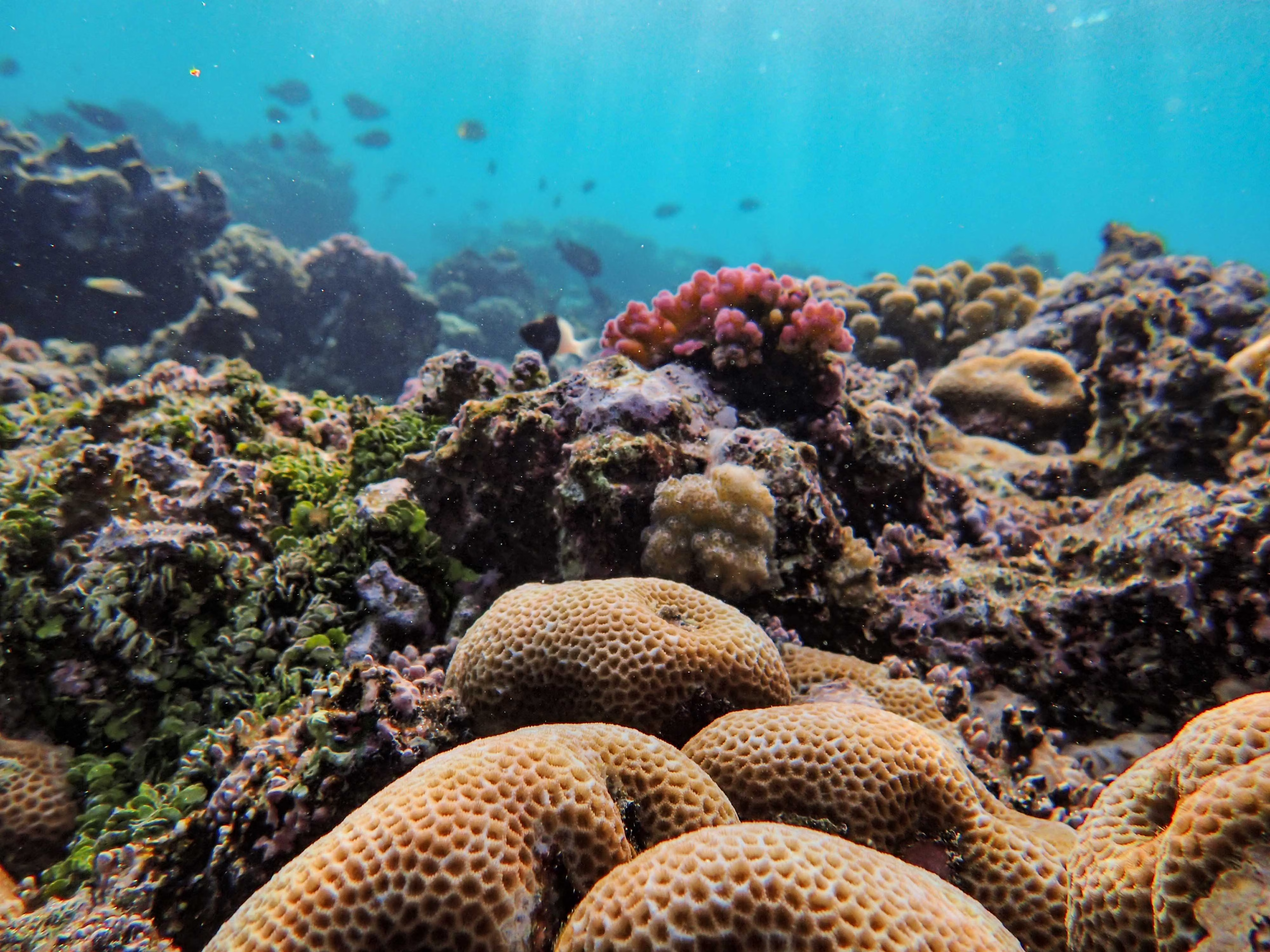
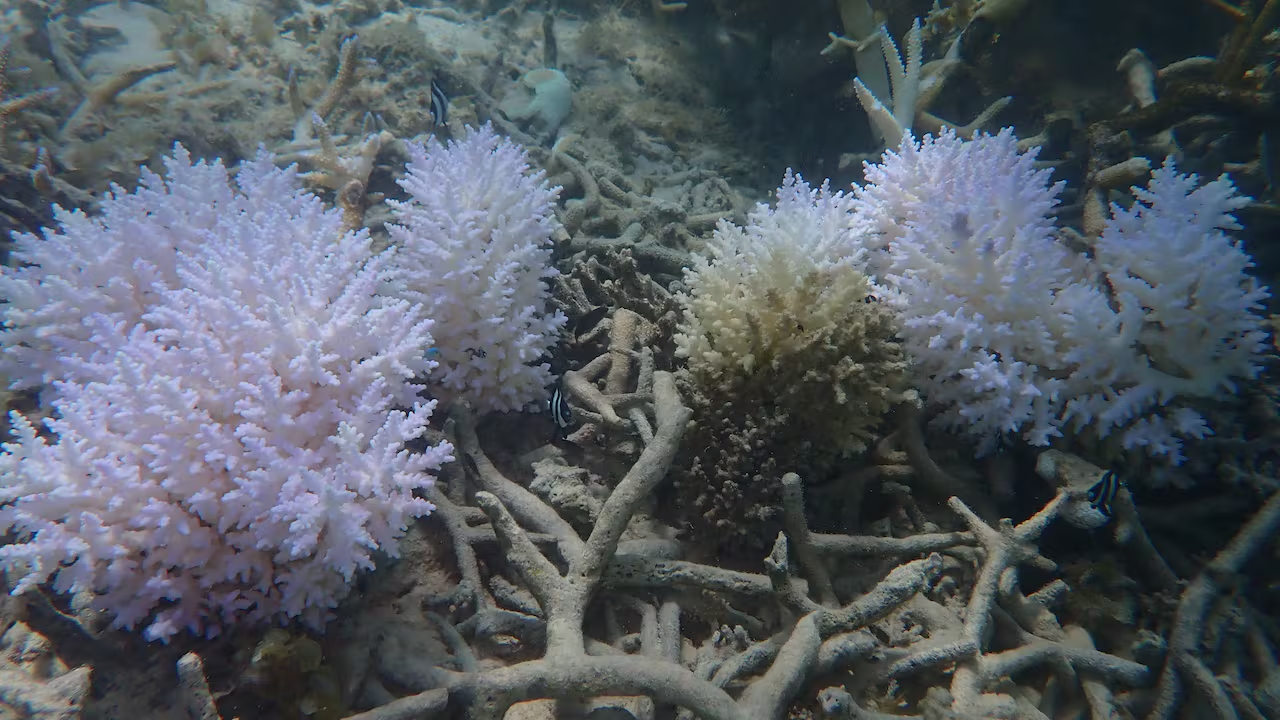
    Mauritius has lost roughly half of its coral cover since the 1970s as ocean warming, bleaching events and pollution place intense pressure on reefs that support biodiversity, fisheries, tourism and coastal protection. A national restoration project, backed by the Adaptation Fund and UNDP, is using coral nurseries and both sexual and asexual reproduction to restore degraded reef areas in Blue Bay Marine Park. Researchers are growing fragments before transplanting them to the seabed, while also exploring coral spawning as a route to resilient new colonies.

    Read more
    How a Community is Helping Sea Turtles Hatch in the Philippines' Palawan
    Ocean & BiodiversityJuly 23, 2026

    How a Community is Helping Sea Turtles Hatch in the Philippines' Palawan

    Community patrollers and researchers in Santo Nino, Palawan are helping protect vulnerable olive ridley turtles and their nests from dogs, storms and growing development pressure. During nesting season, local teams patrol the beach in shifts, document turtles and move threatened eggs to hatcheries where nests can be monitored and safely released. The project, led with the Large Marine Vertebrates Research Institute Philippines, combines local knowledge, conservation science and community participation to give hatchlings a stronger chance of reaching the sea.

    Read more
    Old Fire Hoses Become Lifelines for Penang Island's Endangered Langurs
    Ocean & BiodiversityJuly 9, 2026

    Old Fire Hoses Become Lifelines for Penang Island's Endangered Langurs

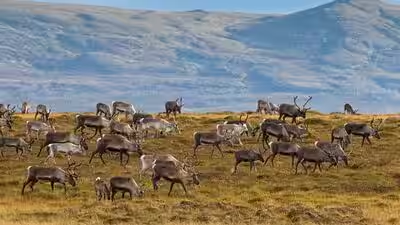
    On Malaysia's Penang Island, conservationist Yap Jo Leen is turning old fire hoses into lifesaving bridges that help endangered monkeys cross busy roads in residential areas. The idea took root after she witnessed a female dusky langur and her infant get struck by a vehicle in 2016, Yap told Mongabay's Phil Jacobson and AFP's Isabelle Leong in a joint interview. Dusky langurs (Trachypithecus obscurus) are small primates with dark gray to blackish fur, distinct large white patches around their eyes, and white fur around their mouth. The species is considered endangered on the IUCN Red List, according to the latest assessment, done in 2015. Yap said that in 2016, as a postgraduate student, she started following a family of dusky langurs that included an individual she called Ah Lai. Over the next year, she recorded several instances of the langurs trying to cross a busy road. People living in the residential areas also reported that dusky langurs and macaques frequently made road crossings. Since 2019, Yap's organization, the Langur Project Penang (LPP), has installed three artificial canopy bridges to help the langurs cross roads safely. The bridges are all made from repurposed fire hoses donated by local fire departments. The initiative has seen remarkable success, said Yap. The first bridge they installed, known as "Ah Lai's Crossing," has been credited with zero langur roadkill deaths on that stretch of road. Beyond langurs, the bridge is also used by nine other wildlife species, including macaques, squirrels, and slow lorises. Yap said LPP operates on three core pillars: scientific conservation, environmental education, and citizen science. She said understanding the dusky langurs is a key part of her work and a bridge to understanding ourselves. "I always believe that the primates, humans and monkeys, we all share a similarity, which is connection," she said. To gather data on the primates, LPP relies on a long-term team of volunteers known as "Duskies," aged 17 to 65. These trained citizen scientists track langur movements, help identify the plants they see the primates eating, and engage with local residents to mitigate human-wildlife conflict. Yap said residents also help by remotely sharing data on monkey sightings in towns, cities, and recreational forests. For Yap, conservation should be accessible to everyone. "Primate observation is more than just scientists' work - it can be everyone's hobby, like bird-watching," she said. Ultimately, Yap said, the project's success isn't measured solely by the number of bridges built, but by fostering a culture of community stewardship. By reframing "conservation as conversation," LPP aims to inspire Malaysians to coexist respectfully with the urban wildlife in their own backyards.

    Read more
    Palau Study Shows First-Ever Evidence of Seabird-Driven Land-Sea Recovery
    Ocean & BiodiversityJune 25, 2026

    Palau Study Shows First-Ever Evidence of Seabird-Driven Land-Sea Recovery

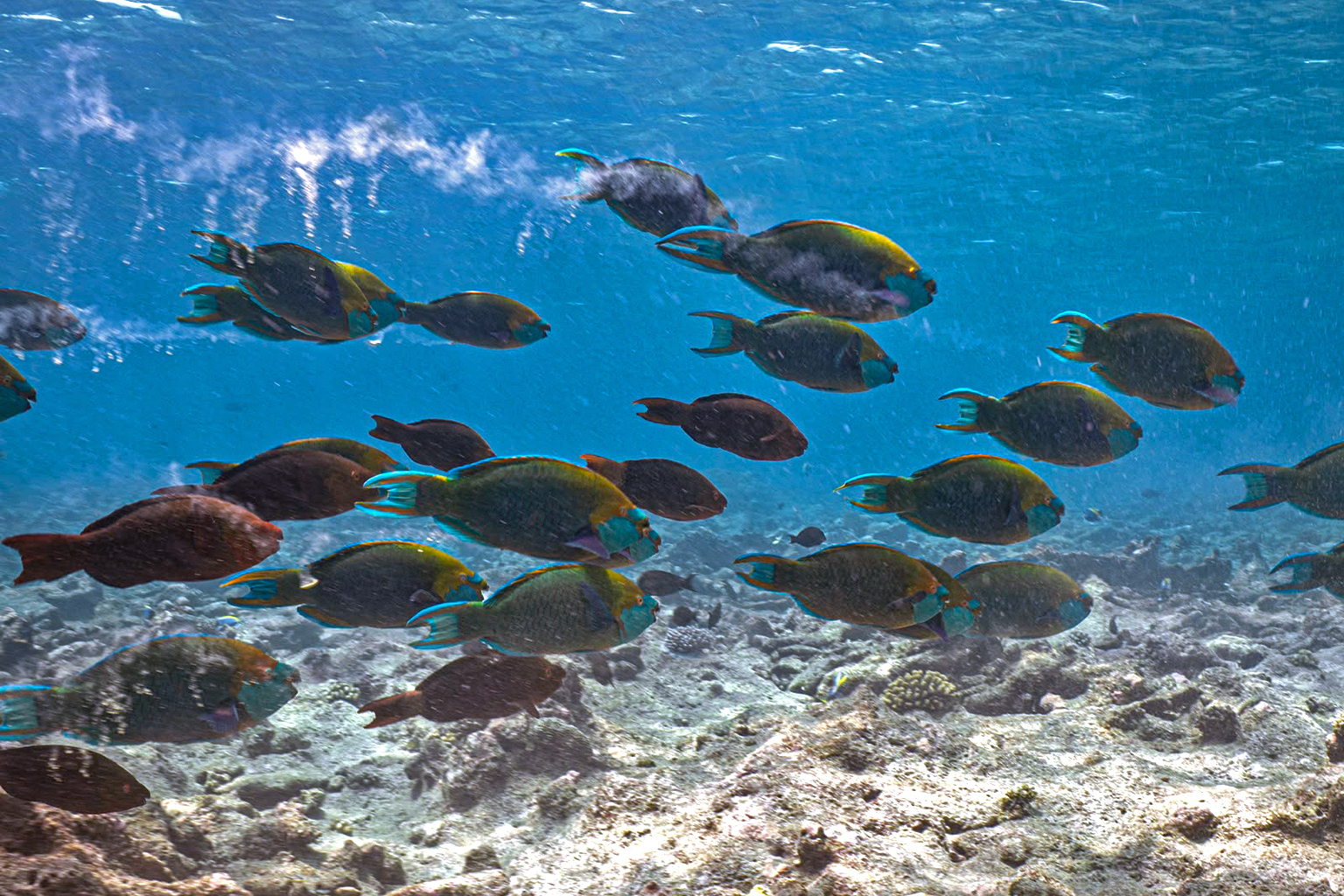
    Data from Ulong Island, Koror Republic of Palau shows that seabirds are returning, nutrients are moving from land to sea, and nearby reefs are beginning to rebound just one year after invasive rats were removed, providing evidence that holistic island restoration can deliver benefits to coral reef ecosystems far sooner than previously understood. This research, conducted as part of the Island-Ocean Connection Challenge (IOCC), is the world's first experimental study demonstrating that seabird recovery following invasive rodent removal drives nutrient transfer from land to reef, confirming prior observational findings that restored islands benefit their surrounding ecosystems. "Seeing measurable ecological change just one year after restoration is extraordinary," said Coral Wolf, Conservation Impact Program Manager at Island Conservation. "It demonstrates the power of local leadership and science working together to heal island ecosystems from ridge to reef." Island Conservation and Scripps Institution of Oceanography at UC San Diego monitored Ulong Island before and after the operation on land and in the sea to track seabirds, nutrients, reef fishes, and benthic communities. The IOCC is a volunteer collective founded by Island Conservation, Scripps Institution of Oceanography, and Re:wild to restore and rewild 40 globally significant island-ocean ecosystems by 2030, one of which is Ulong. The IOCC aims to demonstrate the connections between healthy islands and healthy oceans. Early indicators point to strong biological rebounds. Detections of the rare, endangered Palau Ground Dove increased, and seabird activity surged - Bridled Tern calls rose by 286%, while Brown Noddy and White Tern calls increased by roughly 50% compared to the control island Ngeruktabel, which is a nearby similar island with invasive rats and no eradication. These shifts suggest that seabirds are beginning to return and resume their role as nutrient "connectors" between land and sea.

    Read more
    Teeming with Turtles: Cabo Verde Island Sees 80-Fold Increase in Nesting Loggerheads
    Ocean & BiodiversityJune 25, 2026

    Teeming with Turtles: Cabo Verde Island Sees 80-Fold Increase in Nesting Loggerheads

    In 2018, night patrol teams on Boa Vista, the third-largest island in the Cabo Verde archipelago, started noticing a change along the beaches: The loggerhead turtles were arriving in significantly larger numbers than usual. In previous years, each team, comprised of staff and volunteers from local conservation NGO Cabo Verde Natura 2000 (CVN2), encountered between five and 10 female turtles (Caretta caretta) a night. But now, the teams were each recording between 20 and 30 females a night. By 2021, that number had grown to between 30 and 40. A recent study published in Biological Conservation confirms the upward trend: An 80-fold increase in the population of loggerheads nesting at three of Boa Vista's beaches over 27 years, from 1998 to 2024. The authors of this first long-term study of Cabo Verde's nesting loggerheads ascribe the remarkable trend to decades-long conservation efforts at the local and national level. Loggerheads, which primarily inhabit temperate and subtropical regions of the Pacific, Atlantic and Indian oceans and the Mediterranean Sea, are long-lived, slow-maturing migratory animals. With a lifespan of 80 years or more, female loggerheads take decades to reach sexual maturity. The global loggerhead population has declined by 47% over the past three generations, according to the last IUCN Red List assessment, where it remains listed as a globally 'vulnerable' species. The IUCN, the global wildlife conservation authority, largely attributes this decline to anthropogenic pressures such as habitat loss, marine pollution, bycatch, poaching and multiple climate change-driven impacts. Relative to other global loggerhead nesting sites, the numbers at Boa Vista are striking. Whereas biologists have recorded up to 600 nests per kilometer (0.62 mile) at sites in the U.S. state of Florida and in Oman (the only other sites with more than 10,000 females nesting per year), the new study found that the three largest nesting sites at Boa Vista reached a whopping 22,000 nests per kilometer in 2021.

    Read more
    Bermuda Hosts International Research Vessels to Advance Ocean Science
    Ocean & BiodiversityJune 18, 2026

    Bermuda Hosts International Research Vessels to Advance Ocean Science

    "Ocean research in Bermuda is generating critical insights into climate change, marine ecosystems, and the future of new ocean technology," BIOS said. A spokesperson said, "As Bermuda marks World Ocean Day this June, the island is once again serving as a global hub for ocean discovery. Multiple research vessels, including the ASU Bermuda Institute of Ocean Sciences' R/V Atlantic Explorer and the renowned R/V Atlantis, are operating in Bermudian waters this month, supporting international efforts to better understand climate change, ocean health and the deep sea. "The activity highlights Bermuda's unique role in global ocean science and its importance as a gateway to the deep Atlantic Ocean, where researchers are advancing technologies and collecting data that help scientists understand our changing planet."

    Read more
    Aruba Designated as a UNESCO Biosphere Reserve
    Ocean & BiodiversityJune 18, 2026

    Aruba Designated as a UNESCO Biosphere Reserve

    The 38th session of the UNESCO Man and the Biosphere Programme (MAB) International Coordinating Council, held in Hernandarias, Paraguay, has officially approved today the designation of the Aruba Biosphere Reserve, recognizing the entire island as part of UNESCO's World Network of Biosphere Reserves. The reserve encompasses the whole island, covering approximately 19,300 hectares and incorporating an Exclusive Economic Zone (EEZ) of nearly 3 million hectares. Aruba's Biosphere Reserve is home to approximately 108,000 inhabitants. This landmark achievement is the result of a strong and inclusive co-construction process involving governmental institutions, local communities, civil society, scientists, and private sector stakeholders, with technical assistance provided by the UNESCO Regional Office for the Caribbean. "The concept of biosphere reserves is particularly well suited to the realities of the Caribbean and of Small Island Developing States. These territories demonstrate how biodiversity conservation, cultural heritage, and sustainable development can go hand in hand. We hope Aruba's designation will inspire other countries in the region to consider this model and join the World Network of Biosphere Reserves." -Eric Falt, Regional Director of UNESCO for the Caribbean

    Read more