VIS 2026VIS 2026 — Virtual Island Summit|Also: GSIS 2027GSIS 2027
Island Innovation Logo
About
Services
The Network
Events
Content Library
Contact Us

Subscribe to our newsletter. By submitting, you agree to our Privacy Policy.

Island Innovation

Island Innovation works with governments, institutions, and partners worldwide to support island-led sustainable economic development.

We Support The UN Development Goals

SDG 9: Industry, Innovation and Infrastructure
SDG 11: Sustainable Cities and Communities
SDG 12: Responsible Consumption and Production
SDG 13: Climate Action
SDG 14: Life Below Water
SDG 17: Partnerships for the Goals

Explore

AboutServicesNetworkEvents

Content

ArticlesNewsCareers

Ready to Connect?

Join the island innovation community

Get in Touch

About

  • About us
  • Case Studies
  • FAQs
  • Press
  • Careers
  • Contact

Services

  • Services Overview
  • Public & Media Relations
  • Strategic Communications

Network

  • The Island Network
  • Academic Council
  • Newsletter

Events

  • Our Events
  • Watch Past Events

Content

  • All Content Library
  • Videos
  • Articles
  • News
Privacy PolicyTerms of ServiceContactManage email preferences

© 2025 Island Innovation. All rights reserved.

    News

    Curated stories and analysis from islands and sustainability leaders worldwide.

    Filter by Core Theme

    All ThemesCircular EconomyClimate ActionConnectivity & DigitizationCulture & CommunityEnergy & TransportGreen Finance & EconomyOcean & BiodiversityPolicy & GovernanceTourism & Remote WorkWater & Food
    Showing 9 of 245 news items in Ocean & Biodiversity
    Polar bears on Norwegian islands fatter and healthier despite ice loss, scientists say
    Ocean & BiodiversityFebruary 4, 2026

    Polar bears on Norwegian islands fatter and healthier despite ice loss, scientists say

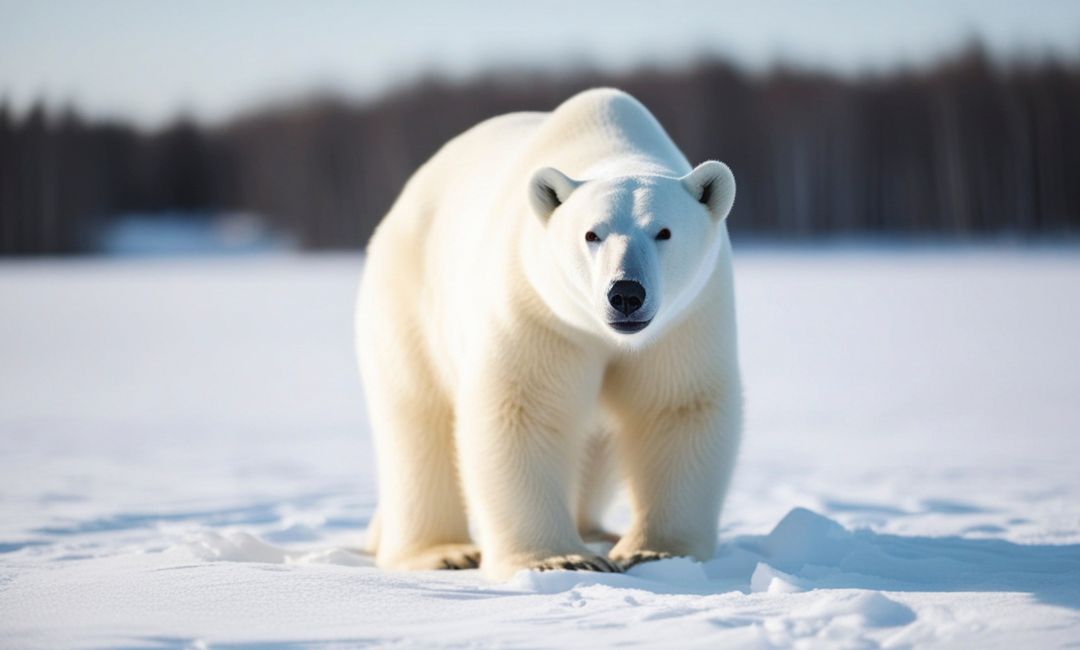
    Excerpt from bbc.com Scientists expected the opposite, but polar bears in the Norwegian Arctic archipelago of Svalbard have become fatter and healthier since the early 1990s, all while sea ice has steadily declined due to climate change. Polar bears rely on sea ice as a platform from which to hunt the seals that they rely on for blubber-rich meals. The bears' fat reserves provide energy and insulation and allow mothers to produce rich milk for cubs. Researchers weighed and measured 770 adults in Svalbard between 1992 and 2019 and found that bears had become significantly fatter. They think that Svalbard bears have adapted to recent ice loss by eating more land-based prey, including reindeer and walruses.

    Read more
    12345678910
    The High Seas Treaty Comes Into Force: What This Means for Ocean Protection
    Ocean & BiodiversityFebruary 4, 2026

    The High Seas Treaty Comes Into Force: What This Means for Ocean Protection

    Excerpt from earthshotprize.org Today, the High Seas Treaty officially enters into force, marking a historic milestone for global ocean protection and international cooperation. After more than two decades of negotiations, this moment signals a new era in how the world governs and protects nearly half of the planet. The Treaty, formally known as the Agreement on the Conservation and Sustainable Use of Marine Biological Diversity of Areas Beyond National Jurisdiction (BBNJ), gives humanity its first global legal framework to safeguard the High Seas. Winner of The Earthshot Prize 2025, the High Seas Treaty reflects the power of collective action and demonstrates that protecting our shared ocean is possible. This is not the end of a journey, but the beginning of a new chapter in ocean governance.

    Read more
    The Great Pacific Garbage, Once the World’s Dirtiest Ocean Zone, Is Now Home to Dozens of Species
    Ocean & BiodiversityJanuary 16, 2026

    The Great Pacific Garbage, Once the World’s Dirtiest Ocean Zone, Is Now Home to Dozens of Species

    Photo Credit: The Ocean Cleanup, via dailygalaxy.com Excerpt from dailygalaxy.com It floats, it drifts, it doesn’t break down. Plastic in the ocean is everywhere, but now it’s doing more than polluting. It’s becoming something else. In the middle of the Pacific Ocean, where no islands or coastlines exist, small marine animals are settling. They’re not just riding the currents. They’re building communities. Some are growing, others are reproducing. All of them are doing it on plastic.

    Read more
    Scientists discover incredible 'window into the past' at remote islands: 'We only have five years left'
    Ocean & BiodiversityJanuary 16, 2026

    Scientists discover incredible 'window into the past' at remote islands: 'We only have five years left'

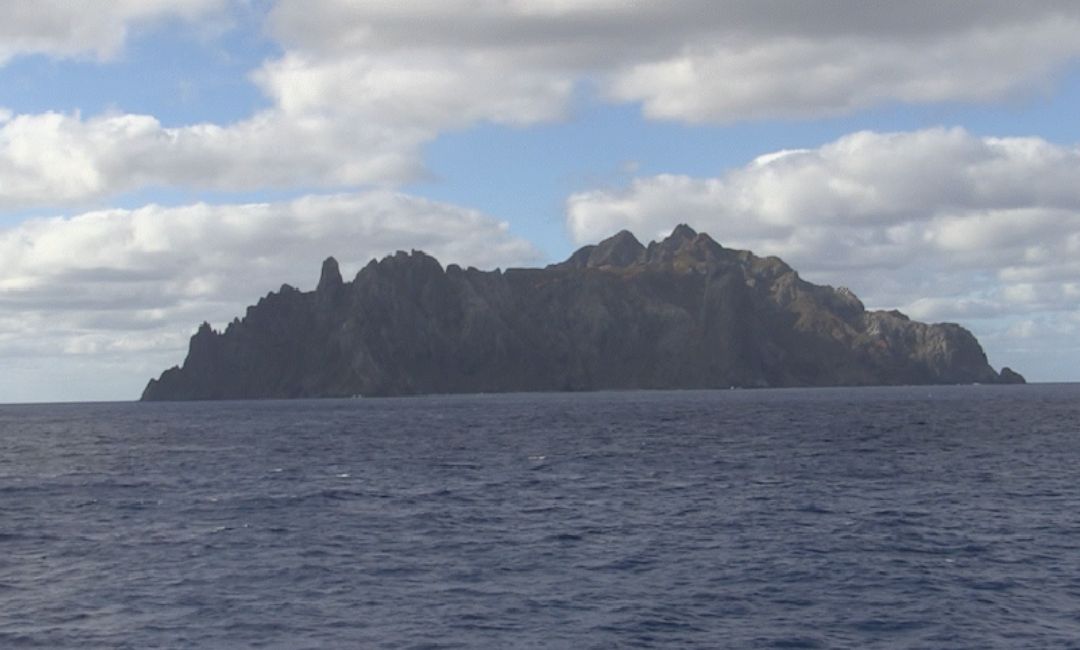
    Excerpt and Photo Credit: thecooldown.com An incredible new study examining shark and predatory fish populations in the Eastern Tropical Pacific shines a light on what the ocean ought to look like at its healthiest, according to an article by the National Geographic Society that was shared by Phys.org. The study surveyed remote marine protected areas such as the Galápagos, Malpelo, Clipperton, and Revillagigedo islands. It also looked at islands that were closer to coasts. It found that shark populations were much higher in the most remote and well-protected areas. Meanwhile, the more accessible and coastal marine protected areas, which allow fishing, showed signs of depletion. "The oceanic islands of the Eastern Tropical Pacific represent a window into the past, where sharks and large predatory fishes are the norm and not the exception," said senior author Dr. Pelayo Salinas-de-León, the principal investigator at the Charles Darwin Foundation. "These areas provide a glimpse of what a healthy ocean looks like."

    Read more
    Could freezing coral larvae protect reefs from ocean warming?
    Ocean & BiodiversityJanuary 16, 2026

    Could freezing coral larvae protect reefs from ocean warming?

    Image: UNEP, CC BY-SA 3.0, via Flickr. Excerpt from eco-business.com The Coral Triangle, one of the planet’s most diverse reef regions, is under siege. The area, spanning the waters of Indonesia, Malaysia, Papua New Guinea, the Philippines, the Solomon Islands and Timor-Leste, is home to 75 per cent of the world’s known coral species. It sustains 3,000 species of reef fish and the livelihoods of over 120 million people. But over 85 per cent of its reefs are threatened by rising temperatures, ocean acidification, pollution and unsustainable fishing, according to the World Resources Institute.

    Read more
    Tiny Caribbean island brings hope for critically endangered iguana
    Ocean & BiodiversityJanuary 15, 2026

    Tiny Caribbean island brings hope for critically endangered iguana

    Excerpt from news.mongabay.com Over the past decade, Prickly Pear East, a small, privately owned island in the Caribbean, has become a beacon of hope for a critically endangered lizard. The islet, near the main island of Anguilla, a British territory, is one of just five locations where the lesser Antillean iguana (Iguana delicatissima) is breeding and thriving, protected from invasive iguanas and human disturbances, conservationists say. The latest surveys, from July, show the species’ population on Prickly Pear East has grown to more than 300 adults and adolescents — up from just 23 individuals that were moved there from Anguilla starting in 2016.

    Read more
    Indonesia’s crocodile attacks rise as wetlands are cleared for mining, oil palm
    Ocean & BiodiversityMay 12, 2026

    Indonesia’s crocodile attacks rise as wetlands are cleared for mining, oil palm

    Excerpt and Photo credit from eco-business.com Residents of a centuries-old coastal settlement in the world’s largest tin-mining outpost — Bangka Island — fear that the environmental damage over just a few decades is behind a frightening rise in reports of violent deaths. In February, local fisher Jauhari became the latest person here on Bangka’s west coast to be killed by an estuarine crocodile (Crocodylus porosus). The 40-year-old was likely the 21st victim in the last five years, according to local wildlife charity Alobi Foundation. The saltwater crocodile — the world’s largest reptile — can exceed 6 meters (20 feet) in length, weighing up to 2 tons (4,400 pounds) and live more than 70 years. On Bangka Island, it ordinarily lurks quietly beneath the surface of estuaries and lagoons. “This has happened because many swamps and tributaries that are the habitat of estuarine crocodiles have been damaged by illegal tin mining, and then turned into oil palm plantations,” Suhadi, who lives in western Bangka’s Menduk village, told Mongabay Indonesia in late March.

    Read more
    Eco-tourism operator in Okinawa bets on corals as carbon absorber
    Ocean & BiodiversityMay 7, 2026

    Eco-tourism operator in Okinawa bets on corals as carbon absorber

    Excerpt and Photo credit from japantimes.co.jp About 10 minutes after departing Naha Port on a clear day, the seascape below a boat reveals a vivid spread of soft corals and schools of tropical fish gliding through the water. Before departure, the concentration of carbon dioxide in the water measured 407.3 parts per million, but at a site where soft corals carpet the seabed, the CO2 level dropped into the 360-ppm range. Marine Tourism Development, an eco-tourism operator based in Naha, has launched a new kind of tour that measures underwater CO2 concentrations in real time while passengers observe the seafloor through a glass-bottomed boat. By “visualizing” otherwise invisible data, the company hopes to encourage visitors to think of climate change mitigation as a personal issue. The initiative — combining sightseeing, environmental conservation and CO2 reduction — is drawing attention as a model of what's known as blue tourism.

    Read more
    Seychelles’ Blue Bond: Turning Ocean Vision into Action
    Ocean & BiodiversityMay 7, 2026

    Seychelles’ Blue Bond: Turning Ocean Vision into Action

    Excerpt from globalissues.org Photo credit: Michaela Rimakova / Unsplash via GlobalIssues.org As the world prepares for the Global Environment Facility (GEF) meeting in Samarkand next month, Seychelles’ pioneering blue bond offers a compelling lesson in practical ocean finance. For small island states, the ocean is not merely a natural resource; it is the foundation of national life, economic opportunity, and long-term resilience against climate threats. As President of Seychelles, I introduced the blue economy as a national vision as early as 2008. I did so because I believed then—as I do now—that for an island nation spanning 1.4 million square kilometers of ocean, sustainable development must begin with responsible stewardship of our marine resources. Our future depended on learning how to protect biodiversity, manage fisheries sustainably, and build economic models that serve both present needs and future generations. This vision positioned Seychelles as an early advocate for integrating ocean health with national prosperity. That vision was not developed in isolation. It was strengthened through deliberate steps and high-level conversations that bridged policy ambition with financial innovation. A key milestone came with the debt-for-nature swap, finalized with the Paris Club creditors and The Nature Conservancy in 2014. This landmark agreement restructured approximately US$21.6 million in debt, freeing resources for marine conservation and climate adaptation. It directly led to the creation of SeyCCAT, the Seychelles Conservation and Climate Adaptation Trust, which has since become a vital mechanism for channeling funds into ocean protection, sustainable fisheries, and resilience projects.

    Read more