VIS 2026VIS 2026 — Virtual Island Summit|Also: GSIS 2027GSIS 2027
Island Innovation Logo
About
Services
The Network
Events
Content Library
Contact Us

Subscribe to our newsletter. By submitting, you agree to our Privacy Policy.

Island Innovation

Island Innovation works with governments, institutions, and partners worldwide to support island-led sustainable economic development.

We Support The UN Development Goals

SDG 9: Industry, Innovation and InfrastructureSDG 11: Sustainable Cities and CommunitiesSDG 12: Responsible Consumption and ProductionSDG 13: Climate ActionSDG 14: Life Below WaterSDG 17: Partnerships for the Goals

Explore

AboutServicesNetworkEvents

Content

ArticlesNewsCareers

Ready to Connect?

Join the island innovation community

Get in Touch

About

  • About us
  • Case Studies
  • FAQs
  • Press
  • Careers
  • Contact

Services

  • Services Overview
  • Public & Media Relations
  • Strategic Communications

Network

  • The Island Network
  • Academic Council
  • Newsletter

Events

  • Our Events
  • Watch Past Events

Content

  • All Content Library
  • Videos
  • Articles
  • News
Privacy PolicyTerms of ServiceContact

© 2025 Island Innovation. All rights reserved.

    News

    Curated stories and analysis from islands and sustainability leaders worldwide.

    Filter by Core Theme

    All ThemesCircular EconomyClimate ActionConnectivity & DigitizationCulture & CommunityEnergy & TransportGreen Finance & EconomyOcean & BiodiversityPolicy & GovernanceTourism & Remote WorkWater & Food
    Showing 9 of 237 news items in Ocean & Biodiversity
    Telling the story of the Atlantic's sargassum surge with 40 years of data
    Ocean & BiodiversitySeptember 9, 2025

    Telling the story of the Atlantic's sargassum surge with 40 years of data

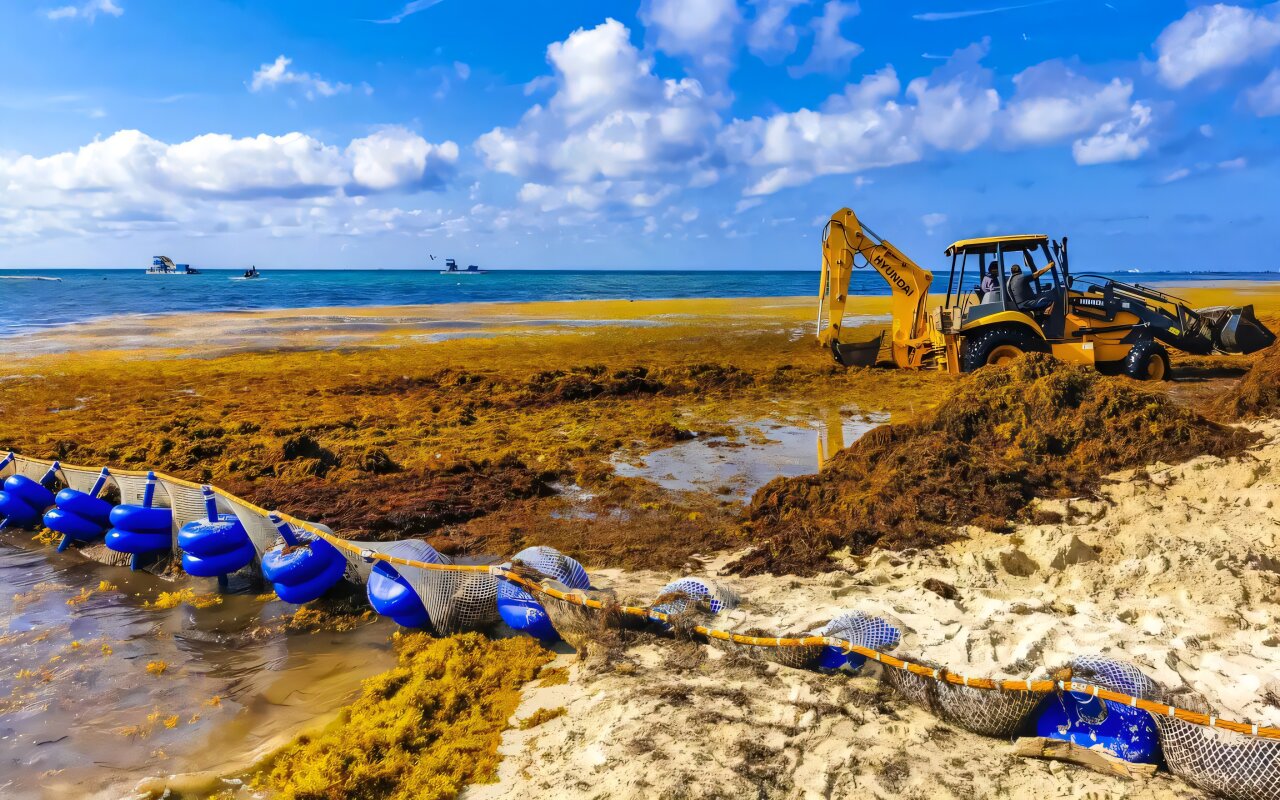
    Excerpt from phys.org Researchers at Florida Atlantic University's Harbor Branch Oceanographic Institute have released a landmark review tracing four decades of changes in pelagic sargassum—free-floating brown seaweed that plays a vital role in the Atlantic Ocean ecosystem. Once thought to be primarily confined to the nutrient-poor waters of the Sargasso Sea, sargassum is now recognized as a rapidly growing and widely distributed marine organism, whose expansion across the Atlantic is closely linked to both natural processes and human-induced nutrient enrichment.

    Read more
    12345678910
    Guadeloupe's corals in an alarming state: 50% less coverage in three years
    Ocean & BiodiversityAugust 26, 2025

    Guadeloupe's corals in an alarming state: 50% less coverage in three years

    This text has been translated with minor modifications. In Guadeloupe, coral reefs are experiencing an unprecedented collapse. Between 2022 and 2025, nearly half of the seafloor coverage rate has been lost. The causes: climate warming, multiple forms of pollution, and uncontrolled human activities. The Guadeloupe National Park (le Parc National de la Guadeloupe) is sounding the alarm. The coral formations of the Guadeloupean archipelago are disappearing before our eyes, putting the entire marine ecosystem in peril. A report by Boris Courret published by the Guadeloupe National Park on YouTube alerts to this dramatic situation. Poor wastewater treatment, in particular, is being singled out as a culprit. According to Claude Bouchon, professor emeritus at the Université des Antilles and member of the Scientific Council of Guadeloupe National Park, "between 2022 and 2025, we lost approximately 50% of the seafloor coverage rate by corals in Guadeloupe." Today, the rates hover around 5 to 6%, levels deemed "ridiculous," even within the protected areas of the National Park.

    Read more
    Restoring Nu‘utele Island, Samoa: Building Climate Resilience and Reviving Biodiversity
    Ocean & BiodiversityAugust 26, 2025

    Restoring Nu‘utele Island, Samoa: Building Climate Resilience and Reviving Biodiversity

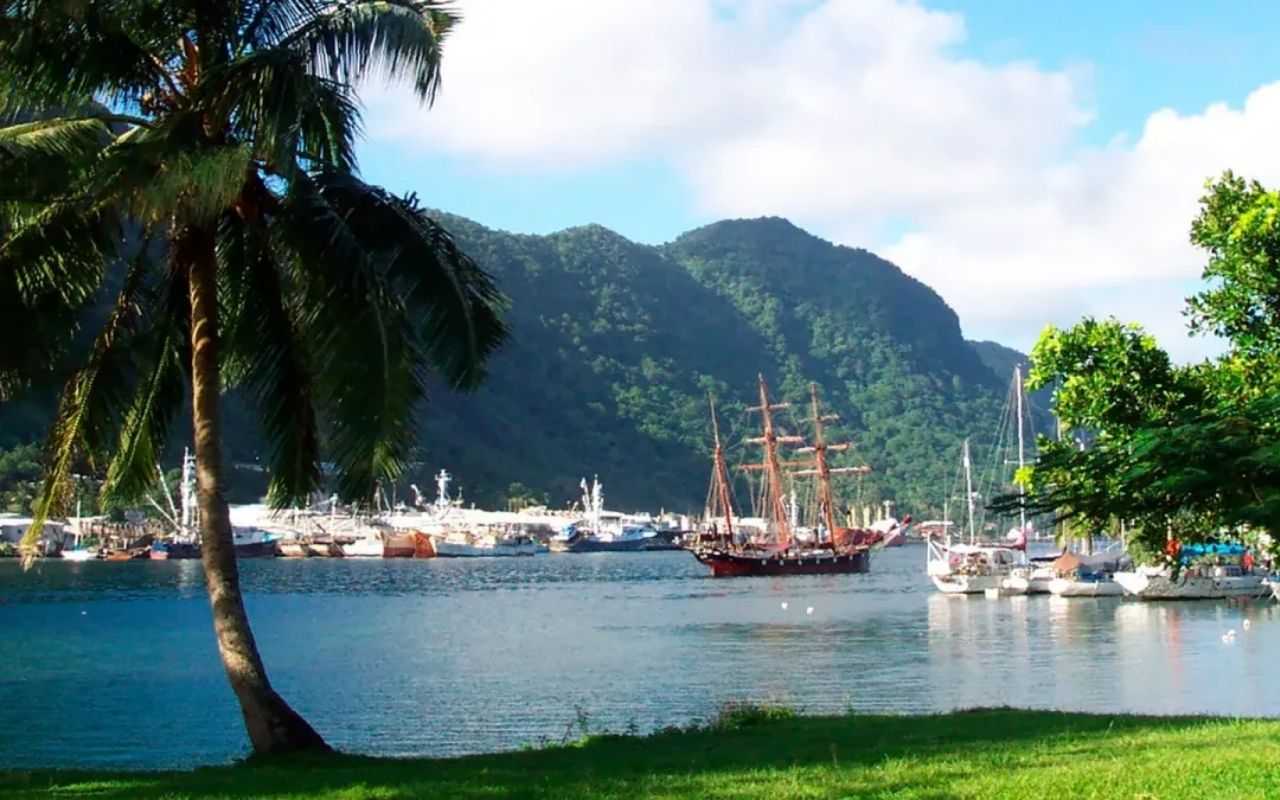
    Excerpt from islandconservation.org In the heart of Samoa, a powerful story of collaboration is unfolding, bringing together communities, governments, and conservation experts to protect one of the Pacific’s ecological treasures: Nu‘utele Island. Island Conservation, the Ministry of Natural Resources and Environment (MNRE), BirdLife International, and the Secretariat of the Pacific Regional Environment Programme (SPREP), under the Pacific Regional Invasive Species Management Support Service (PRISMSS), has launched a bold restoration initiative to rebuild the natural systems that sustain life on and around the island. Harmful, destructive feral pigs and invasive rats pose a serious threat to native wildlife—especially seabirds, whose nesting grounds have been disrupted for decades. By removing these invasive species, the project aims to restore and protect native seabirds, the island’s near-pristine forest, and surrounding coral reef ecosystems, creating a ripple effect of ecological recovery. Healthy seabird populations play a vital role in nutrient cycling, enriching the soil and feeding nearby reefs. With invasive species gone, native plants and animals can return, seabirds can safely nest again, and the flow of nutrients from ocean to land can resume—boosting fish populations and coral resilience.

    Read more
    Building Resilient Blue Communities Through Social Enterprise
    Ocean & BiodiversityAugust 25, 2025

    Building Resilient Blue Communities Through Social Enterprise

    Photo credit: Getty Images via ORFonline.org Excerpt from orfonline.org Small Island Developing States (SIDS) share a unique bond with their ocean territory through their economy, community, and environment. With over 40 percent of the world’s population living within 100 kilometres of the coast, coastal communities are vital hubs for trade and livelihood generation, but often face the brunt of climate change. As many island nations turn towards the Blue Economy (BE) framework to accelerate their national development sustainably, SIDS must ensure their coastal communities are actively and meaningfully involved in decision-making, policy, and stewardship of the very marine resources they depend on. Community-led conservation efforts can be powerful drivers of both environmental stewardship and socio-economic benefits in SIDS. Local fishers in Barbados contributed to the design of a Maritime Management Area and helped secure the boundaries and management practices of their livelihood zone. Community-based marine conservation in Mauritius led to the protection of 50 hectares of coral reef habitat and 8 hectares of seagrass on the border of a fishing reserve, an initiative that has also attracted more visitors and commerce to the area. Scaling up these initiatives and linking them through regional and global networks can strengthen coastal community resilience.

    Read more
    Taiwan - How does agricultural land become forest? I trek to find out
    Ocean & BiodiversityAugust 19, 2025

    Taiwan - How does agricultural land become forest? I trek to find out

    Photo credit: Dave Tacon for Nature via Nature.com Excerpt from nature.com “In this picture, I’m working with my four-legged companion, Yang Mei (Little Sheep) near a small village called Nanxi on the eastern coast of Taiwan. I’m an ecologist studying lowland evergreen subtropical forests. I’ve been conducting research here for the past three years and have known Yang Mei since she was a puppy. Not all forest areas are safe for her. In some places, local people have set traps for deer and wild pigs, so she has to stay behind, which she hates. My research is on secondary forest succession, for my doctorate at the University of Melbourne, Australia. I want to understand how forests grow back after agricultural abandonment. The plot I’m studying in this photo was once a citronella plantation (Cymbopogon nardus), then a rice paddy (Oryza sp.), then an orchard. For the past 16 years, it’s been regenerating back into forest. To select areas to survey, I use a compass to get a bearing, and measuring tapes to mark out a specific plot across the slope. When this photo was taken, besides Yang Mei, my team members were Chance, a volunteer from Utah, and Mr Lai, a local landowner. He’s extremely knowledgeable about local plants.

    Read more
    Saving endangered leopard sharks in Indonesia’s Raja Ampat archipelago
    Ocean & BiodiversityAugust 19, 2025

    Saving endangered leopard sharks in Indonesia’s Raja Ampat archipelago

    Excerpt from aljazeera.com/ 101 East meets the conservationists in Indonesia bringing leopard sharks back from the brink of extinction. Leopard sharks were once abundant in the waters of Indonesia’s Raja Ampat archipelago. However, commercial fishing and the lucrative shark trade have nearly wiped out the population, leaving only 20 adults in these pristine waters. Now, marine biologists are leading a unique project to rewild leopard sharks. Pup sharks are carefully raised in captivity, taught how to hunt and closely monitored before being released into their native waters. 101 East meets the conservationists in Raja Ampat determined to bring leopard sharks back from the brink of extinction.

    Read more
    The Black Parrot of Seychelles: An Endemic Species Symbolising Biodiversity Conservation in the Indian Ocean
    Ocean & BiodiversityAugust 11, 2025

    The Black Parrot of Seychelles: An Endemic Species Symbolising Biodiversity Conservation in the Indian Ocean

    Excerpt from noticiasambientales.com The Black Parrot of Seychelles (Coracopsis barklyi) is a species exclusive to the archipelago, with a prominent presence on the islands of Mahé, Praslin, and Silhouette. Its geographical isolation has favored the evolution of unique traits, clearly differentiating it from other parrots in the Indian Ocean, such as the Black Parrot of Madagascar (Coracopsis nigra), with which it was previously linked as a subspecies. Physical characteristics and ecological role Dark plumage, robust body, and a key role in forest regeneration. With a length that can reach 35 centimeters, this parrot presents plumage ranging from black to gray, and a strong body structure, making it an unmistakable figure in the lush forests of Seychelles. Its diet is based on fruits, seeds, and flowers, positioning it as an essential agent in seed dispersal and regeneration of native flora.

    Read more
    Rare Gecko Species Rediscovered in Galapagos Following Island Restoration Success
    Ocean & BiodiversityAugust 6, 2025

    Rare Gecko Species Rediscovered in Galapagos Following Island Restoration Success

    "Caption: Leaf-toed gecko (Phyllodactylus maresi) displaying variation in coloration. Photo credit: IslandConservation.org Excerpt from islandconservation.org Galápagos Islands — June 2025 — In a thrilling twist of ecological fate, scientists have confirmed the rediscovery of a gecko species once thought extinct on Rábida Island in the Galápagos thanks to a successful restoration and rewilding project. The breakthrough, published in the journal PLOS ONE this month, marks a major conservation milestone and a beacon of hope for biodiversity recovery efforts worldwide. The elusive Leaf-toed Gecko (Phyllodactylus maresi), previously known only from ancient subfossils, has now been officially documented through the collection of live, vouchered specimens during expeditions in 2019 and 2021. Now that the evidence has been peer reviewed, we can confirm the species’ survival in modern times. "

    Read more
    "Would You Visit an Island Populated by Venomous Snakes? We Did. "
    Ocean & BiodiversityAugust 5, 2025

    "Would You Visit an Island Populated by Venomous Snakes? We Did. "

    Excerpt from vice.com About 90 miles off the coast of Brazil is a jagged little island crawling with snakes so venomous, the government flat-out banned anyone from going there. Locals call it Ilha da Queimada Grande. You probably know it as Snake Island. Back in 2014, VICE tagged along on the Brazilian Navy’s annual lighthouse mission to document what most people only learn through legend. Populated by thousands of deadly serpents, every rock and tree on Snake Island hides a golden lancehead viper, armed with venom that can melt human flesh from the inside out. The island is so densely populated with venomous snakes, in fact, that the Brazilian government insists a doctor be present at all legally sanctioned visits. Even with treatment, a bite from the golden lancehead viper carries a three percent chance of death.

    Read more