VIS 2026VIS 2026 — Virtual Island Summit|Also: GSIS 2027GSIS 2027
Island Innovation Logo
About
Services
The Network
Events
Content Library
Contact Us

Subscribe to our newsletter. By submitting, you agree to our Privacy Policy.

Island Innovation

Island Innovation works with governments, institutions, and partners worldwide to support island-led sustainable economic development.

We Support The UN Development Goals

SDG 9: Industry, Innovation and Infrastructure
SDG 11: Sustainable Cities and Communities
SDG 12: Responsible Consumption and Production
SDG 13: Climate Action
SDG 14: Life Below Water
SDG 17: Partnerships for the Goals

Explore

AboutServicesNetworkEvents

Content

ArticlesNewsCareers

Ready to Connect?

Join the island innovation community

Get in Touch

About

  • About us
  • Case Studies
  • FAQs
  • Press
  • Careers
  • Contact

Services

  • Services Overview
  • Public & Media Relations
  • Strategic Communications

Network

  • The Island Network
  • Academic Council
  • Newsletter

Events

  • Our Events
  • Watch Past Events

Content

  • All Content Library
  • Videos
  • Articles
  • News
Privacy PolicyTerms of ServiceContactManage email preferences

© 2025 Island Innovation. All rights reserved.

    News

    Curated stories and analysis from islands and sustainability leaders worldwide.

    Filter by Core Theme

    All ThemesCircular EconomyClimate ActionConnectivity & DigitizationCulture & CommunityEnergy & TransportGreen Finance & EconomyOcean & BiodiversityPolicy & GovernanceTourism & Remote WorkWater & Food
    Showing 9 of 103 news items in Tourism & Remote Work
    Timor-Leste's First UNESCO Biosphere Reserve Designation Boosts Sustainable Tourism Ambitions
    Tourism & Remote WorkSeptember 14, 2026

    Timor-Leste's First UNESCO Biosphere Reserve Designation Boosts Sustainable Tourism Ambitions

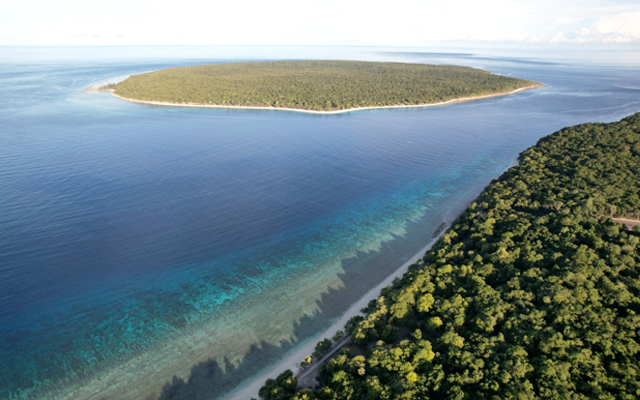
    Timor-Leste has welcomed UNESCO's designation of Nino Konis Santana National Park as the country's first Biosphere Reserve, a move expected to strengthen its position as a destination for nature-based and sustainable tourism. The designation was approved on June 5, 2026, during the 38th Session of UNESCO's International Coordinating Council of the Man and the Biosphere Programme in Paraguay. Located in Lautem Municipality at the eastern tip of Timor-Leste, Nino Konis Santana National Park encompasses forests, coastal habitats, coral reefs, beaches and sites of cultural significance. The reserve includes the country's largest remaining primary forest, freshwater ecosystems surrounding Lake Iralalaro and marine habitats within the Coral Triangle. The recognition raises the international profile of the protected area and supports efforts to attract travellers interested in nature, conservation and community-based tourism.

    Read more
    12345678910
    Jeju Market Embraces Green Makeover to Attract More Tourists
    Tourism & Remote WorkJuly 30, 2026

    Jeju Market Embraces Green Makeover to Attract More Tourists

    Jeju's Dongmun Traditional Market is being positioned as a model for cleaner, more welcoming and environmentally friendly tourism. South Korea's Ministry of Culture, Sports and Tourism and the Korea Tourism Organization are launching the K-Tourism Market Smile Campaign alongside a declaration marking the market's transition. The initiative seeks to strengthen one of the island's busiest visitor destinations while improving the experience for residents, domestic visitors and international travellers.

    Read more
    Canary Islands' New Voluntary Tourist Tax Will Fund Local Sustainability Projects
    Tourism & Remote WorkJuly 23, 2026

    Canary Islands' New Voluntary Tourist Tax Will Fund Local Sustainability Projects

    The Canary Islands have launched RegNext, a voluntary and transparent contribution scheme designed to channel tourism revenue into environmental restoration and community projects. The archipelago welcomed 18.4 million visitors in 2025, and the initiative aims to ensure that tourism strengthens its ecological, social and cultural wellbeing. Initial pilots will support projects on Tenerife, Gran Canaria, Lanzarote, Fuerteventura and a cross-island social project. Outcomes will be tracked through measures such as emissions reduction, habitat restoration, species recovery, landscape improvement, green jobs and poverty reduction.

    Read more
    St. Kitts Just Sank an Aircraft to Create a New Dive Site, Adding an Artificial Reef, a Tourism Draw, and a New Way to Explore the Island Underwater
    Tourism & Remote WorkJuly 9, 2026

    St. Kitts Just Sank an Aircraft to Create a New Dive Site, Adding an Artificial Reef, a Tourism Draw, and a New Way to Explore the Island Underwater

    There's a new reason to go beneath the surface in St. Kitts - and it starts with an aircraft now resting on the ocean floor. The island has officially introduced a new artificial reef created from a decommissioned plane, marking a significant addition to its expanding dive portfolio. The aircraft has been carefully prepared and submerged, creating a new underwater site designed to attract divers while supporting marine life. The project reflects a coordinated effort between government agencies and private partners, with the aircraft donated by local business owner Sylvester Williams of Island Auto Supplies, whose contribution made the initiative possible. The submerged aircraft is expected to become a focal point for dive excursions in St. Kitts, offering a structure that will evolve over time as marine life settles in and begins to grow across its surfaces. Divers can expect a site that combines exploration with gradual ecological development. Over time, coral and other organisms will attach to the aircraft, turning it into a functioning artificial reef that supports fish and other marine species. Sites like this typically become more dynamic with each passing year, as visibility, marine activity, and growth patterns change. The addition gives dive operators on the island a new product to offer, particularly for repeat visitors looking for something different from traditional reef dives. The preparation of the aircraft followed a detailed process designed to ensure that it could be placed in the water without impacting the surrounding marine environment. The plane underwent a multi-phase inspection led in part by the Ministry of Agriculture, Fisheries, and Marine Resources, with oversight focused on environmental safety and compliance. One of the most critical steps involved the removal of all fuel and oil systems. These were fully drained and flushed to eliminate any risk of contamination once the aircraft was submerged. That process is standard for reef creation projects but requires careful execution to meet environmental guidelines and protect nearby ecosystems.

    Read more
    This Japanese Island is Closer To Taipei Than Tokyo. A New Ferry Makes it Easier to Visit
    Tourism & Remote WorkJuly 2, 2026

    This Japanese Island is Closer To Taipei Than Tokyo. A New Ferry Makes it Easier to Visit

    You can now fall asleep on a ferry in Taiwan and wake up in Japan. On the surface, the Yaima Maru offers a perfect slow-travel escape — a passenger ferry equipped with saunas, karaoke rooms and a top-deck cafe. Launched in Taiwan last month to the sound of drums and a traditional lion dance, the 21,000-ton civilian vessel connects the northern Taiwan port of Keelung with the island of Ishigaki, in southwestern Japan's idyllic Okinawa prefecture. But as Beijing ramps up military pressure around Taiwan and Japan shores up its own southwestern defenses, the route has drawn scrutiny — not least because the vessel has been officially earmarked by Tokyo to assist in emergency evacuations if regional tensions erupt into open conflict. For tourists, however, the ferry offers a chance to explore a unique destination far from the Japan most are familiar with. That's because Ishigaki sits about 2,000 kilometers (1,240 miles) away from Tokyo, but only 270 kilometers (168 miles) from Taiwan. "Many people think Japan is quite far away," says Tiger Hong, general manager of the Wagon Group, which operates the ferry. "So the moment when they realize how close it actually is, they are really shocked." Currently, only one airline in Taiwan operates a direct flight to Ishigaki — which takes just an hour — while others require transferring at Okinawa's main air hub of Naha.

    Read more
    Jeju Farmcation Officially Launched, Blends Rural Labour and Tourism
    Tourism & Remote WorkJune 25, 2026

    Jeju Farmcation Officially Launched, Blends Rural Labour and Tourism

    Based on the successful response to last year's pilot project, Jeju Special Self-Governing Province has officially launched the "Jeju Tamnaneun Nongcation" program as a full-fledged initiative this year. This win-win program allows participants to assist with farm work in the morning and enjoy stay-type tourism in the afternoon. Starting with the first schedule for Honam University students on June 24, Jeju plans to sequentially attract more than 1,000 university students and office workers from across the country. The goal is to simultaneously address the labor shortage in rural areas and expand local consumption within the province. "Jeju Tamnaneun Nongcation" is a win-win financial support program that allows people from outside Jeju to stay on the island for a short period, experience the local farming environment, and provide much-needed labor to farms. In return, participants are given free time in the afternoon to enjoy tourism and relaxation. On June 24, the first official day of the program this year, 73 university students from the Honam University General Club Association began assisting local farms by harvesting seasonal crops such as Chodang corn and pumpkins and helping organize workspaces. Jeju Province explained that, following Honam University, large-scale participation from students at key universities nationwide - including Pusan National University, Changwon National University, and Gyeongsang National University - has been confirmed for the summer vacation period. As an incentive for their support of local farms, program participants receive "Tamnaneun Jeon," a regional currency specific to Jeju. This measure is designed to ensure that the incentives are used as direct spending resources when participants visit restaurants, markets, or tourism content on the island in the afternoon. By doing so, the volunteer activity seamlessly leads to the revitalization of local businesses, establishing an organic virtuous cycle.

    Read more
    Fiji Enacts New Tourism Act 2026
    Tourism & Remote WorkJune 18, 2026

    Fiji Enacts New Tourism Act 2026

    Fiji's tourism industry has entered a new regulatory phase following the passing of the Tourism Bill No. 10 of 2026, which has now been enacted as the Tourism Act 2026. The new legislation replaces the Hotel and Guest Houses Act 1973, introducing the country's first comprehensive legal framework for the tourism sector at a time when the industry continues to expand and diversify. The Act broadens regulatory coverage across the sector, including hotels, resorts, tour operators, community-based tourism ventures, camping and hiking experiences, and short-term accommodation platforms such as Airbnb. Fiji currently attracts close to one million visitors annually, and the reforms are intended to modernise oversight systems to match the scale and complexity of the industry. Deputy Prime Minister and Minister for Tourism and Civil Aviation Viliame Gavoka said the legislation reflects the changing dynamics of the sector and the growing participation of communities in tourism development. The Act introduces national tourism standards, alongside strengthened sustainability and compliance requirements. It also includes provisions to protect indigenous and cultural knowledge, as well as expanded opportunities for community participation in the tourism economy.

    Read more
    Siquijor looks to healing traditions and agri-tourism as foundations for sustainable growth
    Tourism & Remote WorkApril 21, 2026

    Siquijor looks to healing traditions and agri-tourism as foundations for sustainable growth

    Excerpt from pia.gov.ph SIQUIJOR, Siquijor (PIA) — Long defined by its reputation for mysticism, Siquijor is staking its future on a different kind of tourist attraction, one rooted in spiritual heritage, indigenous healing traditions, and the untapped potential of its agricultural landscape. Local leaders and development officials say the island’s annual Healing Festival, held every Holy Week at Mount Bandilaan Nature Park, has become more than a cultural event. It is, they argue, a living expression of what makes Siquijor distinct and a platform for the kind of tourism that sustains communities rather than simply passing through them. “Siquijor is not just a place of beauty, with our white sand beaches, pristine waterfalls, and rich forests, but also a place of deep spiritual heritage and quiet strength,” said Rep. Zaldy S. Villa, who represents the island’s lone district. Villa said the island’s identity runs deeper than its natural attractions, pointing to generations-old healing practices and a faith tradition that draws both devotion and curiosity from visitors near and far. That identity has not gone unnoticed. Japanese tourist Kayoko Yamahata, who visited the island during the festival, said the experience went beyond sightseeing. “The green of nature and the spirit of the people, they really heal me,” she said. “Just arriving here, I feel my energy returning. Siquijor has a great healing power.”

    Read more
    How Island Nations Can Harness Tourist Dollars for Conservation
    Tourism & Remote WorkApril 1, 2026

    How Island Nations Can Harness Tourist Dollars for Conservation

    Excerpt from pew.org The Small Island Developing States (SIDS)—a group of 57 United Nations members and associate members—are home to 65 million people across 1,000 islands, 20% of global biodiversity, and 40% of the world’s coral reefs. (See Figure 1.) The SIDS share a common set of significant challenges to preservation and protection of the natural marine and coastal treasures their economies depend on. Financial constraints, including high debt burdens that often exceed 60% of gross domestic product, consume substantial portions of national budgets and leave limited funding for conservation investments, climate adaptation, or environmental management. These debt challenges are exacerbated by small but growing populations that increase demand for housing, infrastructure, and services, and by the effects of climate change—which all put pressure on fragile coastal ecosystems and limited land resources.

    Read more