VIS 2026VIS 2026 — Virtual Island Summit|Also: GSIS 2027GSIS 2027
Island Innovation Logo
About
Services
The Network
Events
Content Library
Contact Us

Subscribe to our newsletter. By submitting, you agree to our Privacy Policy.

Island Innovation

Island Innovation works with governments, institutions, and partners worldwide to support island-led sustainable economic development.

We Support The UN Development Goals

SDG 9: Industry, Innovation and Infrastructure
SDG 11: Sustainable Cities and Communities
SDG 12: Responsible Consumption and Production
SDG 13: Climate Action
SDG 14: Life Below Water
SDG 17: Partnerships for the Goals

Explore

AboutServicesNetworkEvents

Content

ArticlesNewsCareers

Ready to Connect?

Join the island innovation community

Get in Touch

About

  • About us
  • Case Studies
  • FAQs
  • Press
  • Careers
  • Contact

Services

  • Services Overview
  • Public & Media Relations
  • Strategic Communications

Network

  • The Island Network
  • Academic Council
  • Newsletter

Events

  • Our Events
  • Watch Past Events

Content

  • All Content Library
  • Videos
  • Articles
  • News
Privacy PolicyTerms of ServiceContactManage email preferences

© 2025 Island Innovation. All rights reserved.

    News

    Curated stories and analysis from islands and sustainability leaders worldwide.

    Filter by Core Theme

    All ThemesCircular EconomyClimate ActionConnectivity & DigitizationCulture & CommunityEnergy & TransportGreen Finance & EconomyOcean & BiodiversityPolicy & GovernanceTourism & Remote WorkWater & Food
    Showing 9 of 103 news items in Tourism & Remote Work
    Combu Island, in the state of Pará, faces negative impacts of tourism before COP30
    Tourism & Remote WorkMarch 4, 2025

    Combu Island, in the state of Pará, faces negative impacts of tourism before COP30

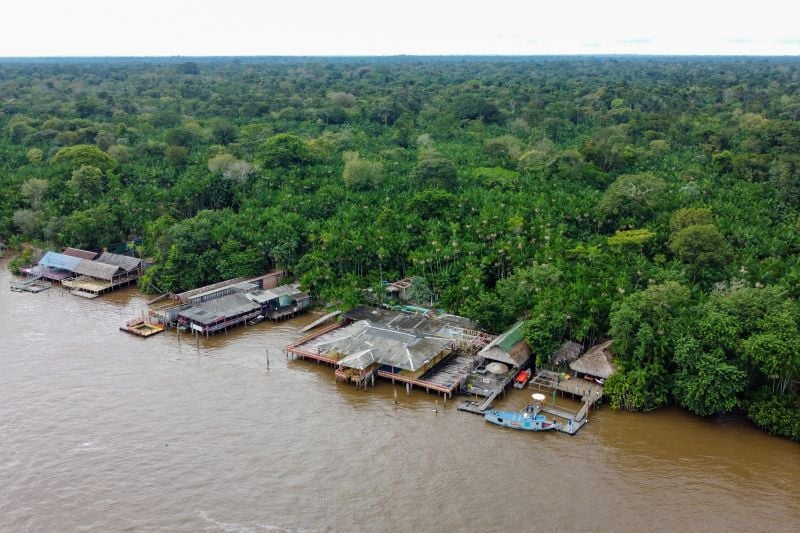
    Photo courtesy, Augusto Miranda – Agência Pará. Retrieved from brasildefato.com.br In recent years, [the island of Combu](https://www.brasildefato.com.br/2024/03/13/os-problemas-que-belem-precisa-resolver-antes-da-cop30/), in the state of Pará, has become a tourism hotspot, where people can know the river and riverside communities in the region. But residents complain that the government’s lack of attention to the rise in the number of tourists in the area is contributing to increased violence, environmental degradation and, consequently, a shortage of products essential for extractive activities and the local way of life. Combu Island is part of Belém’s riverside area. As one of the city’s main tourist routes, it will certainly be a destination for many people attending [COP30](https://www.brasildefato.com.br/2025/01/16/no-ano-da-cop-30-movimentos-fortalecem-construcao-da-cupula-dos-povos/), which will be held in November in the capital of Pará. Combu community leaders argue that the municipal and state governments will be “embarrassed” if, in the middle of the climate conference, visitors see that the residents of one of the main tourist routes in the capital of Pará deal with a lack of drinking water and the negative impacts of extractive activities. “The island’s residents have historically lived off extractivism and, depending on the period of the year, they dedicate themselves to growing food. When it’s not [açaí](https://www.brasildefato.com.br/podcast/bem-viver/2024/05/24/vamos-tomar-acai-com-petroleo-diz-taina-marajoara-sobre-intencao-de-petrobras-explorar-foz-do-amazonas/) season, they fish for shrimp or fish. However, with the increase in the flow of boats on the island, particularly in the last seven years, both shrimp and fish have disappeared, and it’s dangerous for river dwellers to fish,” says Iva Nascimento, president of the Piriquitaquara Igarapé Residents’ Association.

    12345678910
    Read more
    Hawaiʻi Tourism Authority issues a request for proposals for projects exemplifying regenerative tourism
    Tourism & Remote WorkFebruary 19, 2025

    Hawaiʻi Tourism Authority issues a request for proposals for projects exemplifying regenerative tourism

    Excerpt and Photo from bigislandnow.com The Hawaiʻi Tourism Authority has issued the next round of requests for proposals for projects that preserve Hawai‘i’s natural resources, perpetuate the state’s Hawaiian and multicultural heritage, or enrich the community through festivals and signature events statewide. Hawaiʻi Tourism Authority’s community partnership programs support projects that protect and restore the environment, empower local economies, preserve cultural heritage and give back to island communities. “Hawaiʻi Tourism Authority is proud to support programs that exemplify regenerative tourism by directing tourism’s benefits back into our island communities,” said Hawaiʻi Tourism Authority Board Chair Mufi Hannemann. “These efforts protect Hawai‘i’s natural and cultural treasures while uplifting the people and organizations working tirelessly to sustain them.” Online applications are available and need to be submitted through [‘Umeke, Powered by Hawai‘i Tourism Authority](https://sdpvifwab.cc.rs6.net/tn.jsp?f=001HrNv2U_Sy1te2Isjvmwqm03G8yeRsLX906qXoNgnUwvLncDR9TNdOZMZ0cYIwtX_JdGo1vVLpWAcBPOggNgRFM3WEZXQtVZTCKjuqEfA2RuWw6CMga4HFmfkW_5vWTKyKRK0GWLlGM6gzNwxJ7q1eR2aFQih1rr8weQg9MDKAUyBows8cm-Pmp9fClgutaZe3L2DBZ0SJjnBRL-y6N6t4gYcmElUBc3zPS_I-Qka2uw=&c=EugioJHqhlD1faTt2XSs8djv93eX6LKnRhJGdfJTpbkBLXtRbNqwlQ==&ch=-SLEoEFHdj76PSjf-3wuAyeyQC1AmI2rtP6ZUE5s7qDKcjpZVW2QXg==) by April 1. Projects must be scheduled from July 2025 to June 2026. The Hawaiʻi Tourism Authority is accepting applications for the following programs:

    Read more
    Awaji Island: Japan’s ‘First Island’ Offers a Gourmet Taste of a Sustainable Future
    Tourism & Remote WorkFebruary 12, 2025

    Awaji Island: Japan’s ‘First Island’ Offers a Gourmet Taste of a Sustainable Future

    Photo Source: https://awajikanko.com/blogg/wp-content/uploads/harusansan1.webp. [Awaji Island](https://pen-online.com/travel/minami-awaji-an-island-city-rich-in-culinary-delights-traditional-crafts-and-theater/), situated in the east of the Seto Inland Sea, boasts lush greenery, rugged mountains, and sacred sites steeped in myth. Revered as the legendary Onokoro Island, it is said to be the first land formed from seawater by the gods Izanagi and Izanami. This deep historical connection contrasts with its vibrant, present-day character. Easily accessible from Osaka or Kobe, the island is just a short drive across the towering Akashi Kaikyo Bridge. Known as Miketsukuni, or a ‘Land of Food,’ Awaji’s legacy as a culinary treasure lives on through exquisite local ingredients and innovative approaches to wellbeing and sustainability. The island straddles myth and modernity, past and future, offering a singular destination where history resonates, nature thrives, and greener possibilities bloom. Nowhere is Awaji Island’s commitment to sustainability more evident than at Haru San San, a farm-to-table restaurant championing local, homegrown produce and sustainable agriculture. Situated amidst fields cultivated using circular farming practices, the building itself, designed by Pritzker Prize laureate [Shigeru Ban](https://pen-online.com/travel/shonai-hotel-suiden-terrasse-un-etablissement-chic-dans-un-region-reculee-du-japon/), forms a natural part of the tranquil scenery, incorporating traditional thatched-roof techniques with an eco-conscious hybrid structure of recycled paper tubes and minimal timber.

    Read more
    Sapporo, Japan Sets an Example for Sustainable Winter Tourism: How the Snow Festival is Fighting Climate Change with Renewable Energy
    Tourism & Remote WorkFebruary 4, 2025

    Sapporo, Japan Sets an Example for Sustainable Winter Tourism: How the Snow Festival is Fighting Climate Change with Renewable Energy

    Excerpt and Photo from travelandtourworld.com The Sapporo Snow Festival, one of the most famous winter events in the world, is set to return for its 75th edition from February 4 to 11, 2025, in Sapporo, Japan’s northern capital. Known for its massive and intricately designed snow sculptures, the festival attracts around 2 million visitors each year, making it a key tourism event not only for Japan but also for international travelers seeking a unique winter spectacle. However, recent years have presented significant challenges that could reshape the festival’s future, influencing both domestic and international tourism trends. **A Global Attraction Facing an Uncertain Future** The Sapporo Snow Festival has long been a staple of Hokkaido’s winter tourism, offering a mesmerizing landscape of ice and snow that draws travelers from all over the world. Tourists visit the city to admire over 200 snow sculptures, some reaching impressive heights of 12 meters or more. In addition to showcasing elaborate ice carvings, the event features light displays, winter-themed performances, and cultural exhibitions. The festival significantly contributes to Sapporo’s economy, hospitality industry, and local businesses, reinforcing its reputation as a premier winter travel destination. However, organizers now face a combination of climate, financial, and staffing challenges that threaten to disrupt the festival’s sustainability. The increasing operating costs, declining sponsorships, and rising temperatures due to climate change have added complexity to maintaining this grand event. **The Impact of Climate Change on the Festival and Global Winter Tourism** One of the festival’s biggest concerns in recent years has been climate change. The global rise in temperatures has led to irregular snowfall patterns in Hokkaido, which makes collecting and maintaining the large amounts of snow needed for the sculptures more difficult. Organizers have noted that in previous years, the winter climate was much colder, ensuring stable ice structures. However, more frequent warmer spells, sometimes reaching 5-6°C, are now melting the sculptures prematurely, forcing organizers to rethink how they can preserve the snow structures for the festival’s duration.

    Read more
    Hit by blackouts, Cuba’s tourism industry now braces for Trump
    Tourism & Remote WorkDecember 16, 2024

    Hit by blackouts, Cuba’s tourism industry now braces for Trump

    With winter nights drawing in across North America, Canadian “snowbirds” – citizens who flee their freezing temperatures for sunnier climes every year – are planning their annual trips to Florida or the Caribbean. Traditionally, Cuba has been hugely popular among Canadians, drawn to the pristine white sands of beach resorts like Varadero. They fill the void left by Americans wary of the travel restrictions imposed on them under the continuing [US economic embargo](https://cu.usembassy.gov/services/traveling-to-cuba/) of the largest island in the Caribbean. Figures show that [almost one million](https://www.travelweek.ca/blog/goals-and-gains-cuba-tourist-board/) Canadian tourists visited Cuba last year, the top country of origin for visitors by some margin.

    Read more
    Paradise lost? How cruise companies are ‘eating up’ the Bahamas
    Tourism & Remote WorkDecember 2, 2024

    Paradise lost? How cruise companies are ‘eating up’ the Bahamas

    Joseph Darville has fond memories of swimming with his young son off the south coast of Grand Bahama island, and watching together as scores of dolphins frolicked offshore. A lifelong environmentalist now aged 82, Darville has always valued the rich marine habitat and turquoise blue seas of the [Bahamas](https://www.theguardian.com/world/bahamas), which have lured locals and tourists alike for generations. The dolphins are now mostly gone, he says, as human encroachment proliferated and the environment deteriorated. “You don’t see them now; the jetskis go by and frighten them off. “There’s a lot going on. It’s a tragedy – and continues to be a tragedy,” says Darville. Now, he fears further acceleration of the decline, with the scheduled opening next year of Carnival Cruise Line’s vast [Celebration Key resort](https://celebrationkeygrandbahama.com/about-celebration-key), now under construction on the island’s south coast. The sprawling entertainment complex across a mile-long beach, already stripped of its [protective mangroves](https://www.theguardian.com/world/2023/dec/13/fiji-magrove-destruction-why-tourism-restoration-plan-importance-the-price-of-paradise), will ultimately bring up to an additional 4 million people a year to the island, Carnival says, with four of its ships able to dock simultaneously. Concerns about giant cruise ships bringing multitudes of tourists, [and pollution](https://www.theguardian.com/environment/2023/nov/04/cruise-ships-polluting-uk-coast-as-they-ignore-greener-power-options), to the ecologically fragile Bahamas are nothing new. Neither is the concept of foreign-owned cruise companies buying land to build private retreats exclusively for their passengers: Disney’s Castaway Cay, a private island near Great Abaco, last year celebrated its 25th birthday.

    Read more
    Why you should go island-hopping through Estonia’s western isles
    Tourism & Remote WorkNovember 12, 2024

    Why you should go island-hopping through Estonia’s western isles

    Photograph by Simon Bajada. Retrieved from nationalgeographic.com In western Estonia, drama unfolds not in the landscapes, but in the stories that bubble beneath their surface. My first inkling of this comes when I board a car ferry called Toll the Great, bound for the island of Muhu. The modest strip of land I find myself gliding towards is so flat and featureless it looks like it’s been ironed onto the water, whereas the tale of Toll — mythical strongman, sauna master and hero of Saaremaa, an island connected to Muhu by bridge — has all the theatrics of a rollercoaster epic. I imagine Toll towering in his farmer’s garb, muscles bulging, as he rushes through the waves to help embattled sailors in stormy weather. Or wielding an iron axe as he single-handedly fends off encroaching armies and foreign bullies. Armed with Toll’s legends — which are pasted onto the wall of the boat like everyday adverts — I drive off the ferry gangplank an hour later ready for adventure. With five days in front of me, my plan is to island-hop, dropping anchor in Muhu, Saaremaa, Abruka and Kihnu to explore the unique cultures and common histories of their communities. It’s peak summer, but you wouldn’t know it as the car slips down Muhu’s empty, spruce-lined roads. Chalk driveways corkscrew off towards isolated thatched-roof cottages and wooden farmhouses encircled by moss-covered dry-stone walls typical of the islands. It’s as still as a watercolour. When I arrive at Muhu Veinitalu for lunch, I have it almost to myself — and owner Peke Eloranta is happy to show me around his vine-bordered passion project. Wearing a faded blue blazer and a stained, torn cowboy hat, he pours me a glass of his sparkling rosé and proudly introduces Veinitalu as a B&B and restaurant but, most importantly, the only winery in Estonia — and, he believes, the most northerly in the world.

    Read more
    How Digital Nomads Can Experience The Nordic Winter For Free
    Tourism & Remote WorkNovember 6, 2024

    How Digital Nomads Can Experience The Nordic Winter For Free

    Digital nomads—remote workers who leverage technology to live and work from anywhere—are mostly associated with warmer climates and countries with a low cost of living. The Nordic region, with its cold, dark winters and notoriously expensive prices, rarely features on the hit-list of traveling online entrepreneurs. But all that could be about to change thanks to an initiative known as the [Arctic Digital Nomads Grant](https://www.arcticdigitalnomads.com/). Coworking spaces and communities in the Norwegian fjord village of Geiranger, the settlement of Vágur in the south of the Faroe Islands, and Iceland’s rugged westfjords region have banded together with support from the Nordic Atlantic Cooperation ([NORA](https://nora.fo/?_l=en)) to launch the program. Successful applicants will receive free accommodation and office space for between one and three months between January and April in 2025, together with opportunities to embrace everything that’s great about Arctic culture—from local traditions to outdoor experiences.

    Read more
    UNESCO promotes sustainable tourism and heritage conservation in Socotra Archipelago
    Tourism & Remote WorkOctober 25, 2024

    UNESCO promotes sustainable tourism and heritage conservation in Socotra Archipelago

    Excerpt and photo from unesco.org UNESCO, in collaboration with the Arab Regional Center for World Heritage (ARC-WH) and the UNESCO Chair for World Heritage and Sustainable Tourism Management in the Arab Region (UNESCO Chair GUTech), successfully concluded a five-day training program in the Socotra Archipelago from September 25-29, 2024. The program gathered 45 participants from various stakeholders within the tourism industry to equip local tour guides and relevant authorities with the knowledge and skills necessary to support conservation efforts, enhance visitor experiences, and build partnerships with local communities. The Socotra Archipelago, renowned for its rich biodiversity, is home to many endemic species. Socotra Island, the largest in the Arabian Peninsula, symbolizes the region’s natural heritage. Protected by Yemeni law through the Socotra Conservation Zoning Plan, the Archipelago has earned international recognition for its exceptional natural value. It was designated a UNESCO Man and Biosphere (MAB) Reserve in 2003, Yemen’s first Ramsar Site in 2007, and a UNESCO World Heritage Site in 2008. Despite its natural beauty, Socotra faces significant challenges, such as environmental degradation, socio-political unrest, and the impacts of climate change. The ongoing conflict in Yemen further underscores the urgent need to safeguard Socotra’s heritage and promote sustainable development. The island’s inhabitants, deeply connected to their environment, rely on traditional practices such as dragon’s blood extraction and Socotri music, both integral to their cultural identity. Local civil society organizations (CSOs) play a crucial role in conservation efforts, despite limited resources and capacity.

    Read more