VIS 2026VIS 2026 — Virtual Island Summit|Also: GSIS 2027GSIS 2027
Island Innovation Logo
About
Services
The Network
Events
Content Library
Contact Us

Subscribe to our newsletter. By submitting, you agree to our Privacy Policy.

Island Innovation

Island Innovation works with governments, institutions, and partners worldwide to support island-led sustainable economic development.

We Support The UN Development Goals

SDG 9: Industry, Innovation and InfrastructureSDG 11: Sustainable Cities and CommunitiesSDG 12: Responsible Consumption and ProductionSDG 13: Climate ActionSDG 14: Life Below WaterSDG 17: Partnerships for the Goals

Explore

AboutServicesNetworkEvents

Content

ArticlesNewsCareers

Ready to Connect?

Join the island innovation community

Get in Touch

About

  • About us
  • Case Studies
  • FAQs
  • Press
  • Careers
  • Contact

Services

  • Services Overview
  • Public & Media Relations
  • Strategic Communications

Network

  • The Island Network
  • Academic Council
  • Newsletter

Events

  • Our Events
  • Watch Past Events

Content

  • All Content Library
  • Videos
  • Articles
  • News
Privacy PolicyTerms of ServiceContact

© 2025 Island Innovation. All rights reserved.

    News

    Curated stories and analysis from islands and sustainability leaders worldwide.

    Filter by Core Theme

    All ThemesCircular EconomyClimate ActionConnectivity & DigitizationCulture & CommunityEnergy & TransportGreen Finance & EconomyOcean & BiodiversityPolicy & GovernanceTourism & Remote WorkWater & Food
    Showing 9 of 89 news items in Water & Food
    The Greek islands are grappling with a water crisis as tourist season kicks into gear
    Water & FoodJuly 23, 2024

    The Greek islands are grappling with a water crisis as tourist season kicks into gear

    Photo: Stelios Misinas/Reuters. Retrieved from edition.cnn.com The Greek Islands, known for their idyllic towns, rugged landscapes and sun-baked beaches, are in the grip of a serious crisis. Many are running alarmingly low on water — a problem set to get worse [as the tourist season hits full flow](https://www.cnn.com/2024/06/29/travel/europe-heat-waves-tourism-safety-intl/index.html)and hot dry weather continues. Several****islands, including Leros, Sifnos and parts of Crete and Kefalonia, have declared states of emergency over water shortages, as years of very low rainfall and an abnormally hot winter have taken a toll on reservoirs and underground water sources. Authorities****are scrambling to find solutions, including turning seawater into drinking water, as the****islands prepare for millions of tourists to arrive in the weeks ahead. In Naxos, a mountainous island in the Aegean Sea, fringed with long sandy beaches, reservoirs have shrunk dramatically, revealing parched lake beds. The island’s two rain-fed reservoirs now collectively hold around 200,000 cubic meters of water (52.8 million gallons), just a third of what they had last year. “The situation for sure is bad,” said Naxos Mayor Dimitris Lianos.

    Read more
    12345678910
    Blood in the Water, Food on the Table, Protesters on the Shore
    Water & FoodJuly 12, 2024

    Blood in the Water, Food on the Table, Protesters on the Shore

    Photo by Reda Company srl/Alamy Stock Photo. Retrieved from hakaimagazine.com In a centuries-old tradition known as a grindadráp, the Faroese people hunt long-finned pilot whales for their meat and blubber. The whales are technically large dolphins, ranging from four to over six meters long, with bulbous heads and black tails. When a pod is sighted, someone calls a “grind,” pronounced “grinned,” and people are free to leave work to participate. School children leave class to watch. Once the hunters have killed the whales using lances, they share the meat and blubber, carrying it home in buckets, wheelbarrows, and truck beds for boiling and preserving. For many in this place so deeply connected to the sea, the practice is meaningful and central to cultural identity and memory. But it’s proven controversial to outsiders. Compared with industrialized commercial meat production today, which tends to remain contained within factories and industrial slaughterhouses, the grind does not hide the violent reality of harvesting meat for food. That—and the fact that the grind’s quarry is an intelligent marine mammal—have made the hunt a high-profile target for Østrem and Marshfield, and other activists. The pair is part of a land crew with the Captain Paul Watson Foundation UK. Paul Watson is the infamous founder of Sea Shepherd Conservation Society—best known for its militant tactics on behalf of marine life, including against Indigenous whalers. When Watson split with Sea Shepherd in 2022 over directional differences, a few chapters around the world changed their names to stay aligned with him, including Sea Shepherd UK.

    Read more
    Traditional Solomon Islands water well building methods facing challenges from climate change
    Water & FoodJuly 12, 2024

    Traditional Solomon Islands water well building methods facing challenges from climate change

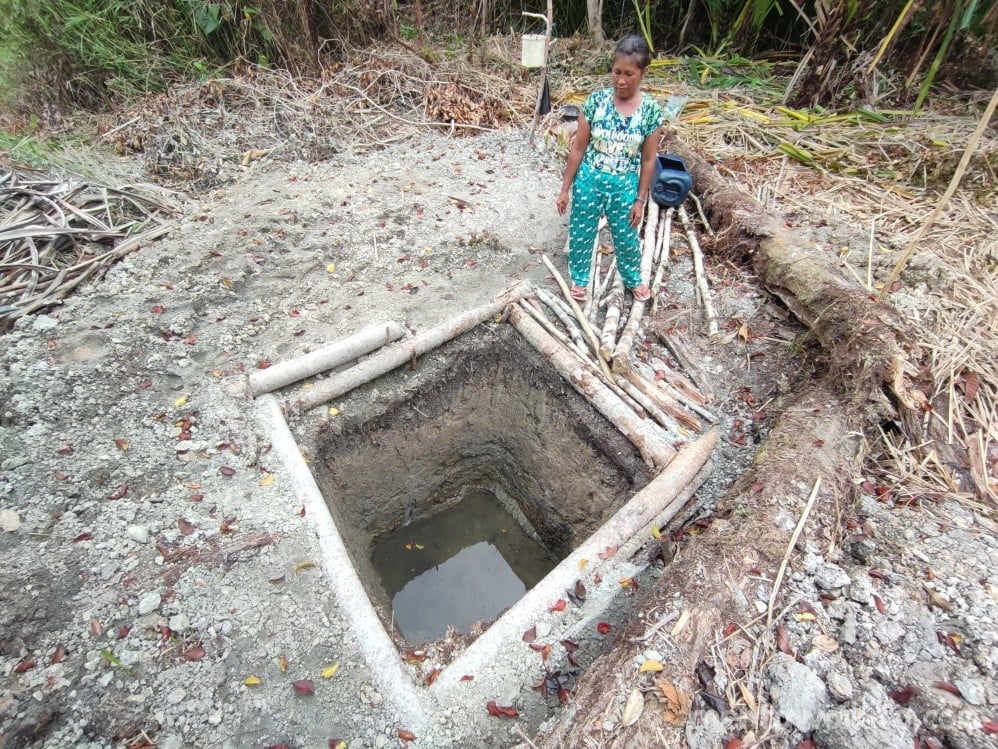
    Excerpt and Photo from abc.net.au Traditional forms of water wells on Savo Island in Solomon Islands are stunning with wide open stone mouths that reach into the earth, giving access to fresh consumable water, but this method is under threat. As the climate changes, more of the water wells are unusable due to salination from the rising sea levels, something that local communities are concerned about. Victor Peter Kere is from Savo Island and acknowledges that the wells are facing a challenge due to rising sea levels but is desperate for the methods of building to be preserved. “I believe that the traditional way of building wells will be lost as people are looking at much better alternatives of getting water for consumption and use,” Mr Kere said. As a volcanic island, the traditional method of the wells has been a solid option for locals.

    Read more
    An Informal to Formal Fisher Story
    Water & FoodJuly 1, 2024

    An Informal to Formal Fisher Story

    How can we promote sustainable fishing behavior if our worry is futures that can shock their daily routines? How can our fishers think of a future if they do not understand options for their own identified issues and risks? To better understand our fishers, we listened to their stories of adventures in the seas and oceans early in the morning as they returned to shore after an evening off the coasts to catch fish and other marine species as their livelihood. In our discussions, I started asking myself, “Does a Fisher need to fish forever?” I have always been in awe of our fishers. They can survive being at sea every night by their lonesome; their work is actually one of the riskiest jobs with the sea having the ability to turn violent within a few seconds notice. Why can’t we care for our fishers the way we do to our doctors, our lawyers, our drivers, our office workers? Any profession would have social and financial protection mechanisms for themselves and their families. What makes it so difficult for fishers to have social services, health insurance, housing insurance and life insurance when their profession is what we need most to feed and nourish ourselves? In our contemplation of this conundrum, my team started collaborating with many groups to check the possibility to design social protection mechanisms for our fishers. Under the guidance of Rare, we finally launched the FishForever Social Protection program in 2018 and began rolling out full social protection access a year later, right before the COVID-19 pandemic. This event, which many were not prepared for, especially the fishers, validated the need for our fishers to have social protection. The trust we’d earned with our fishers ensured they continued sustainable practices despite food scarcity fears and health concerns. Going out to sea for enforcement and monitoring within their community waters felt more secure than staying home.

    Read more
    Thirsty in paradise: Water crises are a growing problem across the Caribbean islands
    Water & FoodMay 24, 2024

    Thirsty in paradise: Water crises are a growing problem across the Caribbean islands

    In the popular imagination, the Caribbean is paradise, an exotic place to escape to. But behind the images of balmy beaches and lush hotel grounds lies a crisis, the likes of which its residents have never experienced. Caribbean islands are in a [water crisis](https://www.paho.org/en/stories/thirst-change-caribbean-story-health-and-water-sustainability), and their governments have warned that [water scarcity may become the new norm](https://cwwa.net/news/water-scarcity-may-be-a-new-way-of-life-in-the-caribbean-warns-minister-of-public-infrastructure/). Within the past five years, every island in the region has experienced some sort of water scarcity. For example, Trinidad is experiencing its [worst drought in recent memory](https://newsday.co.tt/2024/03/05/updated-wasa-worst-drought-ever-new-water-restrictions-from-march-1-june-30/), and residents are under water restrictions through at least the end of June 2024, with [fines for anyone who violates](https://www.guardian.co.tt/news/wasa-begins-annual-water-restrictions-75-fine-for-violations-6.2.1942277.82d76552dd) the rules. Dominica, considered the [nature island of the Caribbean](https://www.travelandleisure.com/dominica-caribbean-island-guide-7109687) for its mountain rain forests, is seeing a [significant decrease](https://www.cijn.org/dominica-at-risk-of-losing-its-freshwater-resource/) in freshwater resources and increasingly frequent water shortages. In Grenada, known as the spice isle, [drought has affected](https://nowgrenada.com/2024/05/nawasa-declares-drought-emergency/) water systems throughout the island.

    Read more
    Primates creating headaches for pineapple farmer in Orange Hill
    Water & FoodMay 10, 2024

    Primates creating headaches for pineapple farmer in Orange Hill

    Excerpt and Photo from barbadostoday.bb For the first time in the six years he has been farming, Devon Slater of Orange Hill, St James is faced with a monkey problem. The green, furry primates have been raiding his small pineapple farm causing him significant financial losses. Slater, 64, tells Barbados TODAY the attacks only started last week and three to four fruits are either eaten, bitten or destroyed daily. Although the losses are discouraging, he says he is implementing strategies to fight back against the monkeys. Slater has been growing thousands of pineapples at the edge of a gully near his home for all these years and never experienced a monkey attack, given that the primates usually live in forested areas. But the increasingly warm climate could be affecting the traditional food supply of the monkeys and scouting around for a new food source could have led to the discovery of his farm, he suggests. “They come in the morning between 7 and 7:30 and they come in a group of 20 or more. Some hang around in the top of the trees and others stay down bottom. The ones down bottom come and start to eat and the ones at the top that you don’t see, then come and join them,” he says.

    Read more
    Making Zanzibar’s famous spices more sustainable
    Water & FoodMay 3, 2024

    Making Zanzibar’s famous spices more sustainable

    Photo and excerpt from dw.com At the spice markets of Zanzibar, the scent of cloves, cinnamon, and cardamom fills the air, a heady perfume that hints at ancient trade routes and exotic flavors. The spice trade has been an important way of making a living for Zanzibaris for centuries, a tradition woven into the very fabric of the island’s culture. Yet, among them today, are some locals who want to work in a more sustainable way, ensuring the rich legacy of the spice islands continues for generations to come.

    Read more
    UH researchers: Could fishponds help with islands’ food sustainability?
    Water & FoodApril 25, 2024

    UH researchers: Could fishponds help with islands’ food sustainability?

    Photo Courtesy: Anne Innes-Gold. Retrieved from bigislandnow.com Indigenous aquaculture systems in Hawaiʻi, known as loko iʻa or fishponds, can increase the amount of fish and fisheries harvested both inside and outside of the pond. This is the focus of a [study published](https://esajournals.onlinelibrary.wiley.com/doi/10.1002/ecs2.4797) by a team of researchers at the University of Hawaiʻi at Mānoa Hawaiʻi Institute of Marine Biology. Today, aquaculture supplies less than 1% of Hawaiʻi’s 70 million pounds of locally available seafood, but revitalization of loko i‘a has the potential to significantly increase locally available seafood. According to historical accounts, loko i‘a can create surplus fish inside the pond, but their role as a nursery ground seeding surrounding fish populations has received less attention.

    Read more
    Hawaii is “on the verge of a greater catastrophe,” locals say, as water crisis continues
    Water & FoodApril 17, 2024

    Hawaii is “on the verge of a greater catastrophe,” locals say, as water crisis continues

    Photo: LI COHEN/CBS NEWS. Retrieved from cbsnews.com In Hawaii, one of the most important sayings is ola i ka wai, “water is life” — a phrase that not only sums up what it means to exist on an island, but what it means to live, period. But now, one of the largest of the island chain’s land masses is facing a triple threat to its sole freshwater source, and if it isn’t addressed soon, one community member says, “we’re in deep trouble.” Despite being surrounded by seemingly endless ocean, freshwater on Oahu, the third-largest of Hawaii’s six major islands, is not easily accessible. The island relies on an underground aquifer for its water supply. Replenishing that aquifer is a decades-long natural process, as it takes a single drop of water roughly 25 years to make it there from the sky. And recent years have seen compounding problems: less rain, leading to [significant droughts](https://www.cbsnews.com/news/pond-mysteriously-turns-pink-kealia-pond-national-wildlife-refuge-hawaii/), and repeated jet fuel leaks and PFAS chemical spills contaminating water systems. All of this significantly limits available water use for locals, many of whom say tourism is only worsening the situation. Just months ago, the [world’s largest surfing wave pool](https://www.cbsnews.com/news/oahu-wave-pool-water-crisis/) opened up on the island — filled with freshwater. “They’re not using it to drink or to support life, they’re using it to make money. They’re commodifying it,” said Healani Sonoda-Pale, who is Native Hawaiian and a member of advocacy group O’ahu Water Protectors. “… We are on the verge of a greater catastrophe.”

    Read more