VIS 2026VIS 2026 — Virtual Island Summit|Also: GSIS 2027GSIS 2027
Island Innovation Logo
About
Services
The Network
Events
Content Library
Contact Us

Subscribe to our newsletter. By submitting, you agree to our Privacy Policy.

Island Innovation

Island Innovation works with governments, institutions, and partners worldwide to support island-led sustainable economic development.

We Support The UN Development Goals

SDG 9: Industry, Innovation and Infrastructure
SDG 11: Sustainable Cities and Communities
SDG 12: Responsible Consumption and Production
SDG 13: Climate Action
SDG 14: Life Below Water
SDG 17: Partnerships for the Goals

Explore

AboutServicesNetworkEvents

Content

ArticlesNewsCareers

Ready to Connect?

Join the island innovation community

Get in Touch

About

  • About us
  • Case Studies
  • FAQs
  • Press
  • Careers
  • Contact

Services

  • Services Overview
  • Public & Media Relations
  • Strategic Communications

Network

  • The Island Network
  • Academic Council
  • Newsletter

Events

  • Our Events
  • Watch Past Events

Content

  • All Content Library
  • Videos
  • Articles
  • News
Privacy PolicyTerms of ServiceContactManage email preferences

© 2025 Island Innovation. All rights reserved.

    News

    Curated stories and analysis from islands and sustainability leaders worldwide.

    Filter by Core Theme

    All ThemesCircular EconomyClimate ActionConnectivity & DigitizationCulture & CommunityEnergy & TransportGreen Finance & EconomyOcean & BiodiversityPolicy & GovernanceTourism & Remote WorkWater & Food
    Showing 9 of 93 news items in Water & Food
    Primates creating headaches for pineapple farmer in Orange Hill
    Water & FoodMay 10, 2024

    Primates creating headaches for pineapple farmer in Orange Hill

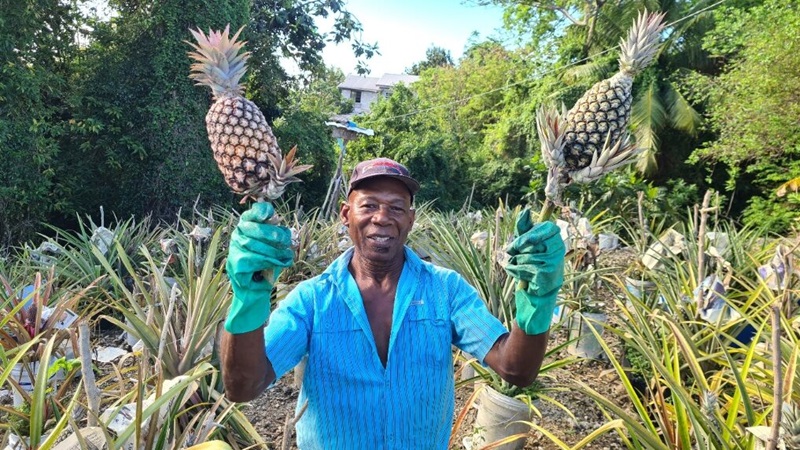
    Excerpt and Photo from barbadostoday.bb For the first time in the six years he has been farming, Devon Slater of Orange Hill, St James is faced with a monkey problem. The green, furry primates have been raiding his small pineapple farm causing him significant financial losses. Slater, 64, tells Barbados TODAY the attacks only started last week and three to four fruits are either eaten, bitten or destroyed daily. Although the losses are discouraging, he says he is implementing strategies to fight back against the monkeys. Slater has been growing thousands of pineapples at the edge of a gully near his home for all these years and never experienced a monkey attack, given that the primates usually live in forested areas. But the increasingly warm climate could be affecting the traditional food supply of the monkeys and scouting around for a new food source could have led to the discovery of his farm, he suggests. “They come in the morning between 7 and 7:30 and they come in a group of 20 or more. Some hang around in the top of the trees and others stay down bottom. The ones down bottom come and start to eat and the ones at the top that you don’t see, then come and join them,” he says.

    Read more
    12345678910
    Making Zanzibar’s famous spices more sustainable
    Water & FoodMay 3, 2024

    Making Zanzibar’s famous spices more sustainable

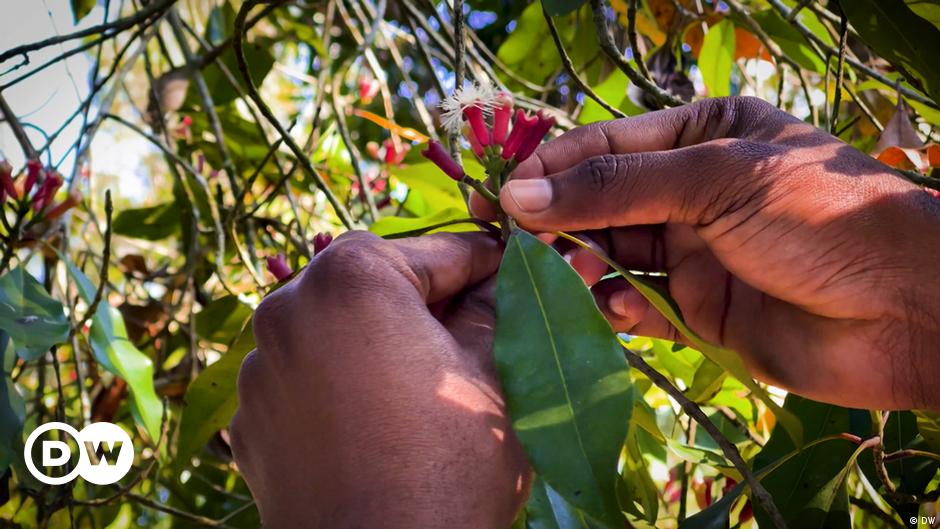
    Photo and excerpt from dw.com At the spice markets of Zanzibar, the scent of cloves, cinnamon, and cardamom fills the air, a heady perfume that hints at ancient trade routes and exotic flavors. The spice trade has been an important way of making a living for Zanzibaris for centuries, a tradition woven into the very fabric of the island’s culture. Yet, among them today, are some locals who want to work in a more sustainable way, ensuring the rich legacy of the spice islands continues for generations to come.

    Read more
    UH researchers: Could fishponds help with islands’ food sustainability?
    Water & FoodApril 25, 2024

    UH researchers: Could fishponds help with islands’ food sustainability?

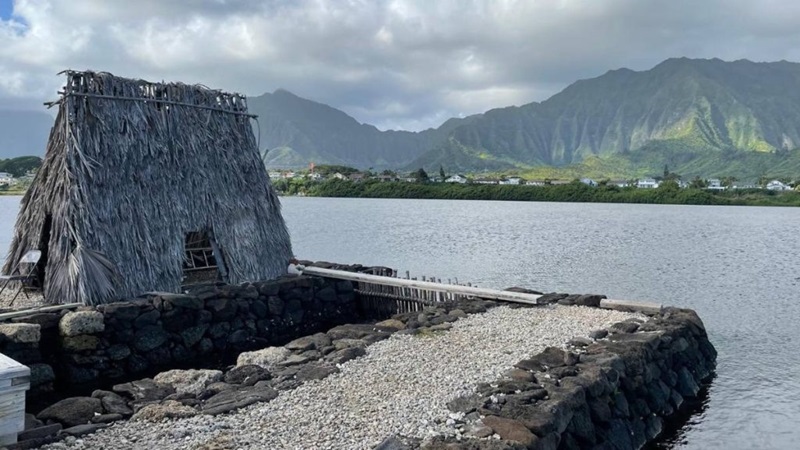
    Photo Courtesy: Anne Innes-Gold. Retrieved from bigislandnow.com Indigenous aquaculture systems in Hawaiʻi, known as loko iʻa or fishponds, can increase the amount of fish and fisheries harvested both inside and outside of the pond. This is the focus of a [study published](https://esajournals.onlinelibrary.wiley.com/doi/10.1002/ecs2.4797) by a team of researchers at the University of Hawaiʻi at Mānoa Hawaiʻi Institute of Marine Biology. Today, aquaculture supplies less than 1% of Hawaiʻi’s 70 million pounds of locally available seafood, but revitalization of loko i‘a has the potential to significantly increase locally available seafood. According to historical accounts, loko i‘a can create surplus fish inside the pond, but their role as a nursery ground seeding surrounding fish populations has received less attention.

    Read more
    Hawaii is “on the verge of a greater catastrophe,” locals say, as water crisis continues
    Water & FoodApril 17, 2024

    Hawaii is “on the verge of a greater catastrophe,” locals say, as water crisis continues

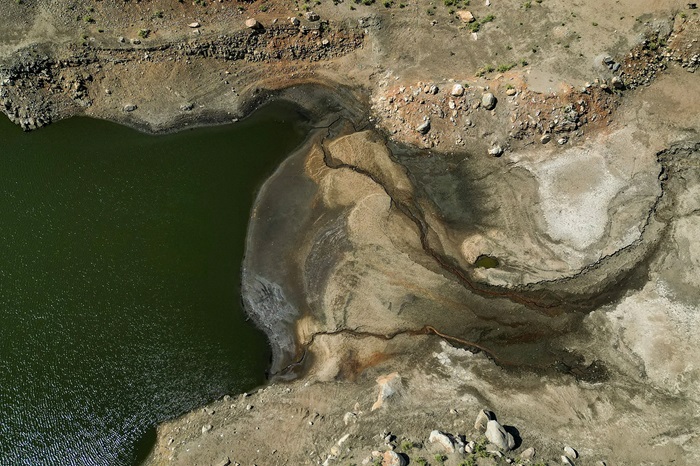
    Photo: LI COHEN/CBS NEWS. Retrieved from cbsnews.com In Hawaii, one of the most important sayings is ola i ka wai, “water is life” — a phrase that not only sums up what it means to exist on an island, but what it means to live, period. But now, one of the largest of the island chain’s land masses is facing a triple threat to its sole freshwater source, and if it isn’t addressed soon, one community member says, “we’re in deep trouble.” Despite being surrounded by seemingly endless ocean, freshwater on Oahu, the third-largest of Hawaii’s six major islands, is not easily accessible. The island relies on an underground aquifer for its water supply. Replenishing that aquifer is a decades-long natural process, as it takes a single drop of water roughly 25 years to make it there from the sky. And recent years have seen compounding problems: less rain, leading to [significant droughts](https://www.cbsnews.com/news/pond-mysteriously-turns-pink-kealia-pond-national-wildlife-refuge-hawaii/), and repeated jet fuel leaks and PFAS chemical spills contaminating water systems. All of this significantly limits available water use for locals, many of whom say tourism is only worsening the situation. Just months ago, the [world’s largest surfing wave pool](https://www.cbsnews.com/news/oahu-wave-pool-water-crisis/) opened up on the island — filled with freshwater. “They’re not using it to drink or to support life, they’re using it to make money. They’re commodifying it,” said Healani Sonoda-Pale, who is Native Hawaiian and a member of advocacy group O’ahu Water Protectors. “… We are on the verge of a greater catastrophe.”

    Read more
    Munda Market: Nurturing Community Empowerment in the Heart of the Solomon Islands’ Western Province
    Water & FoodApril 11, 2024

    Munda Market: Nurturing Community Empowerment in the Heart of the Solomon Islands’ Western Province

    Excerpt and Photo from undp.org Munda, located in the Western Province of the Solomon Islands, is a community heavily reliant on agriculture and fisheries for livelihoods. Everyday market vendors and farmers from nearby villages in Munda travel to Munda Market to trade their farm produce and fisheries products. **Location and Significance** Munda, nestled at the southwestern tip of New Georgia Island, is a hub of activity and culture in the Western Province. The market stands as a focal point for the daily lives of over 2,000 residents, providing a platform for buying and selling; a place where people can come together to meet. Its strategic location makes it not only a local trading post but also a frequented destination for tourists exploring the natural wonders of the Solomon Islands. **Facilities and Development** The transformative changes in the Munda Municipal Market, thanks to collaborative efforts spearheaded by initiatives such as the Market for Change (M4C) Project, have resulted in significant enhancements, including the construction of two new market stalls, a public toilet, improved footpaths for accessibility, dedicated office space, per fencing for security in close collaboration with UN Women as M4C project lead. Now approximately more than 100 market vendors trade on a weekly basis from Munda Market, contributing to the community’s supply of fresh fruits, vegetables, root crops and fisheries as part of their daily livelihood.

    Read more
    Mangroves Treasures: Pate Islands Mud Crab Fattening Boom Brings New Hope For Fishermen
    Water & FoodApril 4, 2024

    Mangroves Treasures: Pate Islands Mud Crab Fattening Boom Brings New Hope For Fishermen

    He used to spend endless hours on his boat, skimming the salty waters of the Indian Ocean, searching for his crustacean prey in the fish-rich areas of Pate, Manda, and Lamu islands, which make up the larger Lamu archipelago. With the invaluable guidance of Wetlands International aquaculture specialists, Abdalla undertook a pioneering initiative in July last year: the cultivation of giant mud crabs. With this endeavor, he hoped to outperform the meager returns from his old-fashioned crab hunts, which frequently produced only one catch per day. For the new venture, however, he was to buy crablets.

    Read more
    Joint initiative to secure the Pacific’s sustainable fisheries future
    Water & FoodMarch 22, 2024

    Joint initiative to secure the Pacific’s sustainable fisheries future

    Excerpt and Photo from fiskerforum.com **Enhancing maritime security and promoting sustainable fisheries management across the Pacific is a key outcome of Operation Rai Balang, which has just come to a close.** ‘This operation exemplifies the spirit of regional collaboration and determination among Pacific Island nations,’ said Pacific Island Forum Fisheries Agency (FFA) Director General, Dr Manu Tupou-Roosen, highlighting the significance of the FFA-led Operation Rai Balang. ‘By tackling IUU fishing head-on, we are not only preserving our marine resources but also securing the livelihoods and food security of our people. Operation Rai Balang reinforces FFA’s commitment to sustainable fisheries management and maritime security in the Pacific.’ The two-week Operation saw Pacific Islands Forum Fisheries Agency (FFA), Members, Pacific Quadrilateral Defence Coordination Group (Pacific QUADs) and partners safeguarding the invaluable marine resources of Pacific Island nations and the Western Central Pacific Ocean.

    Read more
    Guyana farmers share lessons on improving coconut industry
    Water & FoodMarch 18, 2024

    Guyana farmers share lessons on improving coconut industry

    Photo: Christopher Serju. Retrieved from jamaica-gleaner.com AS THE five-day regional coconut workshop, ‘Sustainable and Resilient Coconut Production within a Changing Climate’, came to a close yesterday, the testimony shared by Guyanese participants revealed a glimpse into how the cultivation of coconut rose from obscurity to a priority in their country. Eusi Simpson, the Caribbean Agricultural Research Development Institute (CARDI) Guyana coconut technician explained that the nation had an ailing coconut industry prior to the introduction of the Alliances for Coconut Industry Development, Expansion, and Enhanced Support for the Caribbean (ACIDES) project, during a technical session held at The Jamaica Pegasus hotel in New Kingston. The project, which is funded by the European Union (EU), is nearing the conclusion of its second phase, which started in 2019. The first phase of the project started in 2014.

    Read more
    Net gains: how Pacific Island states are securing the future of tuna – and their own
    Water & FoodMarch 8, 2024

    Net gains: how Pacific Island states are securing the future of tuna – and their own

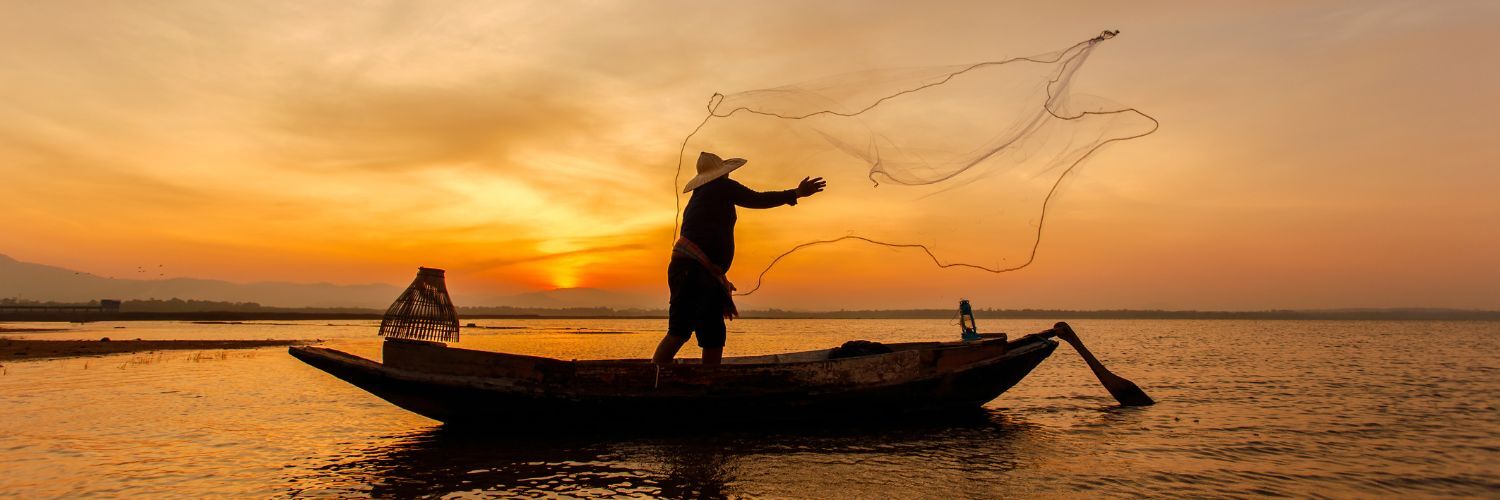
    Excerpt and Photo from euronews.com The largest tuna fishery in the world is also the most sustainable. How do the small island states of the Pacific prevent overfishing, develop their economies, and prepare for the imminent effects of climate change? Our report from the Marshall Islands. Crystal clear waters, white sands and kilometres of scattered islets, stretching as far as the eye can see; the Marshall Islands, a microstate in the Pacific Ocean, is a diver’s paradise, halfway between Australia and Hawaii. The region’s tuna fishing industry, valued at €5.5 billion, is a vital economic resource for the countries and territories of Oceania. However, climate change is a major threat to the Marshall Islands, shoals of tuna, particularly skipjack and yellowfin varieties, are projected to be migrating eastwards towards cooler open water due to rising sea temperatures. According to a UN special report on the impact of climate change on the ocean, ten Pacific Island countries and territories could lose approximately €55.2 million a year in fishing fees and up to 15 per cent in revenue by 2050 due to these tuna migration patterns.

    Read more