VIS 2026VIS 2026 — Virtual Island Summit|Also: GSIS 2027GSIS 2027
Island Innovation Logo
About
Services
The Network
Events
Content Library
Contact Us

Subscribe to our newsletter. By submitting, you agree to our Privacy Policy.

Island Innovation

Island Innovation works with governments, institutions, and partners worldwide to support island-led sustainable economic development.

We Support The UN Development Goals

SDG 9: Industry, Innovation and Infrastructure
SDG 11: Sustainable Cities and Communities
SDG 12: Responsible Consumption and Production
SDG 13: Climate Action
SDG 14: Life Below Water
SDG 17: Partnerships for the Goals

Explore

AboutServicesNetworkEvents

Content

ArticlesNewsCareers

Ready to Connect?

Join the island innovation community

Get in Touch

About

  • About us
  • Case Studies
  • FAQs
  • Press
  • Careers
  • Contact

Services

  • Services Overview
  • Public & Media Relations
  • Strategic Communications

Network

  • The Island Network
  • Academic Council
  • Newsletter

Events

  • Our Events
  • Watch Past Events

Content

  • All Content Library
  • Videos
  • Articles
  • News
Privacy PolicyTerms of ServiceContactManage email preferences

© 2025 Island Innovation. All rights reserved.

    News

    Curated stories and analysis from islands and sustainability leaders worldwide.

    Filter by Core Theme

    All ThemesCircular EconomyClimate ActionConnectivity & DigitizationCulture & CommunityEnergy & TransportGreen Finance & EconomyOcean & BiodiversityPolicy & GovernanceTourism & Remote WorkWater & Food
    Showing 9 of 2195 news items
    Maldives To Develop Industry, Livestock On Uninhabited Islands And Lagoons
    Policy & GovernanceSeptember 10, 2026

    Maldives To Develop Industry, Livestock On Uninhabited Islands And Lagoons

    The Maldivian government has submitted a bill to parliament to change the 28-year-old Uninhabited Islands Act. The new legislation would give the president a central role in defining the use of the archipelago's uninhabited islands and lagoons, introducing provisions on awards, concession duration, and leasing fees. Among the main changes is the possibility of leasing uninhabited islands and lagoons for purposes other than tourism, paving the way for industrial, farming, fishing, social, and public activities. While islands designated for tourism and industrial development will be assigned directly by the central government, those designated for other uses will be managed and administered by local island councils. Lagoons, however, will be entrusted to the relevant ministry. The inclusion of lagoons represents one of the proposal’s most significant innovations, as they had previously been excluded from the existing regulatory framework. Another important aspect of the reform concerns greater transparency and a clearer definition of the role and responsibilities of local governance. The bill introduces specific provisions about the relationship between local councils and government-controlled islands and lagoons. The stated objective is to find a balance between the central government authority and the interests of local communities. With this bill, the government led by President Mohamed Muizzu opens the sector to both domestic and foreign investors. Uninhabited islands designated for commercial purposes may be leased to companies and individuals registered in the Maldives, as well as to foreigners operating in the country. For other uses, leases will be reserved for Maldivian citizens, businesses, and associations. The bill also sets the duration of concessions, the criteria for determining leasing fees, and introduces a system of penalties, with the aim of ensuring more orderly management and ecosystem protection. If approved, the new legislation will replace the 1996 Uninhabited Islands Act. By including lagoons and expanding the authorised uses of uninhabited islands, the government aims to create new economic opportunities and simplify the management of the country's natural heritage. However, the reform reopens the debate on the growing centralisation of power in the hands of the central government and on the role of local councils in land management. The opening of uninhabited islands to industrial activities and foreign investors also raises concerns about the protection of the archipelago's ecosystems and the transparency of concession awards.

    12345678910
    Read more
    Tourist Tax: Norway's Lofoten Islands Manages Overtourism
    Tourism & Remote WorkSeptember 10, 2026

    Tourist Tax: Norway's Lofoten Islands Manages Overtourism

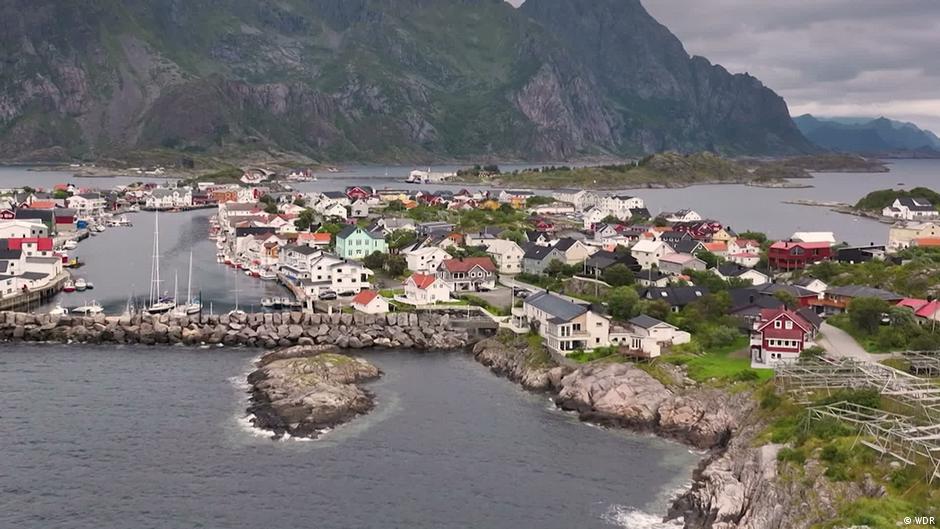
    The Lofoten Islands in northern Norway attract more than 1 million visitors every year with their dramatic mountains, fjords and coastal scenery. But the tourism boom is putting pressure on local communities, with overcrowded roads, full parking areas, litter and unauthorized camping creating challenges for residents. To help fund infrastructure such as toilets, hiking trails and parking facilities, Norwegian municipalities will be allowed to introduce a tourist tax on overnight stays. Locals hope the measure will support sustainable tourism while encouraging greater respect for nature and private property.

    Read more
    This Under-the-radar Caribbean Island Has One of the Most Affordable Citizenship-by-Investment Programs
    Green Finance & EconomySeptember 10, 2026

    This Under-the-radar Caribbean Island Has One of the Most Affordable Citizenship-by-Investment Programs

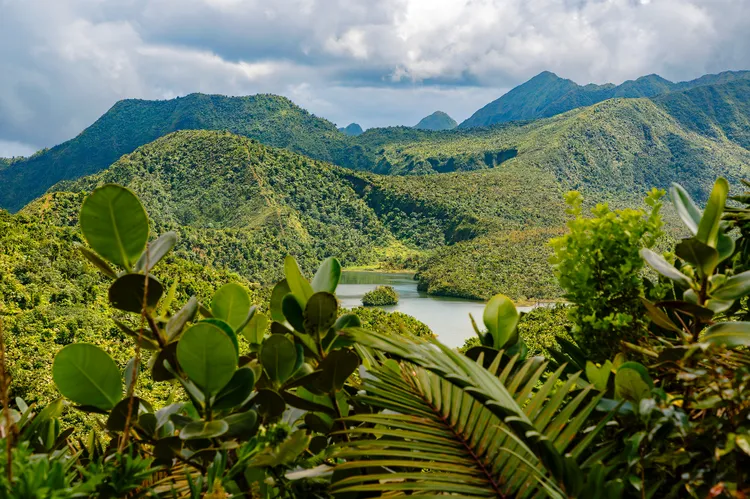
    Recently named the best island in the Caribbean in the 2026 World’s Best Awards, Dominica has spent decades quietly attracting travelers seeking nature over crowds. But according to Dan Merriam, a Caribbean real estate and investment migration advisor with Sotheby’s International Realty, change is on the horizon. “Although this has not happened on a large scale yet, I see Dominica becoming increasingly attractive to retirees, digital nomads, outdoor enthusiasts, and global families looking for a unique place to live and a more intentional way of life,” he tells Travel + Leisure. “The island offers low density, abundant freshwater, food security, natural beauty, and a warm and inviting culture that has not been overwhelmed by tourism.” You can hike to waterfalls, kayak to quiet beaches, and take a boat down the meandering Indian River—activities that make it abundantly clear why Dominica is called the “Nature Island.” And then there’s the appeal of Dominica’s citizenship-by-investment (CBI) program, which provides citizenship status after meeting certain requirements. “Historically, demand for citizenship-by-investment and Golden Visa programs came primarily from developing countries. But due to recent global events, second citizenship has become a much more common topic among high-net-worth and ultra-high-net-worth families in the United States, Canada, Europe, and other developed markets,” says Merriam. One of the “Caribbean Five,” a group of nations known for offering citizenship through investment, Dominica currently has the most affordable CBI program. “The accessibility of the Dominica citizenship-by-investment program largely centers around its relatively uncomplicated application process along with its relatively low contribution requirement,” explains Dominic Volek, group head of private clients at Henley & Partners. There are two pathways to citizenship: a $200,000 contribution to the Economic Development Fund (or $250,000 for a main applicant and up to three qualifying dependents) or a $200,000 investment in real estate. While Volek notes that the program requirements are “in line with those of other Caribbean programs,” and applicants are “generally not required to reside in or travel to Dominica during the application process,” things may soon change. “The government has announced that successful applicants will, in future, be required to visit Dominica to collect and renew their passports. The implementation date and detailed requirements have yet to be confirmed,” he says. It’s also worth mentioning that there’s been recent pressure from the European Commission to end CBI in Eastern Caribbean countries. As of now, though, Merriam says the increased interest in second citizenship has benefited CBI-approved real estate in the Caribbean. “For families interested in spending time in the region, purchasing an approved property can be more attractive than making a government donation because it combines citizenship eligibility with a tangible asset, personal use, potential rental income, and eventual resale,” he explains. Plus, as Volek adds, “Dominica has one of the lowest investment holding periods at three years if the property is sold on the open market, and five years if sold to another citizenship-by-investment investor.”

    Read more
    Elders, Conservationists Race to Record Fading Sacred Ties to Philippines’ Endemic Birds
    Ocean & BiodiversitySeptember 10, 2026

    Elders, Conservationists Race to Record Fading Sacred Ties to Philippines’ Endemic Birds

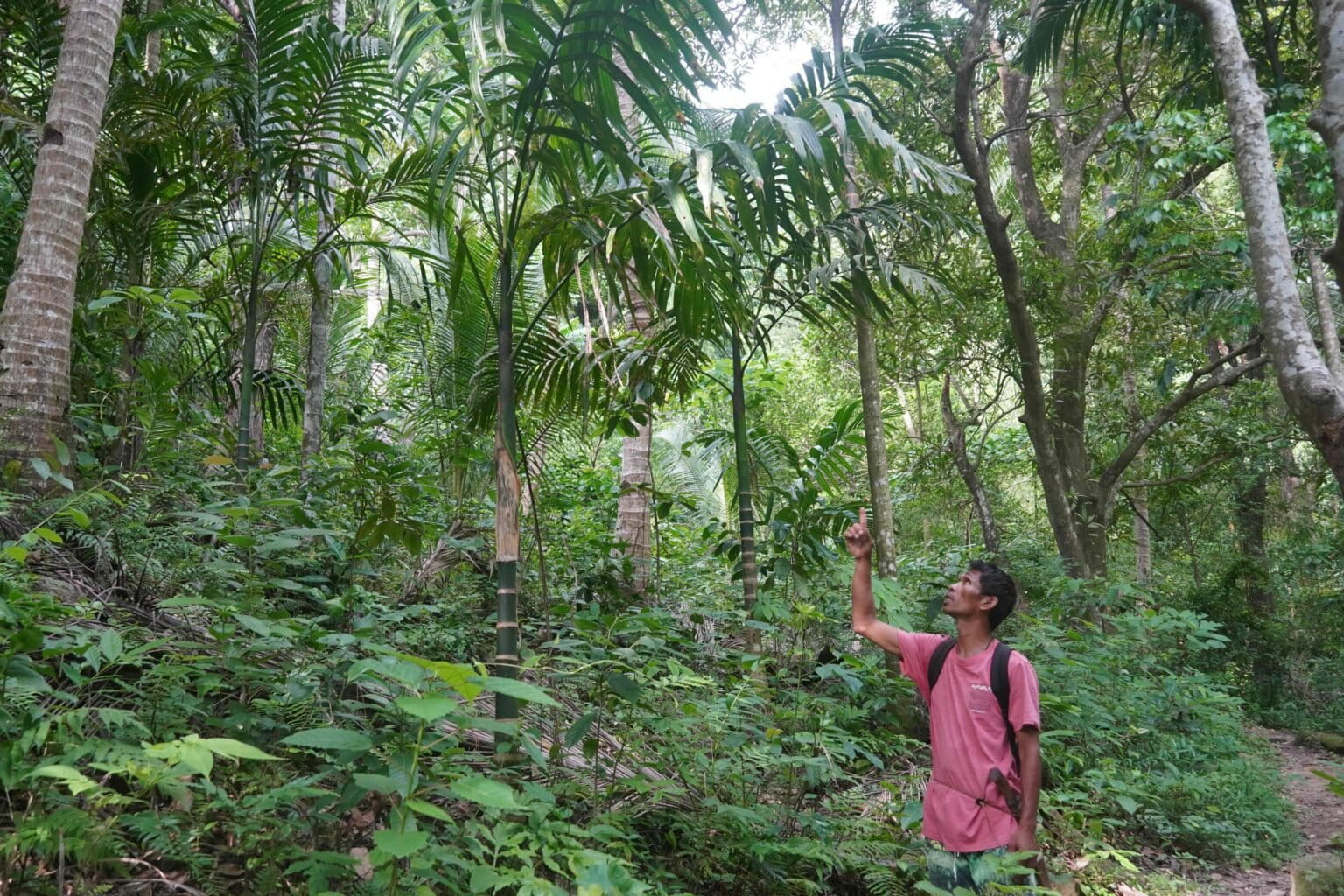
    The forest settles into a gentle rhythm as the trail climbs into the Iraya Mangyan ancestral domain in Puerto Galera town, on the Philippines’ Mindoro Island. Only birdsong breaks the silence as towering trees sway overhead. A clear stream tumbles across the trail over smooth rocks. Ahead walks 43-year-old Lenito Pampilo. Every few steps, he stops — not because the climb is difficult, but because the forest is speaking, he says. He points to an unseen bird in the canopy. Another answers from farther uphill. For him, each call carries meaning. “Our elders taught us these birds,” he tells Mongabay. Pampilo, an Iraya community leader and ecotrail guide, has spent much of his life in these mountains. His knowledge goes beyond recognizing species. “Some birds signal changing weather, warn of danger or carry messages between the living and spirit worlds,” he says. “Trees, streams and ridges also hold stories passed from one generation to the next.” For the Iraya, the forest is a largely unwritten living archive. As elders age and fewer young people learn beside them, the Center for Conservation Innovations Philippines (CCIPH) is helping Iraya knowledge holders document wildlife, medicinal plants and culturally important places under its Mindoro Forest and Biodiversity Conservation Programme (MFBCP), a REDD+ carbon finance initiative in eastern Mindoro Island. This includes the UNESCO-designated Puerto Galera Biosphere Reserve, which overlaps with the Iraya Mangyan’s roughly 40,000-hectare (98,800-acre) ancestral domain, home to about 2,500 households, according to the CCIPH. The Iraya have used and managed its forests, settlements and culturally important places across generations. The information will contribute to the Iraya’s Ancestral Domain Sustainable Development and Protection Plan (ADSDPP), and an ecotrail being co-developed with the community. “The environmental information gathered from the community becomes part of their ADSDPP,” says Rey Luna, CCIPH project management adviser and former Oriental Mindoro provincial officer of the National Commission on Indigenous Peoples (NCIP). “From those data, the community can determine what projects are appropriate for their land.” Luna says he envisions guides explaining why trees matter, how places were named and why some grounds are sacred. “You’re not just walking through the forest — you learn the story of the place,” he says. Where every bird tells a story CCIPH surveys have recorded 517 species across the program area, including 134 animal and 154 plant species considered rare, threatened or endemic. These include 42 bird species, among them three culturally important endemics. Pampilo began learning about birds as a child, when he and his friends playfully mimicked the siruk, or Mindoro boobook (Ninox mindorensis). More birds answered until their calls surrounded the village. “The elders told us, ‘You’re teasing them,’” Pampilo recalls. “Then we all ran.” Families spent the night elsewhere in the mountains, fearing malevolent spirits might pass through the settlement. “We didn’t even bring our belongings,” Pampilo says. “We just left.” Younger generations respond differently, he says, but the lesson remains: Do not provoke the bird. “We simply let it sing,” he says. The sulit, or Mindoro scops owl (Otus mindorensis), carries another spiritual meaning. Some Iraya associate it with departed relatives, Pampilo says, and release any accidentally trapped bird. For Pampilo, these customs teach restraint toward other forest beings. The turis, or Mindoro racket-tail (Prioniturus mindorensis), provides practical guidance. Lenito’s cousin, Bernito Pampilo, an Iraya forest patroller recalls the parrots gathering noisily in one tree when he was about 9. His father interpreted their behavior as a storm warning. That night, a powerful typhoon struck, forcing the family to shelter beneath the buttress roots of a large tree as their house was damaged. “When I see them gather like that, I prepare,” Bernito tells Mongabay. Such observations guided travel, farming and storm preparations before forecasts reached mountain communities. Today, Christianity has also become part of Iraya religious life. Pampilo, who also volunteers in Catholic catechism for children, says Christianity has not entirely displaced Iraya spiritual traditions. He describes the two as coexisting. “We now combine our beliefs with Catholicism, but not all our traditions have disappeared,” he says. “We keep what is most important to us.” All three bird species are endemic to Mindoro and are declining due to deforestation and infrastructure development. The IUCN Red List classifies the Mindoro boobook and Mindoro racket-tail as vulnerable and the Mindoro scops owl as near threatened. Currently, CCIPH-supported Indigenous patrollers monitor forests and report logging, hunting and other threats, while government personnel inspect ports and municipal borders for trafficked wildlife. The local government also conducts annual terrestrial biodiversity assessments, supplemented by CCIPH monitoring and targeted surveys of threatened and Mindoro-endemic species. Ronet Santos, a bird photographer and senior program operations manager of the D’Aboville Foundation, a nonprofit environmental organization working in Mindoro, says the three birds also indicate forest health. The Mindoro racket-tail helps disperse seeds while the Mindoro boobook and Mindoro scops owl provide natural pest control by keeping prey populations in check. “Long-term Indigenous observations can complement scientific knowledge and conservation initiatives by providing a complete temporal picture of these species’ behavior,” Santos tells Mongabay. “It’s not easy for scientists to observe species over the long term, and when they do, they need local Indigenous guides. Indigenous peoples are in the area throughout the year, while scientists only ‘bungee jump’ into the area for short periods.” Santos adds that many of Mindoro’s remaining endemic species occur within Indigenous ancestral domains, making community collaboration vital for long-term monitoring. In the foundation’s tamaraw (Bubalus mindorensis) work, Indigenous observations have helped researchers assess age classes and reproduction.

    Read more
    A Tuvaluan Researchers' Plastic-to-Fuel Work is Now Running Generators in Funafuti
    Circular EconomySeptember 10, 2026

    A Tuvaluan Researchers' Plastic-to-Fuel Work is Now Running Generators in Funafuti

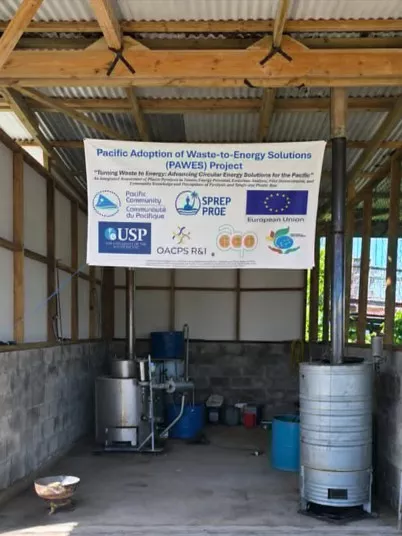
    A biomass-fired reactor at the Department of Waste Management took in 10 kilograms of discarded plastic and returned about 10 litres of liquid fuel and four cubic metres of gas, while officials, researchers and newly certified operators watched. The demonstration commissioned Tuvalu’s first plastic pyrolysis unit, built on research by a Tuvaluan postgraduate student and delivered under the Pacific Adoption of Waste-to-Energy Solutions (PAWES) Project. The unit also converts used engine oil into a diesel-like fuel. Fuel from the system has already been tested in generators, machinery and household cooking stoves. Walter Pulogo, Acting Secretary of the Ministry of Home Affairs, Climate Change and Environment, commissioned the unit. Operators trained in Funafuti received certificates in the safe operation and maintenance of the unit. They will run it from here. The unit is being framed in Funafuti as an answer to two problems at once. "This initiative demonstrates how innovation can help address two of Tuvalu's pressing challenges, plastic waste management and energy security, through one practical solution," said Mr. Kilei. "By converting plastic waste into valuable fuel products, we are not only reducing environmental pollution but also creating opportunities to strengthen local capacity, support the circular economy, and improve resilience. We are grateful for the strong partnership between the Government of Tuvalu, the PAWES Project, USP, NuFuel Ltd and all those who have contributed to making this achievement possible. This is an important step towards a cleaner and more sustainable future for Tuvalu", said Mr. Simona Kilei, Director of the Department of Energy, Tuvalu. The unit grew out of postgraduate research by Miriama Uluiviti Taukiei, a Tuvaluan student at the University of the South Pacific (USP) and a PAWES scholar, whose work examines integrated approaches to plastic waste management in Tuvalu. "As a Tuvaluan, it is incredibly rewarding to see my research move beyond the classroom and make a real difference for my own country", said Ms. Miriama Uluiviti Taukiei, a Tuvaluan postgraduate researcher at the University of the South Pacific (USP) and a scholar under the Pacific Adoption of Waste-to-Energy Solutions (PAWES) Project, the occasion marked the successful translation of research into tangible benefits for her home country. She added, "This project demonstrates that with innovation, research and community partnership, plastic waste can become part of the solution rather than the problem. I hope this inspires more Pacific students to pursue research that responds to the needs of our islands and creates lasting benefits for future generations." For the Pacific Community (SPC), the point of the unit is who operates it. "It’s about people, the communities that deserve cleaner environments, the young researchers developing practical solutions, and the local operators who now have the skills to sustain this technology for years to come," said Ms. Ngedikes Olai Uludong, Deputy Director of the Georesources and Energy Programme at SPC and added, “the project's greatest achievement lies in the people it empowers.”

    Read more
    This Greek Island Solved Its Rubbish Problem By Getting Rid of Its Landfill Entirely
    Circular EconomySeptember 10, 2026

    This Greek Island Solved Its Rubbish Problem By Getting Rid of Its Landfill Entirely

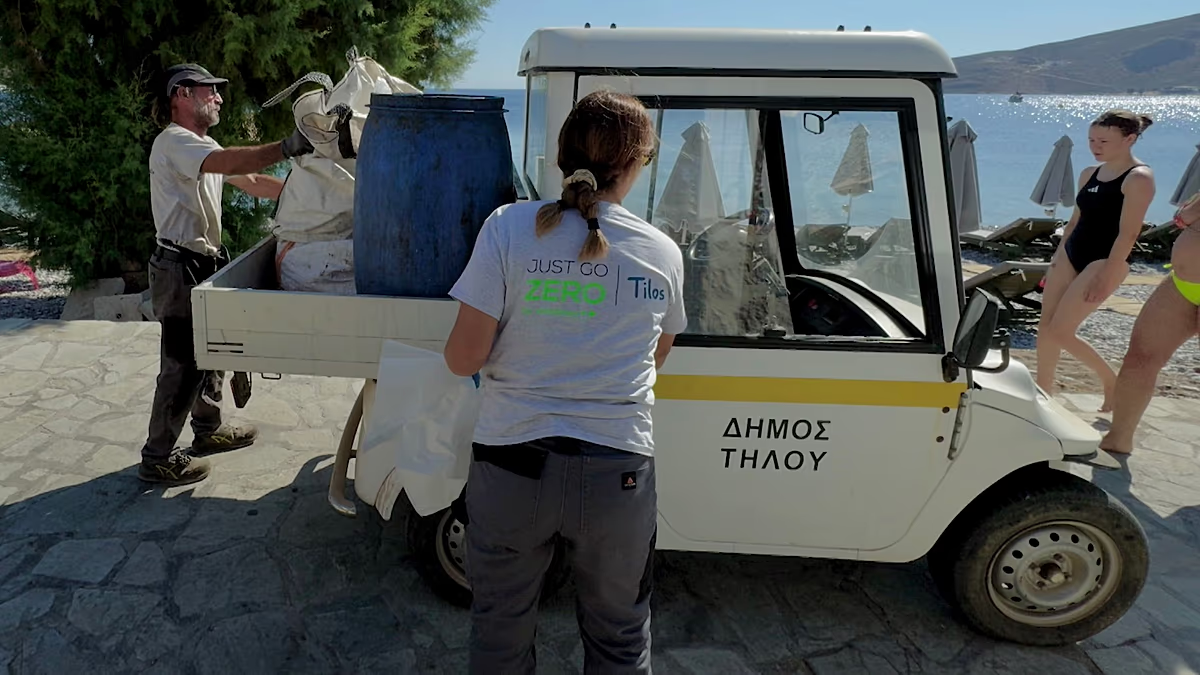
    Most small islands have little choice but to bury their rubbish in a landfill. Tilos in Greece has found another way. Euronews visited the world's first zero-waste island to see how its system works, and whether other places can do the same. Tilos, a small Greek island, used to bury its rubbish on a hillside. The landfill kept growing. Wind scattered plastic across the beaches below. It's a familiar problem for small islands. Residents and tourists produce waste, but shipping it elsewhere for recycling rarely makes economic sense. So most islands sacrifice a patch of scarce land and bury the problem. Out of sight, out of mind. A few years ago, Tilos tried something different. Working with Greek circular economy company Polygreen and backed by the Region of South Aegean, the island removed its street bins entirely and replaced them with door-to-door collection. Every household and business received separate bags for recyclables and organic waste, each tagged with a QR code. As a result, Tilos is now the world's first island to hold the Zero Waste Cities Certification, with a recycling and composting rate of close to 90% - well above both the Greek national figure and the EU average. How it works All waste collected from the residents and businesses goes to the Centre of Circular Innovation, built on the old landfill site. "This is an island that produces waste but buries nothing," project manager Spyros Kastanakis told Euronews. “330 tonnes a year - 60% recyclable, 30% organic, and the remaining 10% goes as fuel to cement factories.” Organic waste is composted into fertiliser and given free to local farmers. Non-recyclables are turned into alternative fuel. Everything else is sorted into 15 categories, compressed, and shipped to the mainland as economically valuable raw material. “This is no longer waste - it's raw material,” says Tilos Secretary General Stathis Kontos. “Everything has a second life.” The system only works if residents sort properly at home. Getting them there took effort. “First we went to the schools and convinced the children,” Mayor Maria Kamma told Euronews. “The children passed it on to their parents, and from there it spread.”

    Read more
    Pacific Islands to Face Food Shortages Due to Global Warming: Scientists
    Water & FoodSeptember 10, 2026

    Pacific Islands to Face Food Shortages Due to Global Warming: Scientists

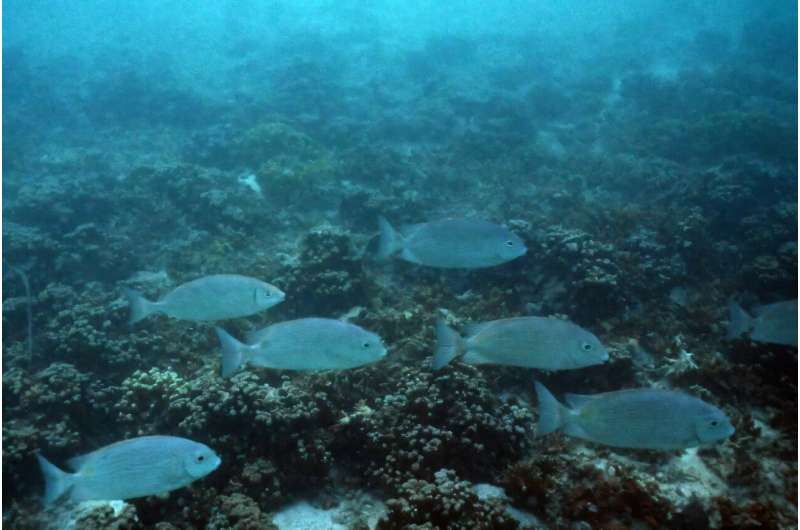
    The Pacific islands will face food shortages, and drinking water will be affected by rising seas, scientists said Wednesday, as a U.N. report found the world would fail to limit global warming to 1.5°C. A U.N. Environment Programme (UNEP) report projected global temperature rise will peak at 1.8°C above preindustrial levels, overshooting a goal of limiting warming to 1.5°C set by the Paris Agreement. Scientists told a summit of Pacific leaders in Palau that the impact of "overshooting" that target will be a $90 million loss in fishing license fees, or 13% of government revenue in the region, causing an "economic crisis." Tuna will migrate east, away from island states where a third of the world's tuna is caught, said Andrew Jones, deputy director general of The Pacific Community. Coastal fishers who feed island people will lose 65% of their catch, he told reporters Wednesday. "That's about two meals per family per week that are not on the plate—clean, free, healthy protein that will need to be replaced," he said. Devastating floods will increase, and salt water will inundate drinking water, reducing the ability to live on islands, he said. Maina Talia, climate change minister for low-lying Tuvalu, said the science showed the climate crisis "is real now, it is here now." Pacific islands are seeking financial help for climate change adaptation and tougher action by developed countries to curb the use of fossil fuels. "We are fighting against a very strong current that is sweeping us into very dangerous waters, and we have to do everything in our power to fight our way back to 1.5," said Marshall Islands climate envoy Tina Stege. Vanuatu climate change minister Ralph Regenvanu urged countries such as Australia, the largest member of the Pacific regional bloc and a major exporter of coal and gas, to stop expanding their fossil fuel exports. "Australia is not doing enough. Australia is a major producer of fossil fuels, we all know fossil fuels are the primary driver of the crisis," he told reporters.

    Read more
    In 1944, 29 Reindeer Were Left on a Remote Island in Alaska, Decades Later, They Had Eaten Themselves Into Extinction
    Ocean & BiodiversitySeptember 3, 2026

    In 1944, 29 Reindeer Were Left on a Remote Island in Alaska, Decades Later, They Had Eaten Themselves Into Extinction

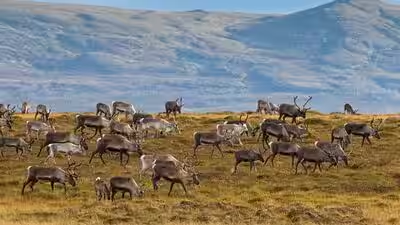
    What happened to the reindeer on St. Matthew Island is a classic story of wildlife boom and bust. In 1944, the US Coast Guard corralled 29 Nunivak Island reindeer on a barge and floated the animals north to the island, more than 200 miles away to one of the most remote places in Alaska. While they initially grew into a population across the land, today the island is devoid of any reindeer, according to a report by AS. A food source The Coast Guard had earlier in the year placed a radio navigation system on the island, along with 19 men. St. Matthew Island is a narrow strip of tundra in the Bering Sea, more than 200 miles from the nearest village. The reindeer were intended as a roaming food source should the men be cut off from supply shipments. The men never shot a single reindeer; the Allies were winning the war, and the Coast Guard pulled its men from the island. But they left the reindeer. Initially, the situation was fine for the animals. Their only predators had disappeared, leaving them on a 32-mile-long, four-mile-wide island rich with their favourite food, lichen. Biologist Dave Klein first stepped on the island in 1957, 13 years after the Coast Guard had abandoned it. Klein, 82, now a professor emeritus for the Univerisity of Alaska Fairbanks' Institute of Arctic Biology, hiked the length of the island with field assistant Jim Whisenhant in 1957. They noted that the herd of 29 reindeer had increased to more than 1,300 animals. Klein returned to the hard-to-reach island six years later. He could hardly believe how many reindeer were there. "We counted 6,000 of them," Klein said in a 2003 interview. "They were really hammering the lichens." But the scene, with its 47 reindeer per square mile, foreshadowed a crash ahead that no one was able to predict. They had trampled vegetation and consumed much of the food that had allowed their extraordinary expansion. The island could accommodate a population boom. It could not keep feeding one forever. For the unversed, a reindeer are large deer that live in the Arctic and sub-Arctic regions of Europe, Asia, and North America. In North America, they are commonly called caribou. They are well adapted to extremely cold environments, with thick fur, broad hooves and a layer of body fat that helps them survive harsh winters. Unlike most deer species, both male and female reindeer can grow antlers, although males generally have larger ones. Out of sight When Klein returned to the island in the summer of 1966, three years since his last visit, the herd of 6,000 had shrunk to a shocking 42. This number included only one male that had abnormal antlers and was probably unable to reproduce. There were no fawns. Moreover, reindeer skeletons littered the entire island. The herd had busted. During the next decade or so, all the reindeer of St. Matthew Island died off. According to the US Geological Survey, the last female died in 1981. According to Klein, an extreme winter might have forced the stressed population to the brink.

    Read more
    At Norway's Newest Island Retreat, Redefining the Relationship Between Community and Tourism
    Tourism & Remote WorkSeptember 3, 2026

    At Norway's Newest Island Retreat, Redefining the Relationship Between Community and Tourism

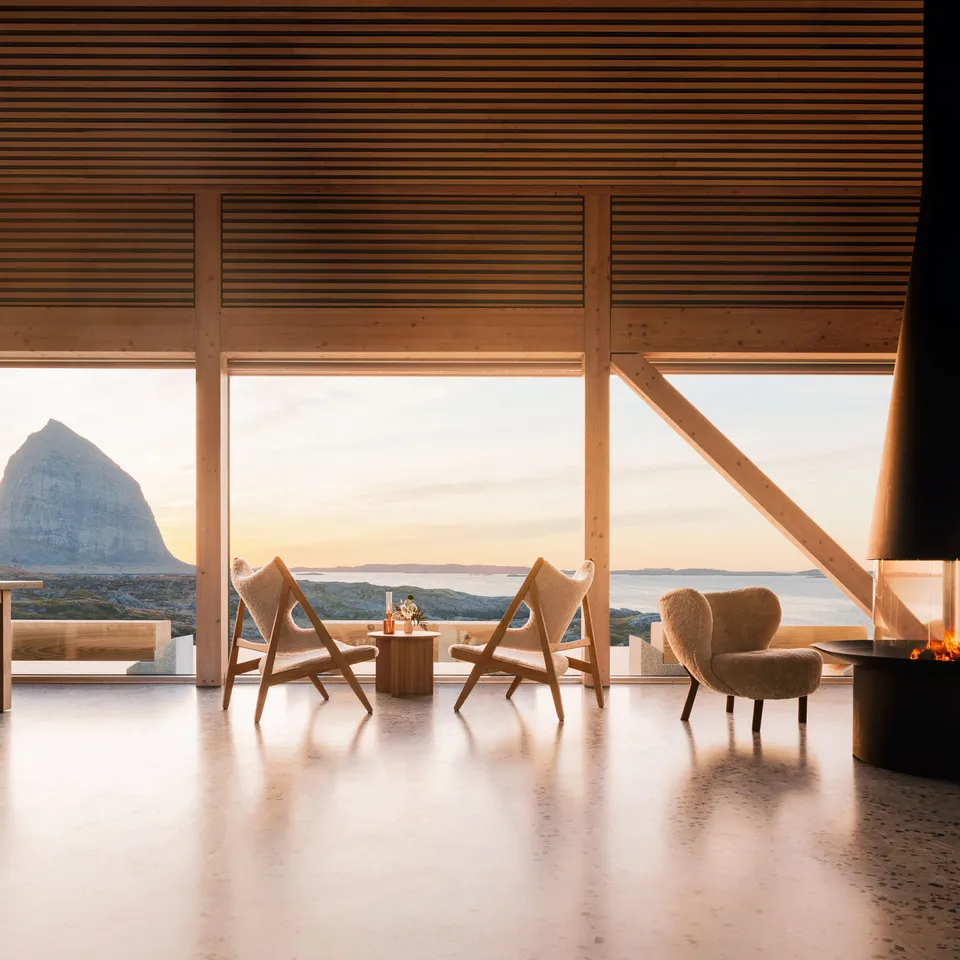
    Traveling to Ytri Island Retreat—which bills itself as “Norway’s most remote island retreat,” and is a 112-mile journey by ferry from the northern coastal city of Bodø—is no small feat. It’s perched on Husøya, one of the 477 islands of the Træna archipelago enfolded by blueberry seas—no wonder that its name means “outer point.” But despite the sobering distance and tales of ferocious winter storms that have been known to blow whole buildings into the sea, I find not so much a rugged, isolated hideaway as a smart, well-oiled operation anchored in its community. The concept of a luxury hotel was mooted by the locals a decade ago when, facing a hollowing-out of the regional fishing industry, the municipality and local development company Træna 365 gathered to brainstorm alternative futures for the archipelago. After six years of planning, investors Asle Helgheim and Ellen Hestenes—keen sailors with an existing Swedish spa hotel—came on board. Since Ytri Island Retreat opened in April, Træna’s population has increased by almost two percent—a sign that the project’s vision of social sustainability is already bedding in. I arrive a few days out from the summer solstice, when the sun appears to move sideways across the sky and the landscape is one of repose. The spartan rocky tufts that unfold from the hotel to the sea are blanketed with moss and wildflowers, and rabbit-tailed strands of swamp wool quiver in the breeze as if they’re bursting to tell me something. Looking back from the shore at Ytri’s cluster of industrial buildings in garnet, mint, and silver—modeled after fishermen’s dwellings—I see its windows catching the golden swell of midnight sun and reflecting a gentle hammered-glass ocean uninterrupted by boats. Inside, the 38 rooms and suites are simple, even monastic: pitched, high, church-like ceilings in pale wood; Norwegian wool cushions and blankets in inky blues and smoky grays; wonky ceramic vases blooming with dried flowers; and a bioelectric fireplace in my suite’s lounge. Design firm Bonaparte Interiør has used local materials such as a terrazzo floor made of sand, stone, and shells from the island, and there are abstract prints by Norwegian artists on the walls and pine-scented Skøn toiletries in the bathroom. But really, the invitation here is to look out. Floor-to-ceiling windows in every room—and a lava-smooth bathtub in mine—all face the emblematic shark-toothed Trænstaven mountain that rears out of the ocean on Sanna island opposite.

    Read more